

That new Michael Jackson biopic isn't going down well with reviewers
Nephew Jaafar Jackson's physical performance earns rare praise amid a whole bunch of negative notices.
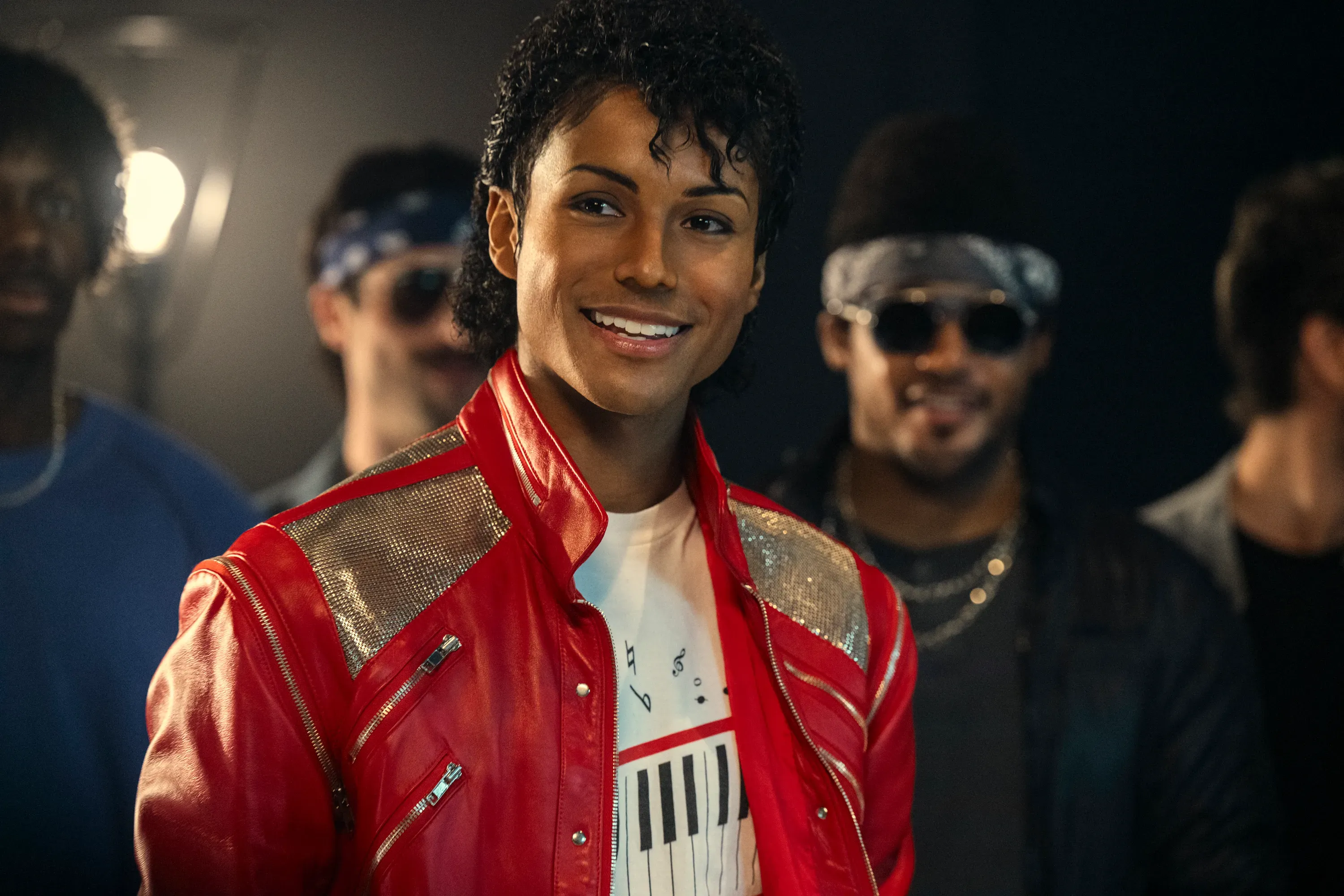
Following a protracted and troubled journey to the screen, Antoine Fuqua's Michael Jackson biopic Michael has landed to a pretty damn negative negative critical reception. The estate-backed film features Jaafar Jackson, the 29-year-old son of Jermaine Jackson and nephew of Michael, making his acting debut in the lead role.
Production difficulties plagued the project after attorneys identified a clause within a settlement involving Jordan Chandler, who accused Jackson of sexual abuse in 1993. The agreement with the estate prohibited any on-screen depiction of Chandler, forcing a costly overhaul. The original ending — centred on the allegations — was scrapped and reshot with a more triumphant conclusion, at an estimated cost of $10 million to $15 million.
Reviewers have largely taken issue with the film's surface-level approach. Writing for the BBC, Nicholas Barber said: "It's bad. It's bad. It's really, really bad."
The Guardian's Peter Bradshaw said the film is "a 127-minute trailer montage assembling every music-movie cliche you can think of: the producers' astonishment in the recording studio, the tour bus, the billboard chart ascent, the meeting with the uncool corporate execs in their offices."
At Vulture, Alison Willmore wrote: "Forget insight into its subject's strange, warped personal life, or his artistry as an entertainer, or his family's famously fraught dynamics— Michael barely manages the momentum needed to propel itself between the many musical numbers that are its main reason for existing. Watching it feels more like being frog-marched through a wax museum than watching a movie, each milestone restaged with an off-putting, uncanny-valley resemblance and no interiority."
The New York Times' Alissa Wilkinson said: "This Michael is flat, barely human. Hagiography is the standard mode in which all estate-involved biographical movies work, documentary and fiction alike, the implication being that audiences can't handle any hint that a figure might not be a saint, or at least a saintly victim. The notion that a human—someone who gets angry or bitter or has a bit of an ego on them—is inherently easier to relate to, far more believable and ultimately more lovable, seems lost on most filmmakers."
Deadline's Pete Hammond added: "It gets a bit too bogged down in running through the greatest hits of a public life we already know well, right up to re-creation of those famous videos including a spot-on making of 'Thriller.' For all its attributes, Michael doesn't tell us anything we didn't already know and falls short of giving any new insights into what made him who he was."
Writing for The Independent, Clarisse Loughrey said: "The draw of Michael, Bohemian Rhapsody producer Graham King's turn at the life of the King of Pop, isn't the desire to understand Jackson as a person or as an artist, or to grapple with the weight of his legacy as one of the most pivotal cultural figures of the 20th century. It exists to be consumed as an act of allegiance, as proof of fandom. It resists story in favour of content, in making sure fans see what they expect to see, whether that be the 'Thriller' video or 'Bad' performed live at Wembley in 1988."
Where critics did find something to commend, it was largely Jaafar Jackson's physical embodiment of his uncle. Variety's Owen Gleiberman wrote: "Jaafar, the 29-year-old son of Jermaine Jackson, is Michael Jackson's nephew, and he has never acted in a movie before. But does he ever nail the look, the voice, the electrostatic moves—and, more than that, the mixture of delicacy and steel that made Michael who he was."
Stereogum's Tom Breihan offered perhaps the most divided take on both the performance and the film itself, writing: "Jaafar is Michael's nephew, Jermaine's son, and this is his acting debut. He is not really an actor, and I can't imagine he'll ever play a major role other than Michael Jackson. In dramatic scenes, he's fully inert. He does Michael's speaking voice all through the movie, and there was a mutter all through my theater when we first heard it. It's not fun to hear someone talk like that for two hours. But Jaafar looks like Michael Jackson, and he moves like Michael Jackson — two things that are basically unthinkable. Fuqua uses Jaafar to restage countless iconic Jackson moments, and the moments of performance are absolutely electric. Parts of Michael are so good that I couldn't believe what I was seeing, just as parts of Michael are so bad that I couldn't believe what I was seeing."
Production difficulties plagued the project after attorneys identified a clause within a settlement involving Jordan Chandler, who accused Jackson of sexual abuse in 1993. The agreement with the estate prohibited any on-screen depiction of Chandler, forcing a costly overhaul. The original ending — centred on the allegations — was scrapped and reshot with a more triumphant conclusion, at an estimated cost of $10 million to $15 million.
Reviewers have largely taken issue with the film's surface-level approach. Writing for the BBC, Nicholas Barber said: "It's bad. It's bad. It's really, really bad."
The Guardian's Peter Bradshaw said the film is "a 127-minute trailer montage assembling every music-movie cliche you can think of: the producers' astonishment in the recording studio, the tour bus, the billboard chart ascent, the meeting with the uncool corporate execs in their offices."
At Vulture, Alison Willmore wrote: "Forget insight into its subject's strange, warped personal life, or his artistry as an entertainer, or his family's famously fraught dynamics— Michael barely manages the momentum needed to propel itself between the many musical numbers that are its main reason for existing. Watching it feels more like being frog-marched through a wax museum than watching a movie, each milestone restaged with an off-putting, uncanny-valley resemblance and no interiority."
The New York Times' Alissa Wilkinson said: "This Michael is flat, barely human. Hagiography is the standard mode in which all estate-involved biographical movies work, documentary and fiction alike, the implication being that audiences can't handle any hint that a figure might not be a saint, or at least a saintly victim. The notion that a human—someone who gets angry or bitter or has a bit of an ego on them—is inherently easier to relate to, far more believable and ultimately more lovable, seems lost on most filmmakers."
Deadline's Pete Hammond added: "It gets a bit too bogged down in running through the greatest hits of a public life we already know well, right up to re-creation of those famous videos including a spot-on making of 'Thriller.' For all its attributes, Michael doesn't tell us anything we didn't already know and falls short of giving any new insights into what made him who he was."
Writing for The Independent, Clarisse Loughrey said: "The draw of Michael, Bohemian Rhapsody producer Graham King's turn at the life of the King of Pop, isn't the desire to understand Jackson as a person or as an artist, or to grapple with the weight of his legacy as one of the most pivotal cultural figures of the 20th century. It exists to be consumed as an act of allegiance, as proof of fandom. It resists story in favour of content, in making sure fans see what they expect to see, whether that be the 'Thriller' video or 'Bad' performed live at Wembley in 1988."
Where critics did find something to commend, it was largely Jaafar Jackson's physical embodiment of his uncle. Variety's Owen Gleiberman wrote: "Jaafar, the 29-year-old son of Jermaine Jackson, is Michael Jackson's nephew, and he has never acted in a movie before. But does he ever nail the look, the voice, the electrostatic moves—and, more than that, the mixture of delicacy and steel that made Michael who he was."
Stereogum's Tom Breihan offered perhaps the most divided take on both the performance and the film itself, writing: "Jaafar is Michael's nephew, Jermaine's son, and this is his acting debut. He is not really an actor, and I can't imagine he'll ever play a major role other than Michael Jackson. In dramatic scenes, he's fully inert. He does Michael's speaking voice all through the movie, and there was a mutter all through my theater when we first heard it. It's not fun to hear someone talk like that for two hours. But Jaafar looks like Michael Jackson, and he moves like Michael Jackson — two things that are basically unthinkable. Fuqua uses Jaafar to restage countless iconic Jackson moments, and the moments of performance are absolutely electric. Parts of Michael are so good that I couldn't believe what I was seeing, just as parts of Michael are so bad that I couldn't believe what I was seeing."
Related Articles
LIKE THAT? READ THESE✦LIKE THAT? READ THESE✦LIKE THAT? READ THESE✦LIKE THAT? READ THESE✦
LIKE THAT? READ THESE✦LIKE THAT? READ THESE✦LIKE THAT? READ THESE✦LIKE THAT? READ THESE✦