
In a federal office somewhere in the U-S-of-A, a civil servant is deciding whether a follower count constitutes proof that a man from Mumbai is extraordinary enough to sing pop songs in Los Angeles. The O-1 visa is reserved for individuals of “extraordinary ability” in the arts, sciences or athletics and demands sustained national or international acclaim. It has to be documented through awards and evidence of important contributions to your field. It’s the visa handed to Michelin-starred chefs and internationally recognised conductors. And, as we write, it is being applied for by a twenty-something Indian singer whose primary credential is that 1.3 million people watched him perform Taylor Swift parodies through a laptop screen while three men in matching pink tracksuits pranced around a living room in LA.
The application was neither approved nor denied. The government issued a Request for Evidence. Bureaucratic language for: go on, then. Prove it.
This is the story of Boy Throb. Not the “are they real or are they satire?” story, which has been done to death by every outlet from Teen Vogue to Know Your Meme and is, in any case, the wrong question. It’s the story of what happens when four men who failed American Idol decide to build a boy band out of an algorithm and an immigration crisis, and what the fact that it’s working tells us about pop music, sincerity, and who gets to call themselves extraordinary in 2026. It's also the story of what a government's true intentions are when it uses the word "begging" to describe over a million people who showed up voluntarily to listen to something they enjoyed.
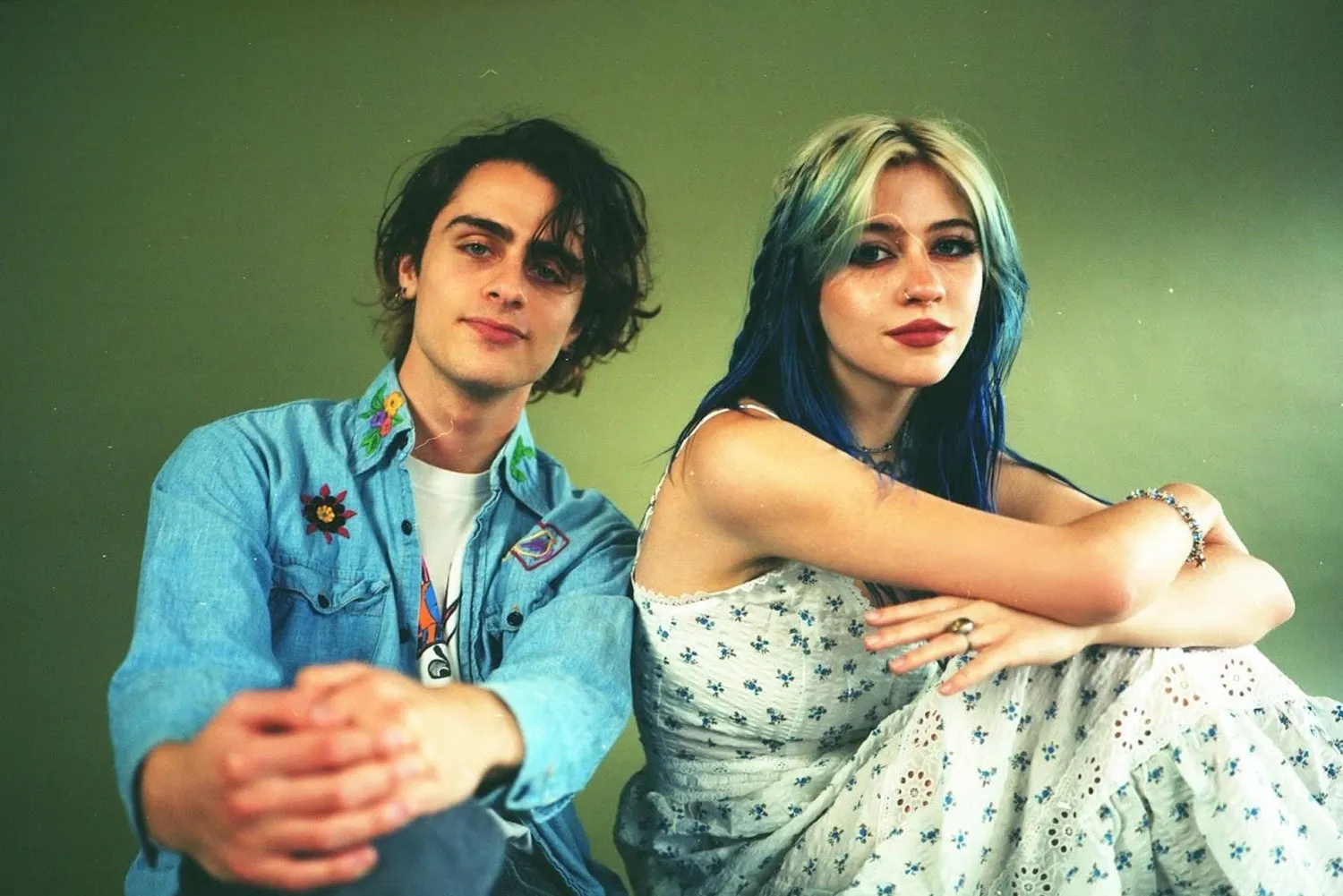
Boy Throb are (pens and papers out, everyone - Ed) Anthony Key, Evan Papier, Zachary Sobania, and Darshan Magdum. Key and Papier auditioned for American Idol in 2021. Neither got through, but they connected afterwards, drawn together by the stubbornness that kept them making music after a nationally televised rejection. Sobania joined about eight months before the group went public, while Magdum was found online. A singer in Mumbai posting covers to small audiences, he was making the kind of earnest, mostly ignored content that fills the lower reaches of every platform on earth. Each of them had invested years doing this individually. Posting their music, then watching it vanish into the void.
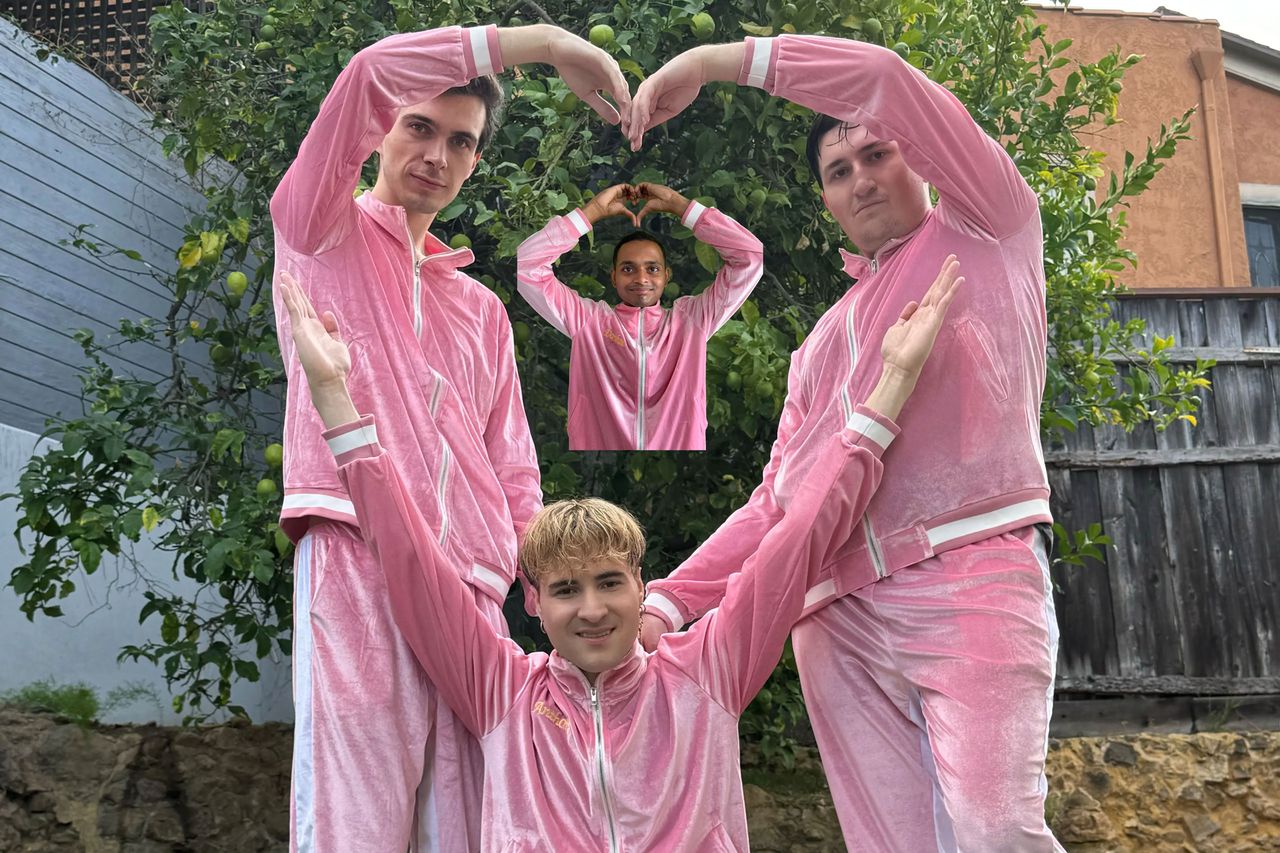
In October of last year, they posted their first TikTok under the handle @boyband2026. The premise was straightforward enough: help us reach one million followers so Darshan can get a visa, come to America and join the band. They were wearing matching pink tracksuits with their names embroidered on the chest and, depending on any prior disposition, looked either like the funniest thing on the internet that day or the most sincere.
Within a month they had the million followers. Within two, there was a debut single. By month four, they’d performed the U.S. National Anthem at an LA Kings game, collaborated with MrBeast for Super Bowl weekend, appeared on the Zach Sang Show and generated the kind of online discourse that usually requires someone to pay an agency to pretend to be a bunch of 16-year-old girls from Connecticut. Reddit couldn’t decide if they were marketing geniuses or deluded amateurs. Threads was convinced Nathan Fielder was behind the whole thing. TikTok’s comment sections had become a rolling seminar in post-ironic theory, conducted by people who would never use the phrase “post-ironic theory” but found themselves doing it regardless.
Boy Throb, for their part, just kept on posting.
It's also the story of what a government's true intentions are when it uses the word "begging" to describe over a million people who showed up voluntarily to listen to something they enjoyed.
Sartorial choices are essential in the cut-throat world of pop nonsense and the cultural register. That’s why those tracksuits act as a prism for everything Boy Throb are, because they’re doing more work than polyester should reasonably be expected to. Matching outfits are boy band gospel - the Backstreet Boys did it, *NSYNC did it, KATSEYE (a cited Boy Throb influence) do it now. But the colour is the tell. Pink, that specifically, that aggressively, is a commitment device. You cannot wear a matching pink tracksuit casually. You are either entirely in on this, or you are taking the piss, and Boy Throb’s particular trick is to occupy both positions at once without confirming which one is load-bearing. The tracksuits dare you to decide. Most people can’t.
Underneath all the pink polyester nonsense, the mechanics are genuinely pretty sophisticated. Their content operates on three tiers. First are the parody covers. They rewrite Taylor Swift, Sabrina Carpenter or Olivia Dean songs with self-referential lyrics about the group or Darshan’s visa campaign, riding the algorithmic momentum of tracks people already know. Funny and shareable, they work as a very effective discovery engine, reliably popping up on the FYP of an audience pre-determined to engage positively. Tier two is lore. The visa updates, the group protesting outside immigration offices, Darshan appearing on a laptop screen at 1:30am Indian time because that’s when his bandmates are awake in LA. With all of that, the parasocial investment only builds as fans engage with a story that has real-life stakes. Tier three is the introduction of original music, and the point at which the whole thing pivots from curiosity to something worth taking seriously.
‘Finger’, the debut single released in December, is a K-pop-inflected pop track with three-part harmonies and an earworm of a hook. ‘Can’t Stop The Throb’ followed in February, shifting into R&B territory with a groove that glides rather than stomps. Users on Album of the Year gave it an 81 from 24 ratings. One reviewer called it “silly and catchy and groovy.” Another noted that “it’s really hard to dislike this” and described Boy Throb as “internet-based musicians who seem genuinely passionate about the music.” The music press, when it engaged at all, reached for expressions like “bona-fide pop bops” and “substance beneath the satirical packaging.”
The just-dropped ‘Number One Boy’ might be the best of the lot, though. It’s pulling influence from all the right places: a boy next door narrative, a chorus made from gorilla glue and spangles, and a sax line that sounds like it’s wandered in from The 1975’s greatest hits. It’s not a comedy single. It’s just a really good one. Yes, there’s doubtless some very clever instinctive thinking about hooking the algorithm at play, but it’s also a whole heap of unironic fun.
Because they’re not entirely novelty records. Strip away the rest, and you’re left with three genuinely catchy pop songs with slightly silly lyrics that would work in a playlist without a paragraph of context to justify their presence. Every professionally produced single that lands properly strengthens two cases at once - the cultural case that Boy Throb are a real band worth your time, and the literal legal case that Darshan Magdum possesses the extraordinary ability required for that O-1 visa.
What’s more interesting is what all this attention is actually doing. Every piece of content they produce is doing four jobs simultaneously. It’s entertainment for the audience. Marketing for the brand. Social proof for industry gatekeepers. And legal documentation for an immigration attorney’s filing. Your TikTok likes are a data point in a federal case. Your follow is evidence, theoretically admissible, that a person you’ve never met possesses extraordinary ability in the arts.
The entire economy of social media engagement - a system built to sell advertising - is being repurposed here as something else too. Not just audience-building. Not just clout. A kind of improvised immigration infrastructure. Boy Throb may or may not have planned it in exactly those terms, but they’ve built it, it works, and the U.S. government is currently trying to figure out whether it counts.
Obviously, the internet has theories about all of this. The Nathan Fielder one is the biggie. Fielder’s work - Nathan For You, The Rehearsal - operates through exactly the kind of sustained sincerity-that-might-also-be-performance that Boy Throb trade in, and the comparison writes itself. “Boy Throb HAS to be a Nathan Fielder bit, and I refuse to accept any other explanation,” reads a characteristic Threads post. Others have suggested a Silicon Valley marketing company, an unnamed record label, an elaborate film pitch that hasn’t been announced yet.
There is no evidence for any of this. What the theories reveal isn’t anything especially useful about Boy Throb. They reveal something about the audience. If it’s Fielder, the discomfort resolves. There’s a reveal coming. The bit has a punchline. The sustained weirdness of watching four men pursue a pop career through an immigration crisis can be filed under “comedy” and processed accordingly, the way we process everything on the internet: categorise it, react to it and move on.
Boy Throb deny the audience that resolution. There is no punchline. The discomfort continues. And in that continuing discomfort, a question starts to surface that’s more interesting than “are they real?” The question is: why do we need to know?
Why can’t four men in pink tracksuits want to be a boy band? What is it about sincerity at this scale that makes it register as inherently suspicious?
When Boy Throb addressed the satire accusations directly - “We know our content can seem playful and fun, but comments like this really affect us, as we are aspiring to be legitimate artists” - the response split predictably. Some believed them. Some thought the denial was part of the bit. The split is the point. If you believe them, you’re invested. If you don’t, you’re still watching. Both responses feed the algorithm, both grow the number. The ambiguity is not a failure of communication, it’s part of the mechanism.
If they declared themselves satire, the visa case would get a lot harder to sustain. You can’t exactly rock up to the current U.S. immigration regime - already busy with raids, detentions and all the rest of its bureaucratised cruelty - and expect it to wave through an extraordinary ability petition for a comedy project. If they declared themselves 100% sincere and dropped the amusing content, the viral engine stalls. Nobody shares a straight-faced boy band video from four unknowns with no label and no industry machine. The ambiguity isn’t a stance they’ve adopted for a laugh. It’s the condition under which the whole thing functions.
The obvious comparisons only get you so far. The Lonely Island needed you to know it was a joke. The humour depended on the audience being in on it - Andy Samberg dressed as a naval officer is funny because we know he’s Andy Samberg from SNL and Brooklyn Nine-Nine. Flight of the Conchords used comedy as a mode of vulnerability - the jokes were how Bret and Jemaine expressed feelings they couldn’t say straight, and the HBO show gave the songs emotional tension by embedding them in a narrative about loneliness and displacement.
Boy Throb aren’t doing any of this. They’re not using comedy to express vulnerability or irony to critique a genre they clearly genuinely love. Nobody has that level of lore-craft without knowing their material from a place of actual affection. They’re using comedy to build institutional power. The viral content is the construction material for an infrastructure of followers, press coverage, cultural legitimacy, and legal evidence that serves a concrete, material goal: getting a man across a border. The Conchords wanted you to feel something. Boy Throb want you to do something - follow, share, engage, become a line item in an immigration filing. The comedy is a vehicle for power, not pathos, and that’s a fundamentally different project.
The question everyone keeps asking is whether Boy Throb are real. It is, with respect, a deeply boring question.
The old boy band model was a factory. A Lou Pearlman-type selected the members. A Simon Cowell manufactured the product. K-pop’s trainee system runs for years before debut, sanding performers down into precision instruments of parasocial investment. In every case, the boys were chosen, developed, and deployed with a skip load of capital investment.
Boy Throb invert this in a way that probably seems more like satire than it actually is. The members chose themselves. The audience (the Throb Mob, which is the best fan-army name since the Beyhive and no one is going to convince anyone otherwise) does the development. The capital here isn’t money, it’s eyeballs and engagement. Where the old model had the label’s lawyers sorting out the visa paperwork as a matter of routine, Boy Throb have turned the visa paperwork into the content itself. The obstacle became the narrative, the narrative became the growth engine, and the growth engine became the evidence. It’s a closed loop with a government bureaucracy trapped somewhere inside it, which feels funny right up until you remember what that bureaucracy is currently doing to actual human beings.
Four men publicly, enthusiastically wanting to sing pop songs together while wearing pink is also doing quiet, accidental work in a cultural sphere that could use it. They cry on camera about Darshan’s visa. They perform choreography without a trace of self-consciousness. In 2026, when the algorithm serves young men an unrelenting diet of harmful bullshit, Boy Throb offer something that shouldn’t feel radical but does: male friendship expressed through a shared creative project that isn’t rooted in toxic masculinity. They’re not positioning themselves as an alternative to anything, but the image will still reach people who might not have known they needed to see four men being genuinely, visibly happy about singing together.
At the time of writing, Darshan Magdum is still in Mumbai. The visa is pending, the Request for Evidence has been received and extra documentation is being prepared. Boy Throb are still posting. Darshan still on a laptop screen, beamed in from a timezone nine and a half hours ahead, singing his parts to a room he’s never been in for an audience that knows him only as a face in a rectangle, hoping that the collective heft of their attention amounts to something a federal office will recognise as extraordinary.
The question everyone keeps asking is whether Boy Throb are real. It is, with respect, a deeply boring question. They are four real people with three real singles on real streaming outlets and a real immigration case before a real government agency making real decisions about a real person’s life. The interesting question is the one the government is asking, and the one it’s being asked back: are they extraordinary, and, given the raids, the detentions, the bureaucratic vanishing acts and the general culture of performative cruelty the current U.S. immigration regime now treats as ordinary business, what exactly is it you think counts as extraordinary?
1.3 million people seem fairly sure. The man in the federal office is still deciding.
On 16th March, Boy Throb posted a video none of them wanted to make. The government had come back on their Request for Evidence, and it wasn’t a maybe. It was a kicking.
“The evidence you submitted is insufficient,” the letter begins, before noting that while income, brand deals and invoices were provided, none of it proves that Darshan Magdum has “commanded or will command a high salary or other substantial remuneration.” It goes on to say that while Magdum “appears to have a lead or critical role” in Boy Throb, the government “has not established that Boy Throb has a distinguished reputation or that they are an organisation or establishment.”
Then comes the line that really curdles it: “You provide several articles that indicated the beneficiary and his group members were begging the internet to follow them, for journalists to write articles about them... Begging for press solely to improve an immigration benefit request is not indicative of an organisation or establishment that has a distinguished reputation.”
Begging. That’s what they called it.
Except it isn't. It's four people trying to get in the same room to make pop music, and still the official reading is suspicion. The word “begging” reads exactly like you'd expect it to from Trump's America. It takes an audience that turned up willingly and makes it sound like grubby deceit. It looks at camp, humour and the glorious nonsense the internet does best and decides none of it can possibly add up to enough in the face of a cruel mantra and the kind of villainy they'd deem too far for a dystopian novel.
You don’t need to make Boy Throb saints to see what’s rotten about that. The songs exist. The audience exists. “We put our whole heart into everything we do, but we’re not going to stop,” they respond. “You can’t stop the throb.”