Maisie Peters: "It's about being the good witch and deciding to use your power for good" | Dork
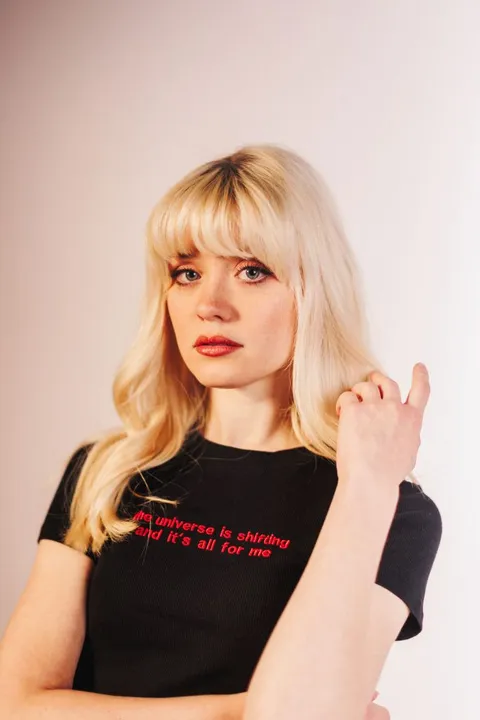
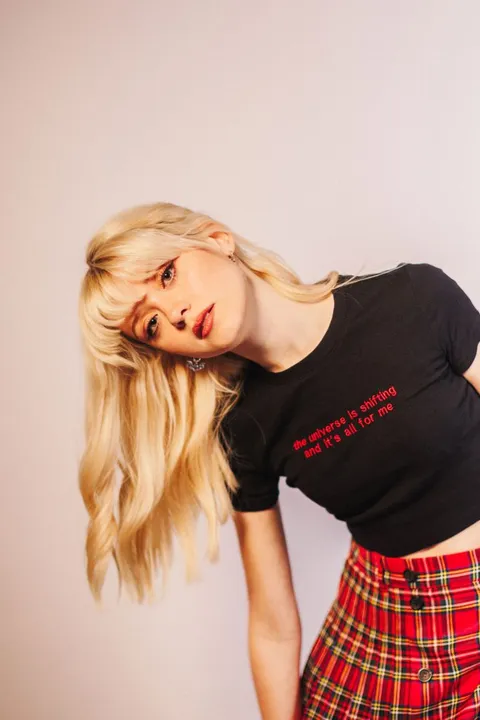
A melodic diary penned from soul-stirring experiences, Maisie Peters' latest album 'The Good Witch' is a tapestry of emotions. Prepare to be cast under her spell once more.
EMOTIONAL WEIGHT
EMOTIONAL WEIGHT
A melodic diary penned from soul-stirring experiences, Maisie Peters' latest album 'The Good Witch' is a tapestry of emotions. Prepare to be cast under her spell once more.
A melodic diary penned from soul-stirring experiences, MAISIE PETERS' latest album 'The Good Witch' is a tapestry of emotions. Prepare to be cast under her spell once more.
Words: Neive McCarthy.
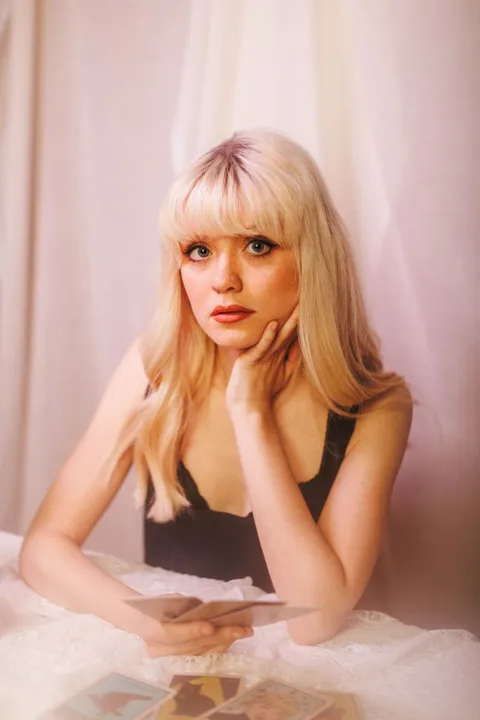
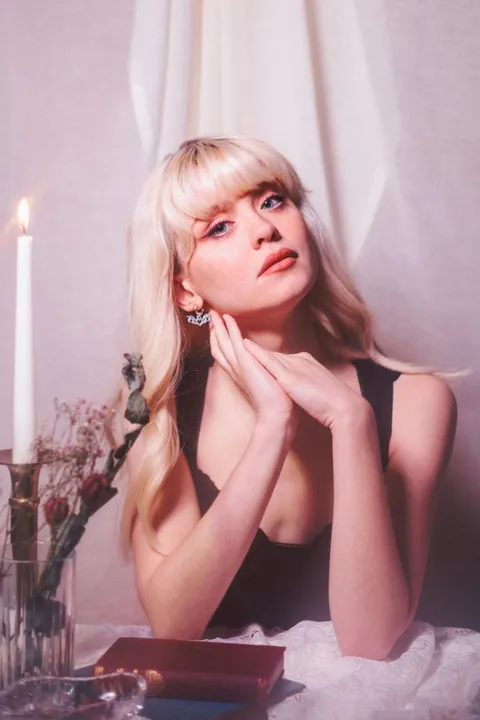
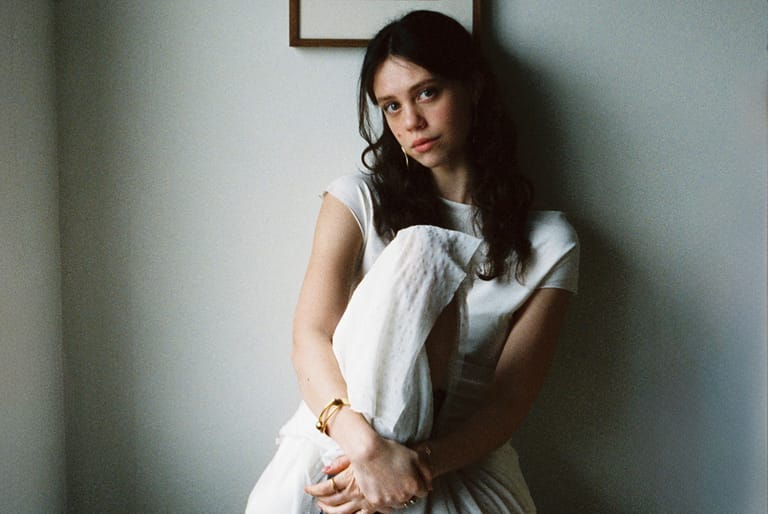
Photos: Em Marcovecchio.
A shift is coming. A new energy, a new era, a new mindset. A chance to feel vindicated, to tell your story, to set your intentions under the moonlight. Clutch your crystals, light your incense, and take a deep breath: the witching hour has begun.
Some of the most intense, powerful magic stems from that hour of strength and heightened senses. It makes sense, then, that some of the most intense, powerful music might stem from an embodiment of that energy. The second album from Maisie Peters, 'The Good Witch', fits that description perfectly. It's an ascension – a means of getting in touch with a higher vibration and allowing yourself to heal through creation. 'The Good Witch' is that something on the horizon that has lingered under clouds of smoke, simmering with the heat of one woman's anger. That anger has cooled, and from the heat, 'The Good Witch' emerges.
"In a way, that's what being a writer is," explains Maisie, perched on a sofa in East London. "It's about being the good witch and deciding to use your power for good, not evil. It's important to tell the truth. Music is subjective, and it's my music, so I get to decide. It's interesting when I look back at the album and all the songs that didn't make it as well. I'm struck by how most, if not all, of the songs that made it, in my opinion, for a breakup album, I don't think it's that mean. There's not a lot of anger, hate, or malice in it. Those types of songs, the petty songs, maybe they don't stand the test of time. Being the good witch is letting those songs stay in my back pocket. It's funny; the songs that do make it tell the right story. That's a story I'm proud to tell, and I think I will be – I think it will age well."
Written over the last year of her life, Maisie's second release tells the story of a fundamental twelve months in her world. It's equally coloured by heartbreak and loss as it is with undiluted joy, unguarded and seeped in sadness, but also a cackling tale of rising above. It's the peaks and troughs of a woman in her early twenties, consumed by emotion and poised with pen in hand.
"With the first album, I was making it arguably my whole life," reflects Maisie. "Some of those songs I wrote when I was sixteen. It was a flinging of paints on a canvas. It was broader, and I was reaching in lots of different places and saying lots of different things in different ways, sonically and lyrically. I'm really proud of that album, but I don't know if I'd make the same album now. That album addressed the reader, and I think with this album, it's a more truthful album in terms of the way I wrote it and what I wrote it about. It is more vulnerable, and there's more of myself in this album than there was in the first."
"For a breakup album, I don't think it's that mean. There's not a lot of anger, hate, or malice in it"
— Maisie Peters
Her debut, 'You Signed Up For This', was an ode to growing up, wrapped in bubble-gum pop and synths. It finds an older sister in 'The Good Witch', one that at first glance looks vastly different. On closer inspection, you see the same nose, the same strip of freckles across cheekbones, the same dimple when they smile. There are the same tendencies; to forgive but not forget, to chronicle everything, to take you directly into the scene of each moment with her. Yet, the Maisie we meet here is wiser, more restrained in a lot of ways, holding her pen slightly differently.
'The Good Witch' deals with a myriad of complex emotions – raging over an ex who has moved on, cursing yourself for wanting someone back despite how they treated you, feeling like 'the man'. Yet, it does so in a more poised way. It's an album that is very reactive and firmly planted in the present moment, but she gives herself the space and time to mull things over and dig to the bottom of her feelings. It touches bases and checks in on the self constantly, burrowing closer to an inner truth that is calmly told.
"For me, a lot of writing this album was a means of processing," muses Maisie. "But it was also just a way of chronicling and getting down what I was experiencing and what was happening at the time. The last year was very hectic – I was on tour a lot, and I was constantly travelling; I moved house, and there was so much going on. While doing that, I was experiencing this heartbreak and having to deal with that at the same time. The process of writing this album – the writing down ideas, the talking about it, the writing sessions – all of those things were ways to centre myself and remind myself of how I was feeling. In writing it down, I think it's a way to know that for better or for worse, that's how you felt, that was your experience, and that did happen and was true."
'The Good Witch' is something akin to a musical journal; it's brimming with plane tickets, photobooth strips, and scribbles of thoughts. It's a collection of feelings and moments as they came, in reflection, and as they might be. Meticulously taking stock of things as they happened meant that for a lot of the album, the end of that story was unclear. Maisie had the empty pages, and she was able to write her own narrative. Songs became objects of her manifestations, packed to bursting with visions of the future and hopes of emerging anew from this heartbreak.
"There was a switch in the last year in the way I see myself. That energy runs through it"
— Maisie Peters
The second single from the album, 'Lost The Breakup' revels in indie-pop glory as it acknowledges how she "might be a mess right now" but will soon have her arm raised as the winner. She fills her songs with mantras for how she might want to feel – 'Run' instructs exactly what to avoid in a boy, while 'Coming of Age' insists that she is running this show. It's something to cling to, both for Maisie herself and her army of fans.
Sometimes, though, those higher states of being are a bit more out of reach. To get to that ideal state of mind, there's some work to be done. There are feelings to be felt, and Maisie brings them all into the light. As much as one might curse themselves for it, in the thick of heartache, that overthinking and longing and lingering sadness cut through the edges despite all attempts to seal it out.
"I always think about Florence + the Machine. I love her; she's one of my idols. She wrote about how when she was younger, she thought the best way to make music was to be sad and to be fucked up all the time, but she realised that's not true. It just feels easier to be like, 'I'm sad, I hate this, and I don't know what to do', rather than to be happy. The quiet calm of being happy makes it harder to pick out how you feel and why you feel it. I think that's true. That's my next challenge. The emotions are right on the surface, and it's easier to work out how you feel. It's almost like you can't stop talking about it. Obviously, there are some examples of great 'lover girl' albums. 'Golden Hour' is amazing. That's the next plane I must tackle."
'The Good Witch' becomes a world to revel in those dark emotions and emerge stronger. To feel that fury and attempt to heal, to indulge in the ugly side of things and find a new appreciation for the good. 'Body Better' is the perfect example, in a lot of ways. Spiralling in self-doubt and helplessly comparing herself, Maisie acknowledges a kind of truth of human nature. "Was I wrong and is she so right? / Is her body better than mine?" she pleads. We may be fed these Pinterest fitting ideas of how we are all individuals and comparison is a killer, but it's something so many young women have felt despite all good intentions. "I'm not claiming that it's logical or true or a positive way to spend your time," Maisie assures. "But it was a real situation I was in. That's an important thing to write about too."
Though she explores different sonic directions and finds herself taking the reins of the story far more, there's one thing that has remained the same throughout her career. The solidarity she offers her listeners, many of whom are young women like Maisie, is immense. There's a truth to her writing that is rooted in her experience of girlhood; it's the debriefing of a bad date with your friends, the overthinking and rewriting of a simple message, seeing angel numbers or a too-close-to-home horoscope and texting your best friend 'I think this is a sign' repeatedly. That kinship is stronger than ever on 'The Good Witch'.
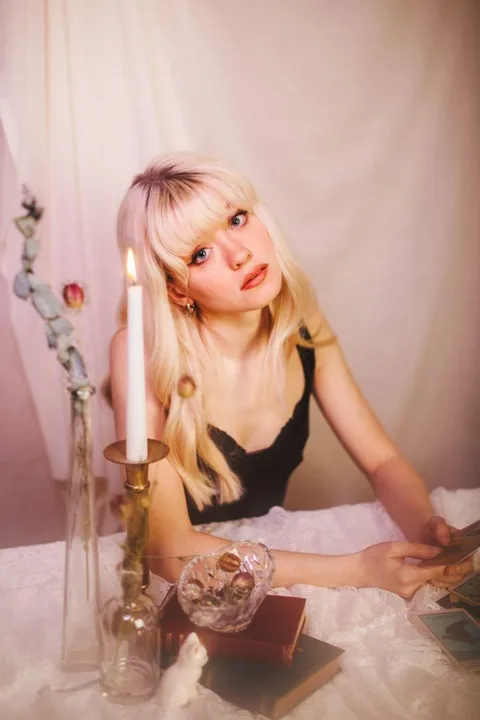
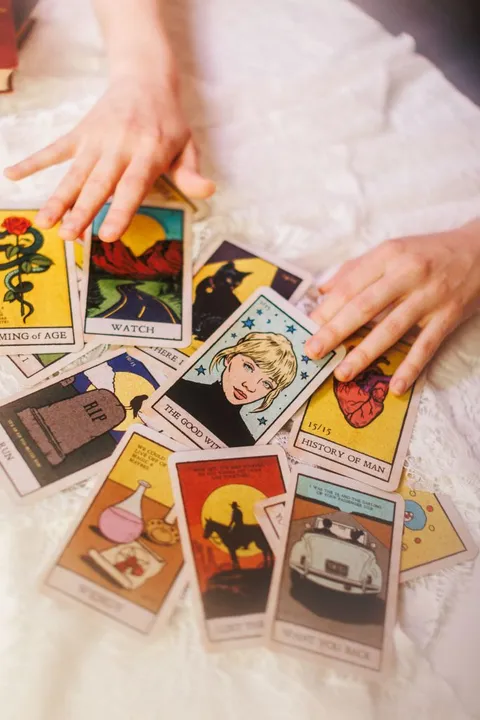
''Wendy' and 'History of Man' both do look at gender and the never-ending work of being a woman. It wasn't intentional, and I say woman, but I mean anyone that identifies that, and the same with the femininity of the album. It's my version of that, which is a more nuanced version than just the divine feminine energy, whatever that is. It's however you choose to channel it. A lot of the songs have that running through. I did a tarot card reading when I was in New York, and the woman did say I was stepping into my masculine energy, though, which is good to know. Maybe I'm doing both."
"It's easy to feel sad and wronged. It's easy to write that music and know how you feel. You know what to do with it"
— Maisie Peters
There's a kind of guidance found in those mentions of figures in 'Wendy' and 'History of Man' – the stories of women throughout history who have suffered heartbreak and pain and come out on the other side. 'History of Man' recounts familiar tales – of the poets, of Helen of Troy, of Samson and Delilah. It brings them into startling life amidst Maisie's own story, the founding members of this coven.
"I've always read a lot," acknowledges Maisie. "I've always been into books and poetry and fiction and mythology – Greek mythology, Roman mythology. I think it naturally bled into what I was doing. With 'History of Man', it naturally became what it was. It was a very easily written song. It was written super quickly. I was writing it with Joe Rubel, and we were playing around with the guitar. I had this text from my friend, Gretta Ray, who's an Australian singer-songwriter. We text all the time. We were talking about somebody, and she replied: 'Wow, he must be the most clueless person in the history of man'. I thought that was a good phrase, and it must have been rattling around in my mind because we ended up writing that song."
Those women in her life, like Gretta, continue this sisterhood for Maisie. There's an army of talented women rallying around her to unpack and revel in this magical year, too. "Cate and Tommy [Lefroy] are some of my closest friends. Laufey, also, she's just announced she's doing a 'Bewitched' tour. We're really good friends. There's a whole group of us. Ines Dunn, a songwriter I work with, Elvira and Tove in Stockholm. I love working with them and being around them. I feel very inspired by them."
Of course, she pays homage to the loved ones in her life, too. A particularly special moment on the album is 'The Band and I', written across continents and tours in a bid to convey the love she has for those in her life. It's a sweet recollection of moments, softly building to absolute anthemic release.
"It's so weird and cool how that song is going to exist forever. I'll always listen to it and know exactly where I was. It was this long, epic saga of writing in different countries. That was such a huge part of my last year, it's a huge part of who I am, and the band, the tours, the shows, and the fans are a huge part of my life and what I want to talk about and what I care about.
From writing fake Lady Gaga songs in the studio to embracing “Scandinavian Strut”, 'Dancefloor Erotica' finds Dagny pushing herself in every direction.