


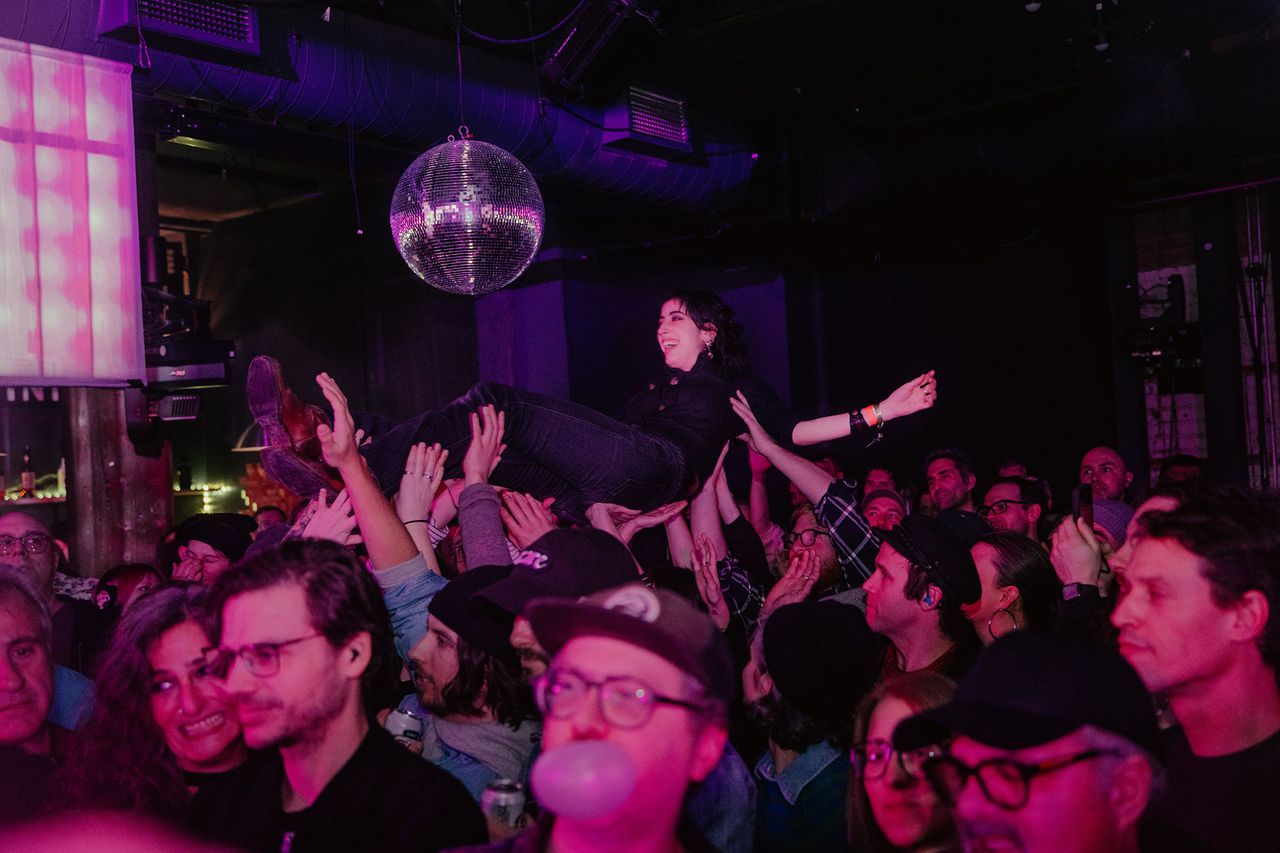
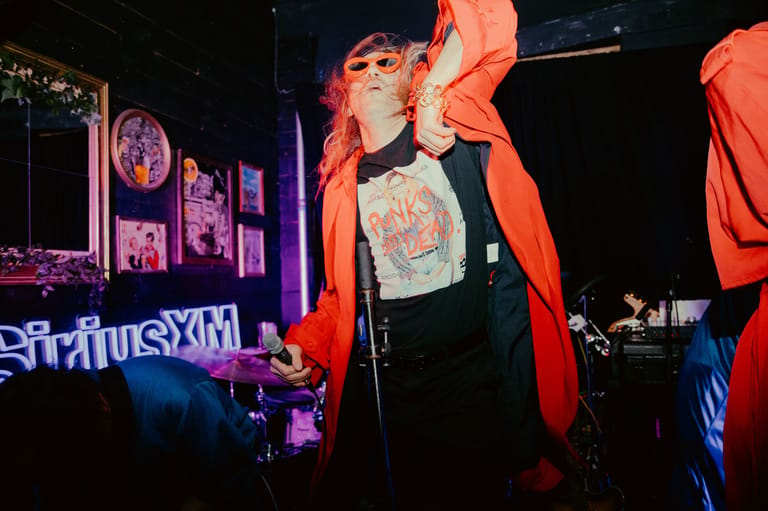
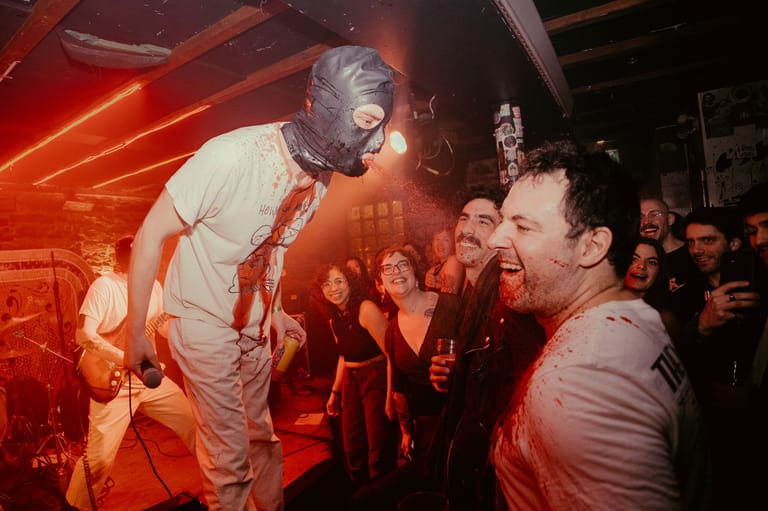
For the past decade, Montréal’s Taverne Tour has been dragging people out into the snow and funnelling them into packed bars, tiny clubs and makeshift venues for a weekend of left-field music, sweaty basements and glorious musical whiplash. What started in 2016 as a two-day crawl along Avenue du Mont-Royal has grown into one of Canada’s great underground festivals, bringing together post-punk, hardcore, experimental electronics, folk, rap, industrial noise and whatever else the organisers reckon “vibes with us artistically”.
This year’s tenth edition features everyone from Protomartyr and Christopher Owens to Kap Bambino, Julie Doiron, Lydia Lunch and Marc Hurtado and Choses Sauvages, spread across the Plateau’s beloved venues like a trail of amplifiers and pizza boxes.
Ahead of the festival, Dork caught up with the team behind Taverne Tour - Marilyne Lacombe, Philippe Larocque, Jean-Philippe Bourgeois and Maxime Hébert - to talk winter hibernation, weird trailblazers, spelling disasters and the dream of watching Lightning Bolt melt a tiny room in February.
“It’s been a beautifully hectic start to 2026,” they say, “but we wouldn’t want it any other way!”
"We don’t really care about trends"
The hecticness mostly comes from the sheer amount of music they consume while putting the festival together. “Prior to the festival, we listen to a lot of new music, trying to curate bills that feature as many up-and-comers as possible,” they explain. “Our main mission is to program left-field artists, who don’t typically get slots on more mainstream festivals. We’re always on the lookout for weird trailblazers. We don’t really care about trends; more so about what vibes with us artistically.”
And it’s not just about booking bands. “On top of programming, there is a lot to do in terms of coordinating the different teams and reaching out to like-minded journalists and industry folks,” they continue. “We aim to celebrate music, but also to elevate the alternative music community, all while retaining our DIY ethos.”
The community aspect extends beyond the stage as well, with the organisers working closely with “local cultural workers, with whom we collaborate every year”. Once the festival actually begins, any sense of calm goes out the window. “During the festival,” they say, “we’re literally running all over the place…”
It's a feeling that has been baked into Taverne Tour since day one. “The festival started in 2016 as a two-day musical circuit on Avenue du Mont-Royal,” they explain. “This Montréal neighbourhood is flush with artistic communities, a celebrated destination for anyone looking to catch an underground concert on any given night.”
The idea came from spotting a gap in the city’s calendar during the colder months. “Canadian Winters come with a bit of a lull in terms of live music,” they say. “Having noticed this apparent void early in the calendar year, we got a small festival going, hoping to get folks out of hibernation, if you will.”
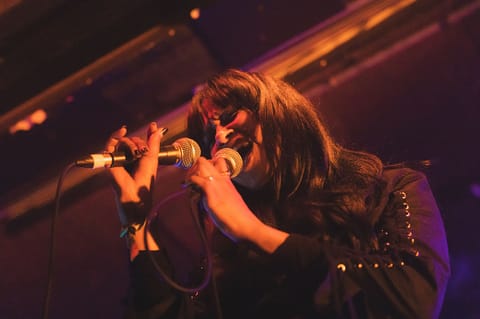
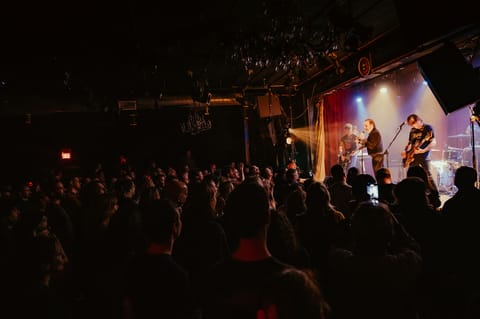
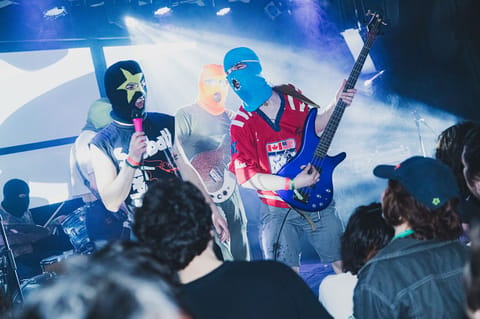
"We aim to represent as many left-field music communities as possible"
Ten years later, that “small festival” now sprawls across the Plateau and beyond, though the team insist it happened naturally. “For the first edition, we were throwing stuff at the wall to see what sticks,” they admit. “The event was well received, so we ended up doing a second, a third, a fourth edition, and so forth.”
Growth came steadily, helped by audiences cramming themselves into venues “to the brink”. “We slowly added venues, spreading to Rue Saint-Denis and Boulevard Saint-Laurent,” they say, alongside bigger satellite spaces like Théâtre Fairmount and Théâtre Latulipe.
Even with the festival’s expanding reputation, the organisers still see it less as a giant institution and more as “an ever-growing underground gathering”.
“With each passing edition, the festival saw more and more folks show up, looking to catch new and intriguing musical acts,” they explain. “In turn, it made it possible for us to program a handful more concerts with each new edition, until we reached the festival’s current status.”
Still, they insist it remains “somewhat of an intimate musical circuit, trying to make the best out of an incredible music scene.” Most importantly, “most venues are quite small, so there is a proximity between the artists and the public.”
There are also drawbacks to running a bilingual festival. Namely, nobody can spell it. “One thing we wish we’d known?” they laugh. “That people would have trouble spelling the bilingual name of the event… Taverne (French) and Tour (English).”
Montréal itself remains at the centre of the whole operation. “Montréal, being a bilingual city with diverse communities and somewhat of a European feel, makes it an ideal hub for artists,” they say. “There is an effervescent musical - and all-around artistic - scene and plenty of amazing venues to discover up-and-coming artists.”
It's a spirit that feeds directly into how they build the line-up each year. “Our main objective is to program a majority of new artists at every edition,” they explain. “Musically, we aim to represent as many left-field music communities as possible, striving to build our art direction around said artists, and not the other way around.”
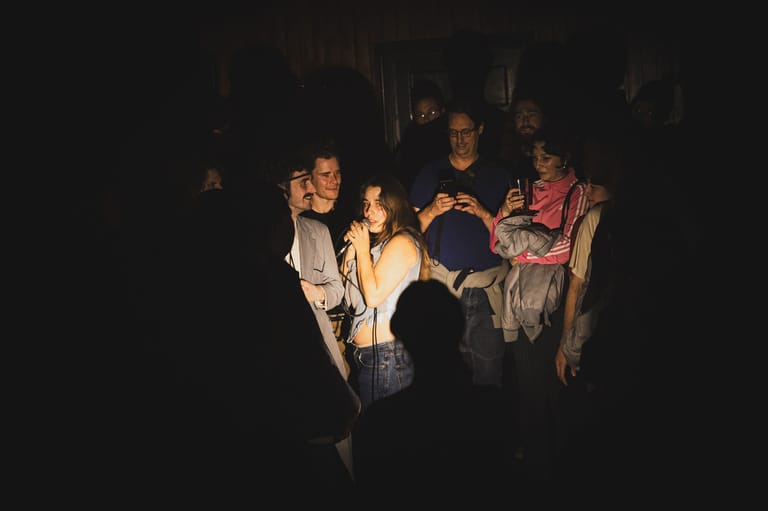
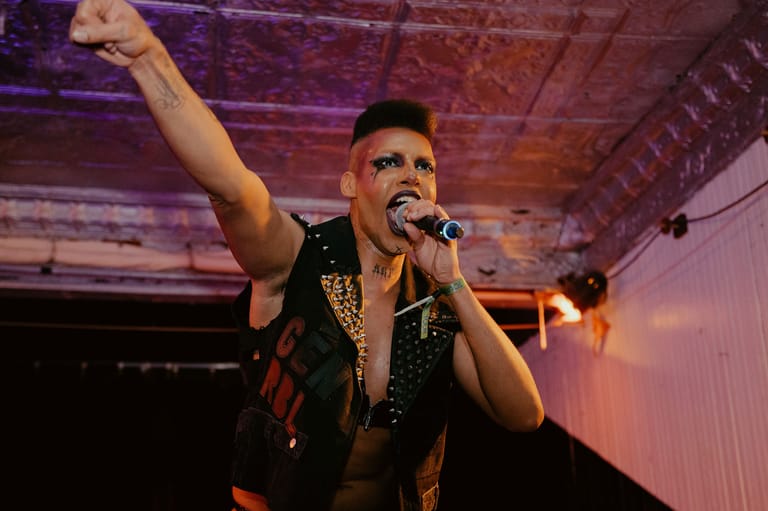
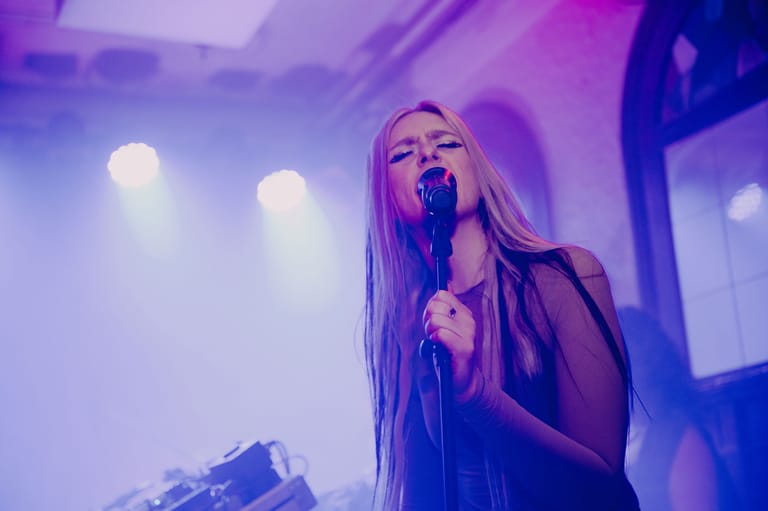
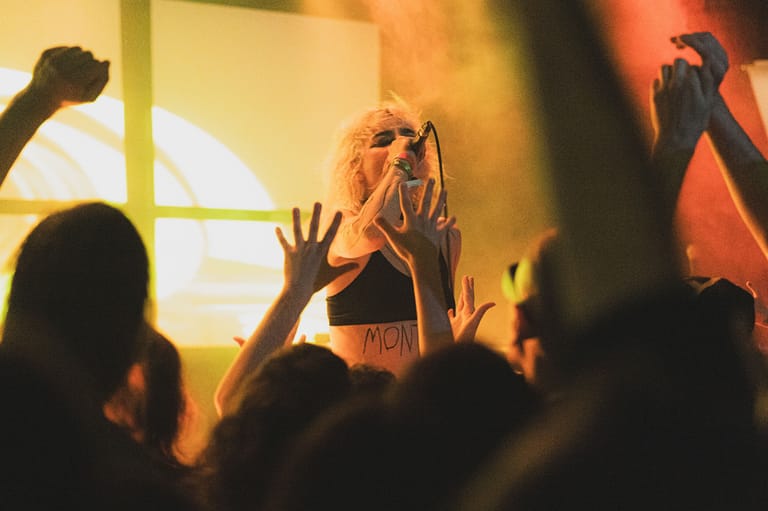
With a bill that ricochets from hardcore to avant-pop to industrial electronics in the space of a few blocks, even the organisers admit the process can get messy. “There is so much happening musically that it ends up being a bit of a beautifully chaotic experiment with every new edition.”
As for personal highlights across the festival’s history, the answers are pleasingly all over the map: Marilyne picks Metz in 2019, Philippe chooses Adam Green in 2023, Jean-Philippe goes for Chandra in 2025, and Maxime selects The Drin’s 2025 appearance.
There are still dream bookings hovering in the distance, too. “We’d love to have Lightning Bolt blast their noise rock anthems in a small venue in the thick of Winter,” they say. “Other team pipe dreams include: Pachyman, Mudhoney, Death Grips, Guided by Voices, etcetera.”
And if you’re wondering why people keep trekking back through the Montréal snow every February, the organisers reckon the answer is fairly simple.
“The vibes are a big part of it, for sure,” they say. “There’s quite a magical feeling about hopping from venue to venue in the middle of a snowy winter, catching new exciting acts at every corner, and also discovering the occasional local establishment that is turned into a makeshift venue.”
They also offer perhaps the greatest description of Taverne Tour imaginable: “The contrast between the cold Montréal streets and the sweaty venues makes for somewhat of a punk version of a Scandinavian spa retreat.”
“But all jokes aside,” they add, “the amazing artists are the sole reason why people keep coming back.”
As for 2027? “Yes,” they reply when asked about surprises. “More Labatt 50!”
And for anybody dreaming of launching their own underground festival one day, they’ve got one final piece of advice: “Don’t try to please everyone.”
For more information on Taverne Tour festival in Montreal, visit tavernetour.ca.