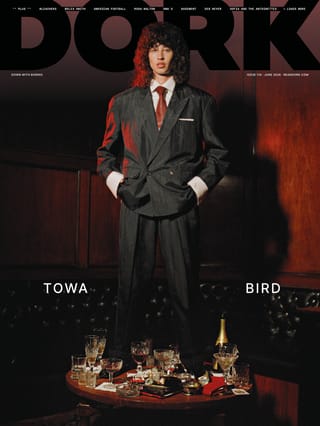
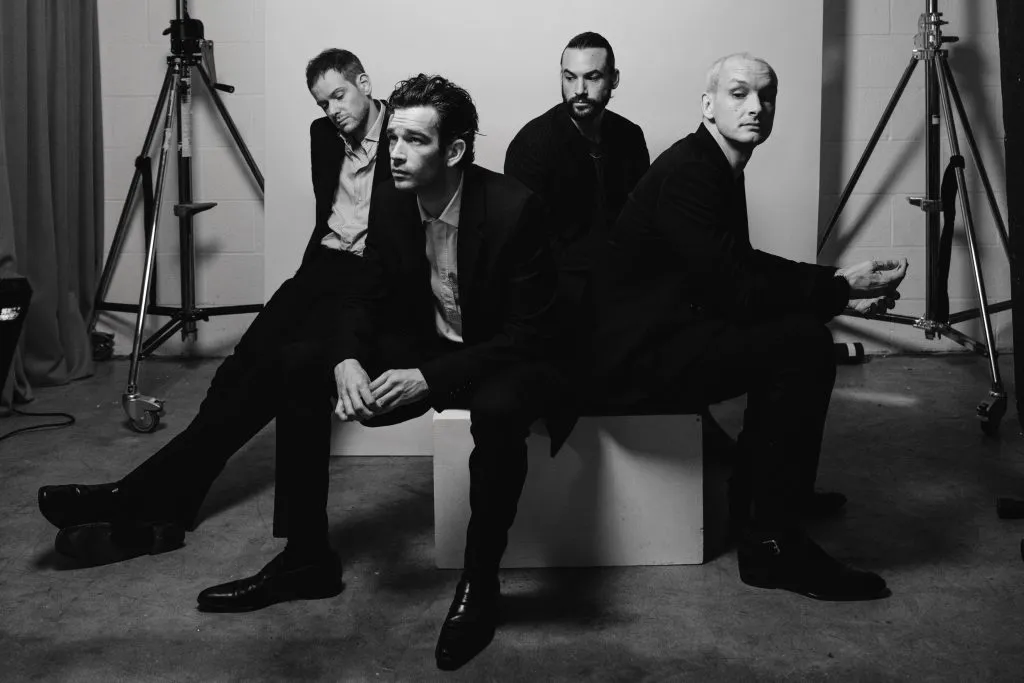
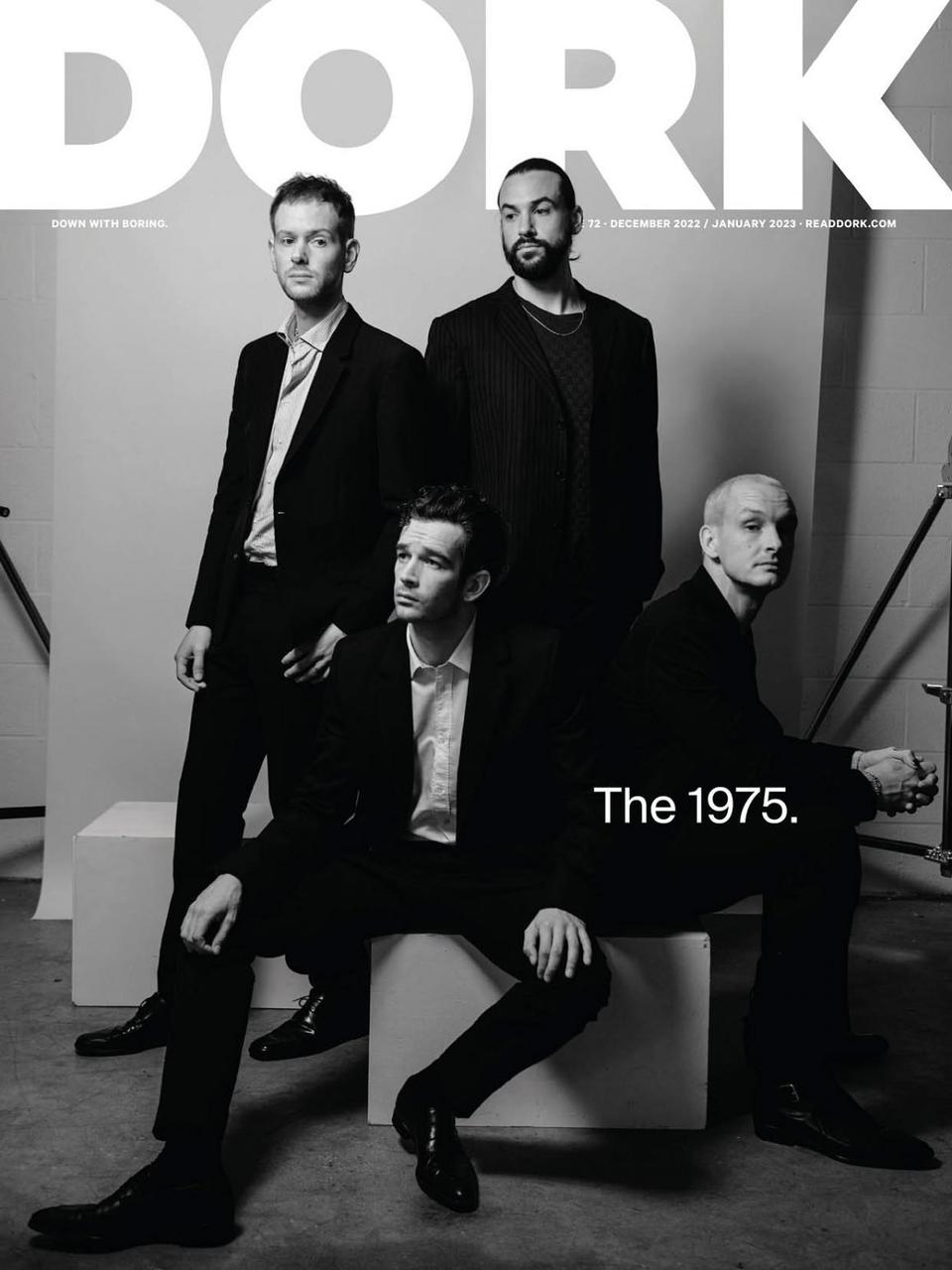
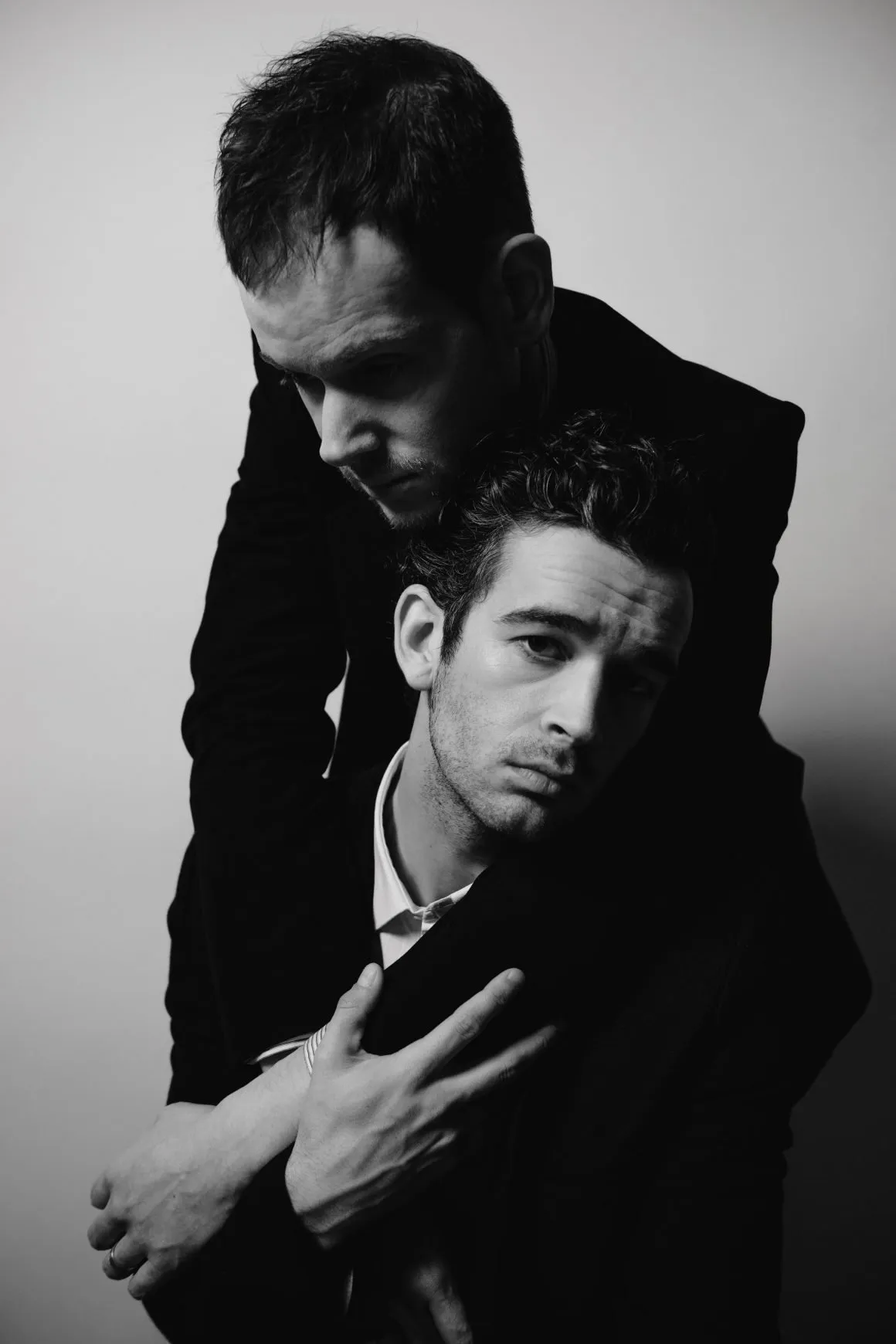
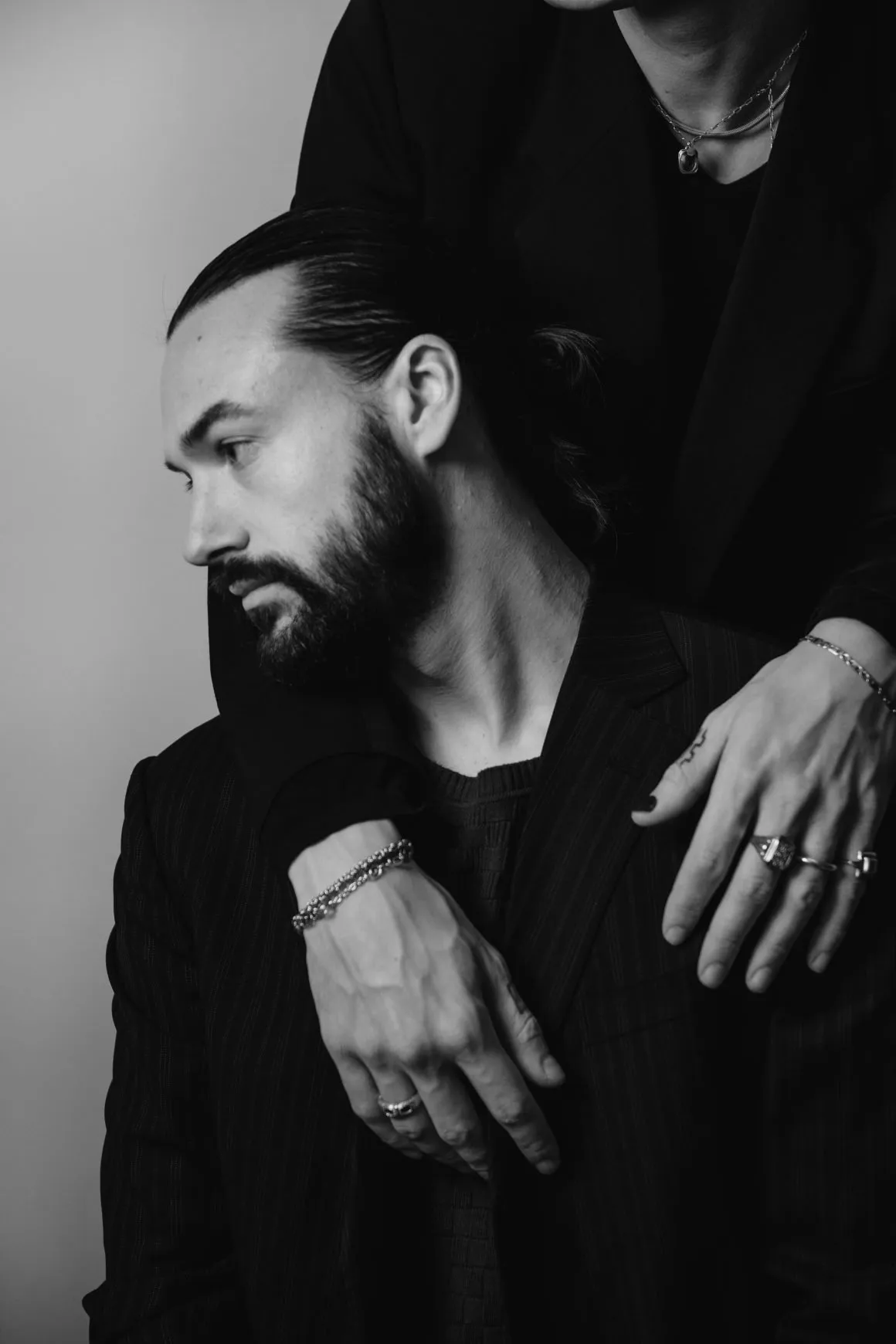
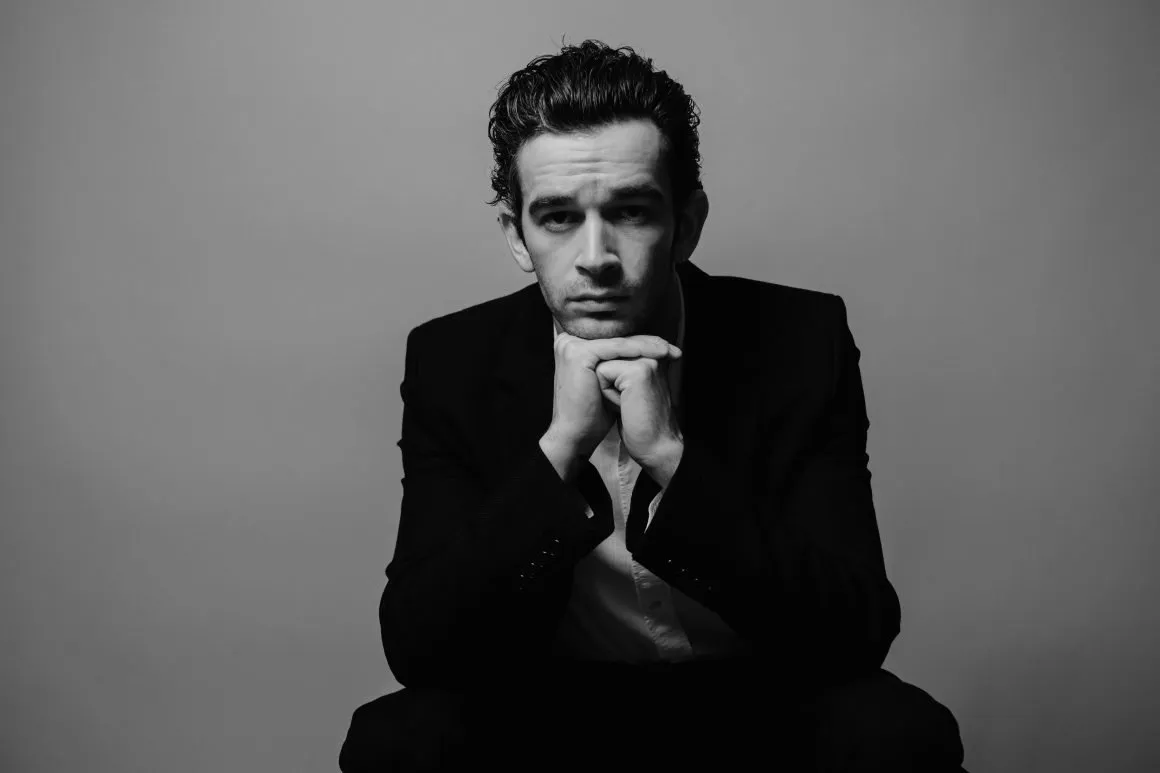
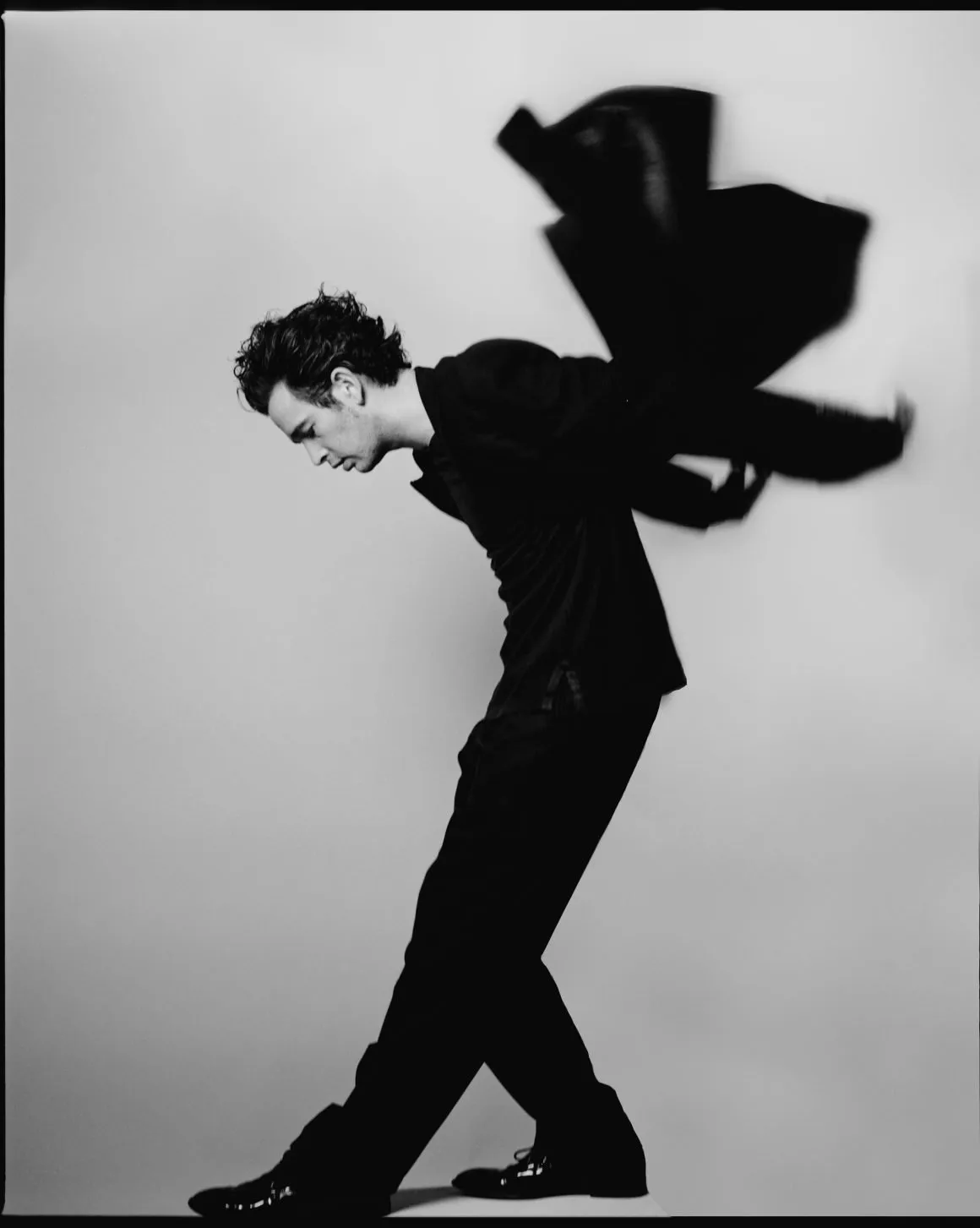
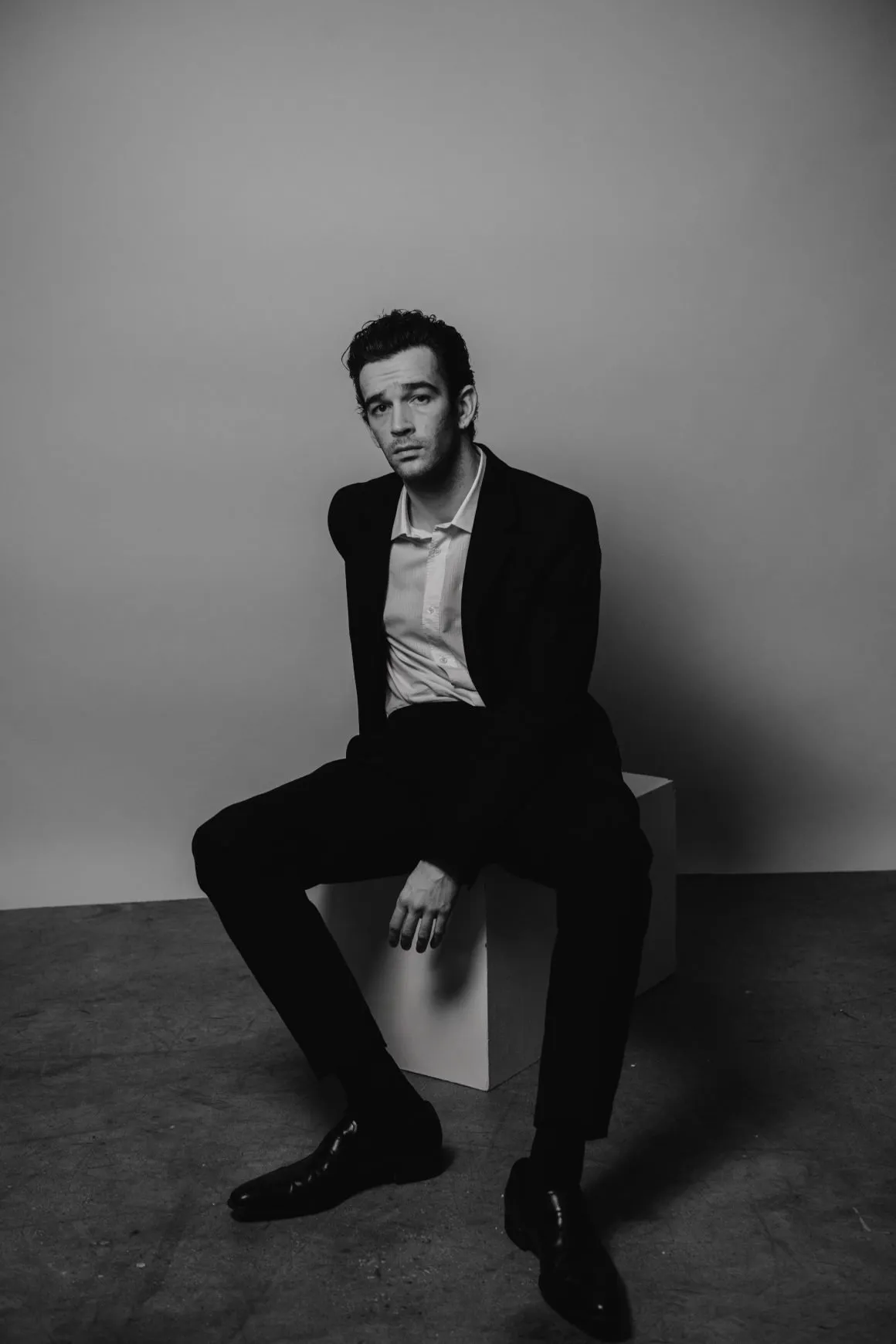
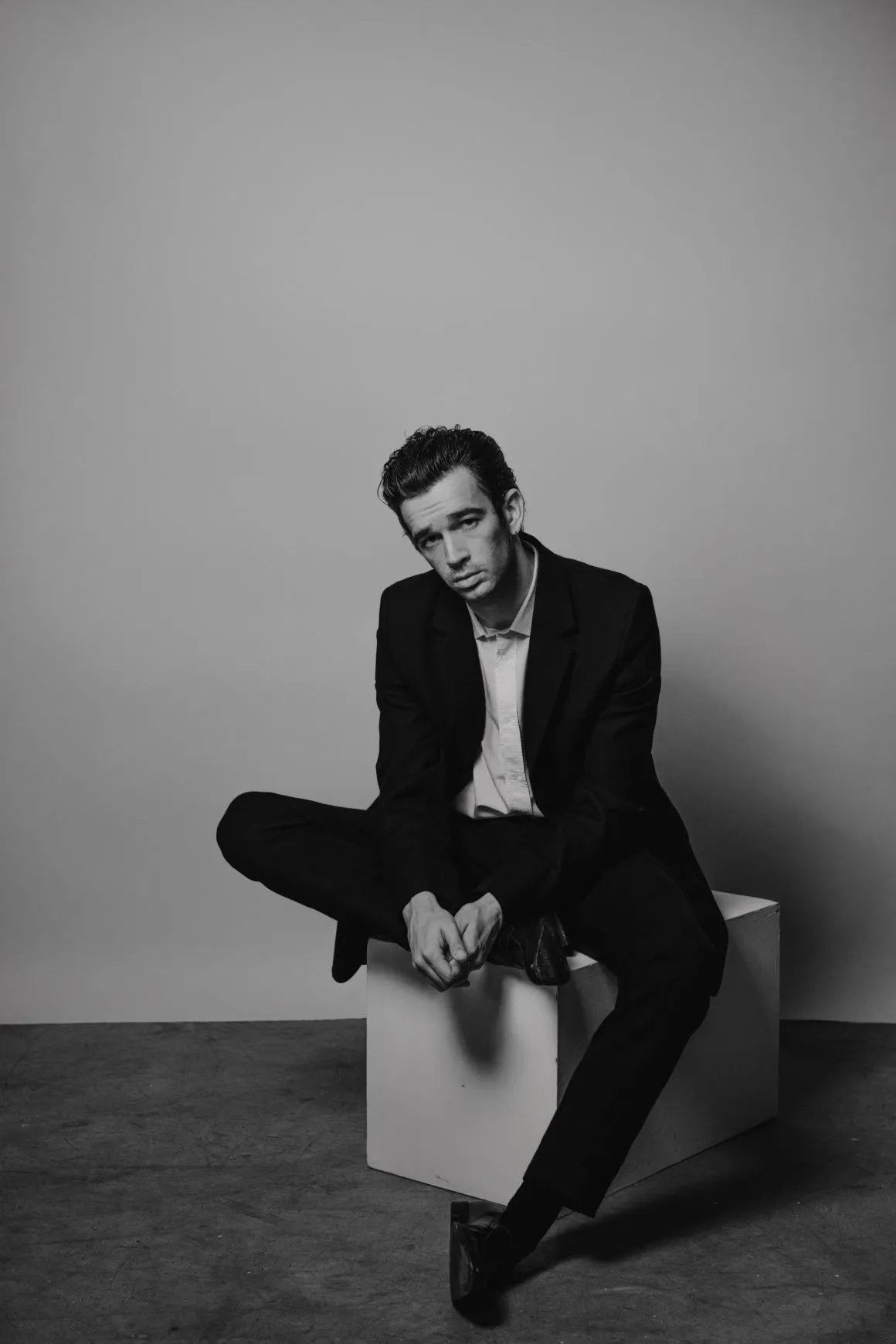
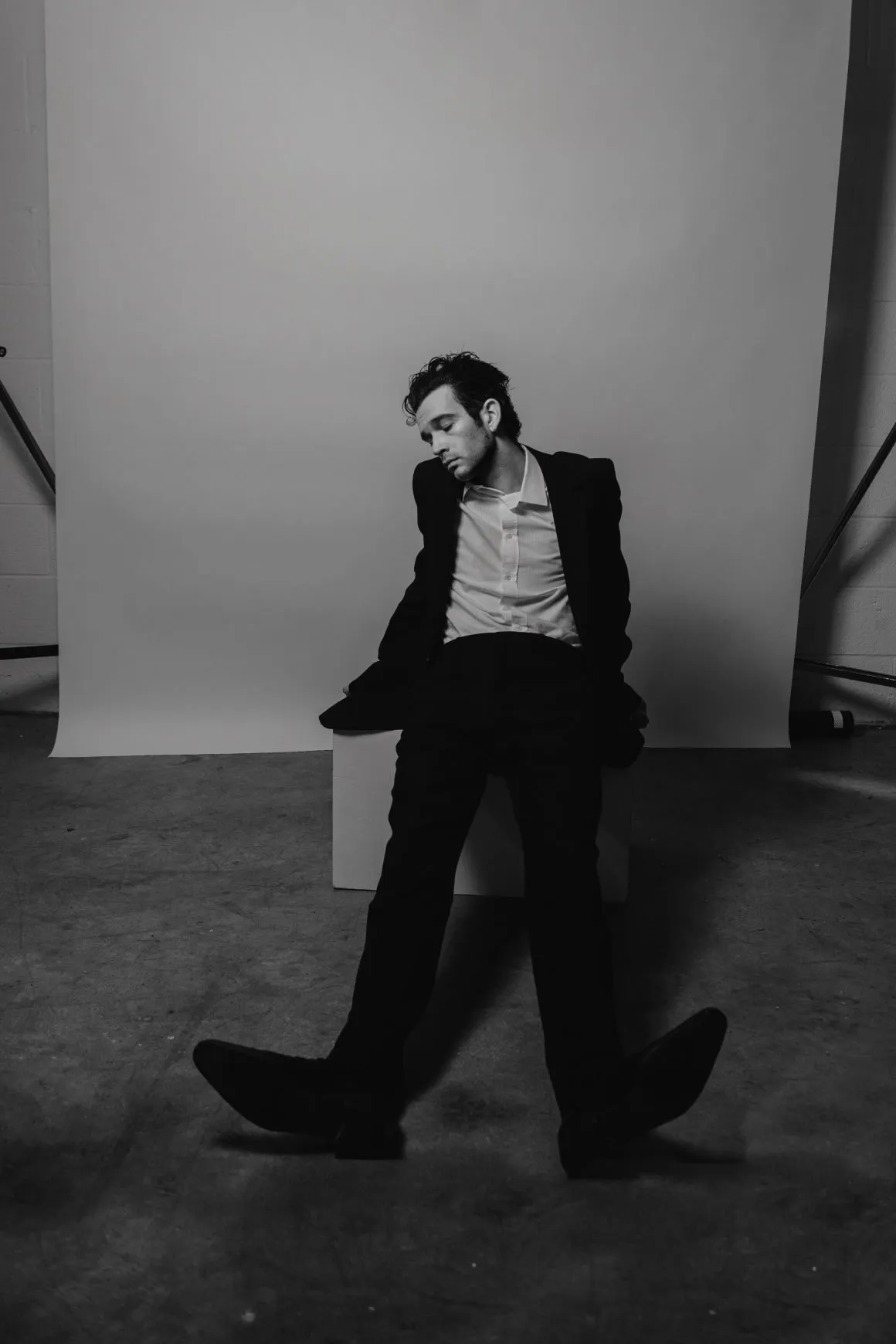
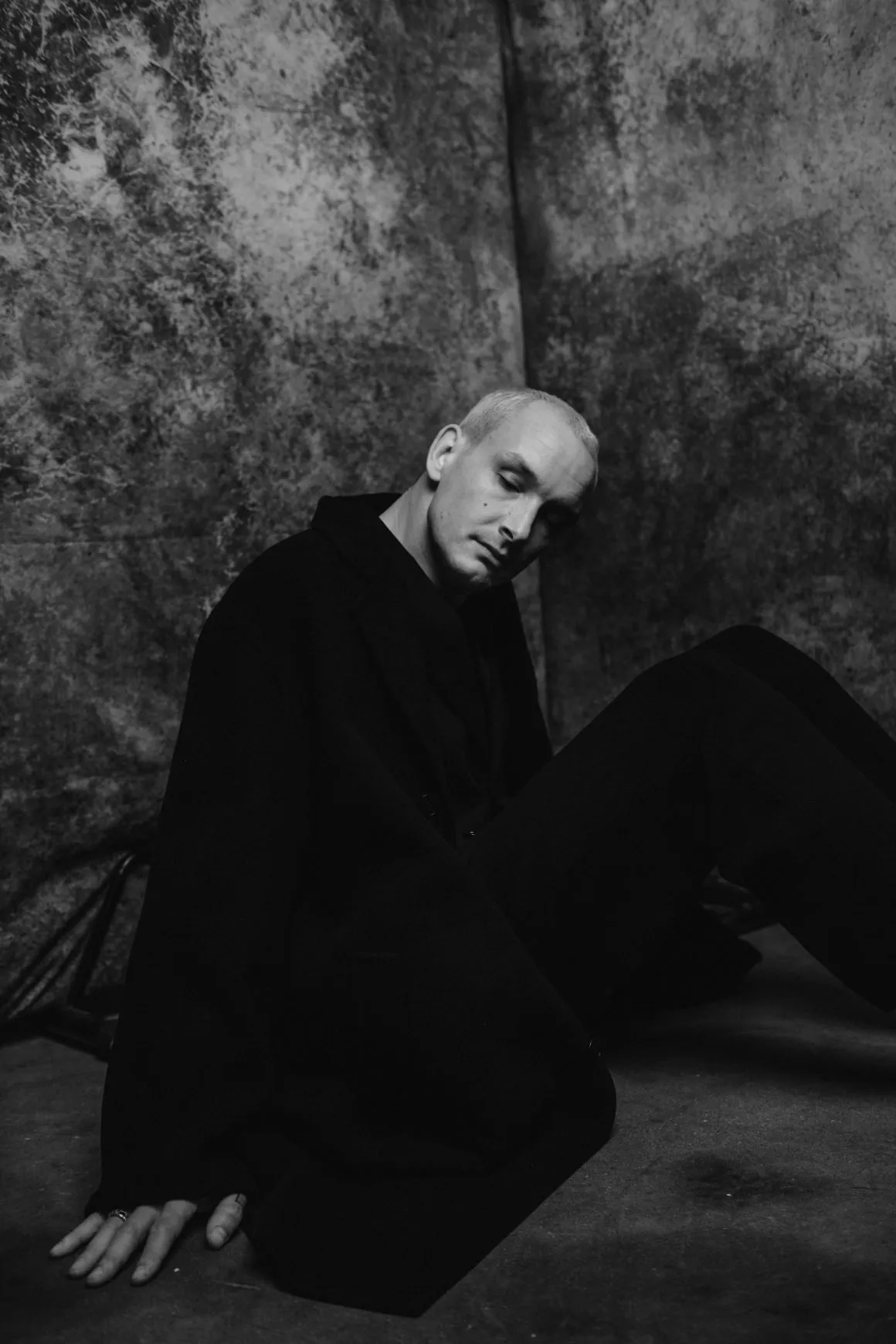
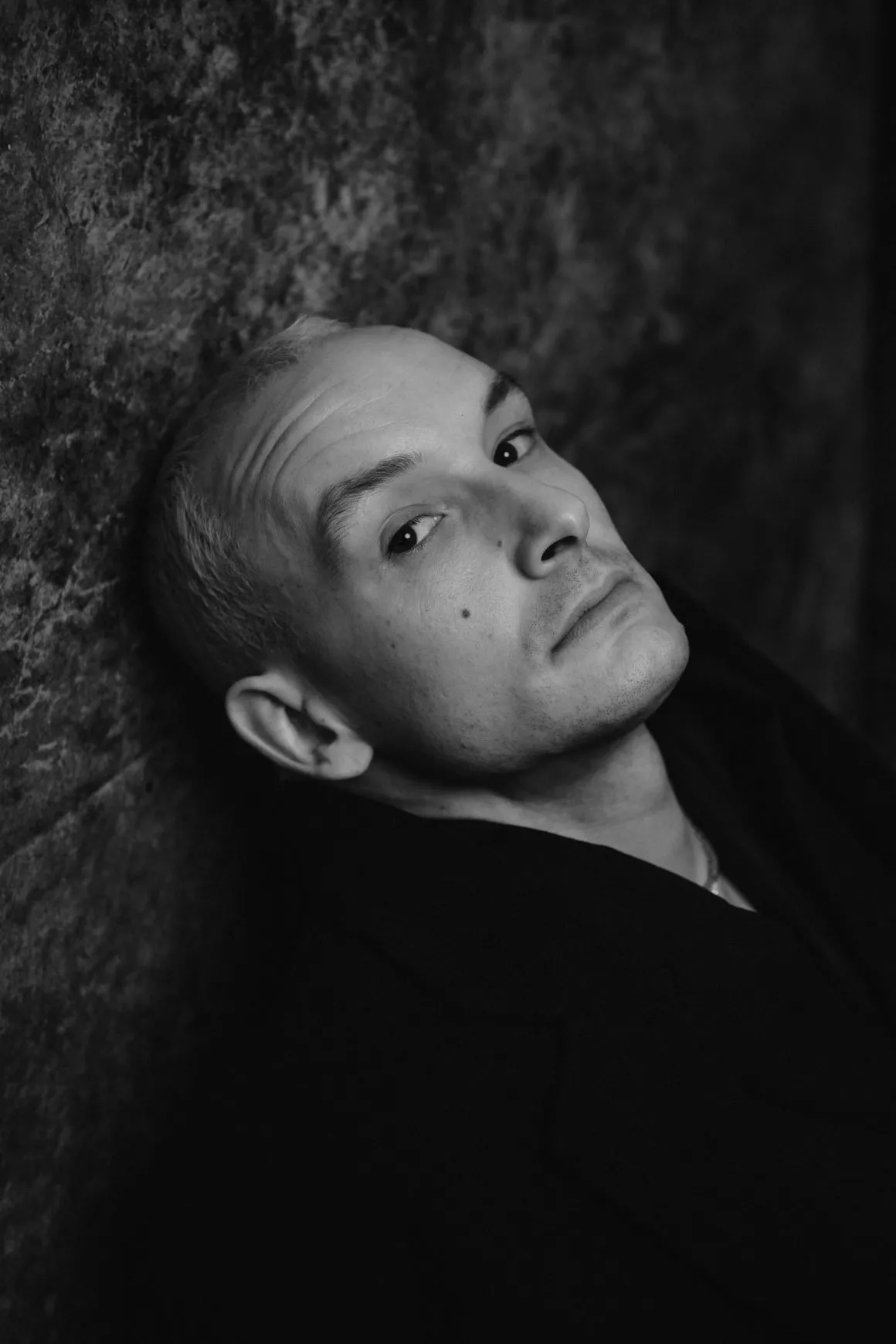
With their fifth album, ‘Being Funny In A Foreign Language’,The 1975 turned inwards to push out. A record that focuses on what makes them so special, playing to strengths to produce quite possibly their best work to date, we gathered all four members for a rare full-band sit down that proves the magic is in those real-life relationships built along the way.
Words: Jamie Muir.
Photos: Jennifer McCord.
Around a table in East London, four mates while away the day. They’re chatting about anything and everything, cracking jokes, eating a takeaway. Laughing at memes on the day the short-lived prime ministerial reign of Liz Truss comes to a spectacular end - a particular favourite being the fact that ‘Believe’ by Cher was Number 1 for longer than her entire time in office. Recommending the films and TV shows that have caught their eye since they’ve last seen each other, which isn’t very long at all. Catching up on the weekend’s football - one jokingly considering supporting Tottenham Hotspur “for the lols”. It sounds like the kind of everyday scene you’ll find in any home, coffee shop, bar or pub. Then again, most mates aren’t at the centre of a storm that has shaped modern alternative culture for the past decade. Most aren’t Matty Healy, George Daniel, Adam Hann and Ross MacDonald. And most aren’t entering a bold new chapter, At Their Very Best.
As a wet and windy mid-October afternoon falls outside, The 1975 watch as the world digests ‘Being Funny In A Foreign Language’. It’s a matter of days since its release, and the ripples of its impact are already plain to see. In just 24 hours, they’ll have their fifth UK Number 1 album, joining an elite club of artists to have every studio album hit the top spot. And 24 hours after that, they’re heading to America ahead of the start of their most ambitious and bold headline tour to date. Yet again, everyone is focused on four childhood friends from Wilmslow, but you wouldn’t know it today. While reinvention and revolution have come with each chapter of their story, consistency is found in their bond. The same dynamic. The same jokes. “Well…” cracks George as they all laugh at the suggestion. “The jokes have got worse.”
It’s rare for all of them to sit down together for something like this. “We haven’t done a chat like this for a while,” notes Ross. They agree that everything would take four times as long. “I think we stopped doing it because we kept laughing at each other, and it descended into nothing. In-jokes and nonsense.”
“WOAH,” George cracks. “THAT IS NOT TRUE!!” The collective laughter that follows from the band again probably indicates it is.
For all the in-jokes and nonsense, The 1975 take their position seriously. A band of self-confessed outsiders, they spent years knocking at the music industry’s door before deciding to build and burst through their own entrance. That mentality has remained ever since. ‘Being Funny In A Foreign Language’ is just where everything clicks even more into place. It’s an album that follows the panoramic expansiveness of ‘Notes On A Conditional Form’ by turning an eye inwards. What makes The 1975, The 1975? The result is a record Matty sees as “kind of a bigger risk, even though I know that it feels like it’s in service of the fans a bit. It’s braver than another record like ‘Notes…’. It was scarier because we could have been cleverer with it. We could have been fucking mental and obtuse to the point that it can’t be criticised. We had that opportunity, but you need to be a bit fucking nervous about it. It’s like what [David] Bowie said: you need to be a little bit out of your depth. What scared us, and what does scare us, is repeating ourselves.”
Nobody could accuse them of that. With every era of The 1975, a line has been drawn in the sand from what came before it. It began with the 80s teen movie black-and-white of their self-titled debut and earlier EPs, transitioning to the neon-drenched wonderland of ‘I like it when you sleep…’. Then we had the defining digital takedown of ‘A Brief Inquiry Into Online Relationships’ moving on to the maximalist, free-flowing, genre-hopping punch of ‘Notes On A Conditional Form’ (which Matty confirms is his favourite ‘75 album “at this moment”). They have always been set on looking forward. They are a band whose legacy and importance can be seen in the countless fans whose lives have been soundtracked by each step. Yet looking back they find challenging.
The records, the shows, those life milestones - they all intersect with why The 1975 have become synonymous with a generation growing up in the modern world. It’s ‘the box’. June 1st - The 1975. ‘She said’. ‘What a shame’. ‘It’s about time’. It means everything to a community that traverses nationality, age, culture and race. For the band themselves, it’s their personal journey too. “The 1975 has been our entire life,” states Matty. “You can get it, right? People have documented that feeling really well. James Murphy [of LCD Soundsystem] in their documentary [‘Shut Up And Play The Hits’] - when he walks back into the rehearsal room, and it’s the band’s gear, then a photo of a memory. Then the gear and then a photo… I can’t say gear then a photo of a memory more than a couple of times, because I’ll start crying. I think that’s why we’re always moving forward. Do you know what I mean? To look back, I’d have to let myself get nostalgic, and I think the main driving force and why our albums sound so different from each other is continuing to move forward.
"Other bands don’t really like us, and we don’t really like them. We don’t really get each other"
— Matty Healy
“If it was answering the question of, ‘How did it feel when you played Shepherd’s Bush Empire at this moment and what was it relative to?’ Well, I can show you,” notes Matty. “We’ve filmed everything, and every time I look at that footage, regardless of how we got it and stuff like that, I don’t like it.” There’s a pause as each member takes a moment to process the emotions of that journey. The one that began with rejection, then acclaim and that is now wrapped into the fabric of their lives. Matty looks up again. “It’s too nostalgic for me to reflect on.”
“There’s a certain amount of blind faith that you have as a 16-20-year-old that just wants to play the music that I definitely wouldn’t have now,” explains George, thinking of those early days of what would later become The 1975. A journey through Me And You Versus Them, Forever Drawing Six, Bigsleep and Drive Like I Do, amongst other forms. From age 13, they put on shows to rooms full of mates and family members, playing with their sound and growing from teenagers into young men. Matty recalls that it wasn’t until SXSW 2013 and the band’s first trip to America that he noted that “people stopped us on the street, and it was not our fucking mates from back home.” That’s where they acknowledged things were changing. Before that, “we couldn’t get a record deal,” continues George. “We did a lot of showcases for major record labels, and it just didn’t happen because, retrospectively, we weren’t ready. We didn’t know what kind of band we were, but we did have some good songs. They didn’t want to take a risk.”
The years of different iterations of bands has helped shape the unmistakable formula that is The 1975 to this day. “I always knew I was the frontman, but I didn’t know I was the frontman until it happened. Like, take for examp-”
“WAIT,” jumps in Adam. Matty, George and Ross stop in their tracks, turning to him as he leans forward with a curious look. “… I was the frontman,” he cracks with a wry smile. They burst into laughter before jumping back and forth.
What stood firm was their steadfast determination to make it. If labels and the music industry weren’t going to open the door to them, then The 1975 would kick it down. “It does sound quite romantic and lofty to say that we never doubted ourselves,” explains Matty, “but there was an element there that we were always going to be a band, and you’ve got to remember what our ambition was. If you played the Academy in Manchester, in our heads, you were a big band. The Apollo was really big, like massive bands would play the Apollo. The MEN [Manchester Evening News Arena] is like a football game. It’s like Green Day. That’s not something that you’re thinking about. We were happy touring below the Academy 3 level getting 50 quid a gig.”
“There was no wave of success until we were 24,” continues Ross. “That 6-8 years when you’re supposed to be figuring out your career or whatever, we were committed to this happening.”
“I remember being like - wait, we’ve sold 300 tickets to a show?!” recalls George.
“Yeah, that was at Sound Control,” chips in Matty, recalling the now-defunct Manchester venue.
“That’s it,” George says in agreement, “but even in America, it was like, wow - we’ve sold out our first show in Chicago to 400 people?! It was like, wow, this is actually it!”
"We’re always interested in what’s on the precipice of culture"
— George Daniel
Matty puts that down to the continued surge of interest and availability that the growth of online culture provided. “We’d grown up on the internet. We got what the internet was, but it hadn’t taken the linear music industry form, and then it did. If you were in fucking Chicago, it was just as easy to listen to our music because of YouTube. It had this thing that had a life of its own.”
Before long, The 1975 had become more than just ‘a band’. They had devoted fans scribbling lyrics onto tattoos and notebooks alike. Their live shows had an explosive and almost spiritual quality, with the crowd reaching out for them. They had their finger firmly on the pulse of modern millennial culture and its trials and tribulations for those living through it - the world soon became The 1975’s playground. “It happened so quickly,” says Ross. “There wasn’t time to get accustomed to being on a certain level - what we’re achieving or what gigs we were now doing - because the next one was already booked, and it was bigger. We were just doing laps of the world, and it’s growing and growing.”
As Matty makes clear, there’s never been a focus on how big a band The 1975 were becoming or are today. It’s something he sees as a conversation that could quickly get in the way of the creativity and drive that has brought them to where they are now. “We’d never have made an album like ‘Notes’ if we focused on that.”
“Just wait until we get smaller,” cracks George. “I reckon we’ll have that conversation,” he laughs.
“See, I don’t think we will,” Matty answers. “I think everything makes sense. If we started to play theatres now, we wouldn’t be like, ‘oh, where is everyone?’ Then again, like I said, and I’ve been saying before, The 1975 doesn’t really sit next to many ‘bands’, y’know? We came at a time defined by, well, not bands. Basically, everything else. Male solo artists, female solo artists, rappers and stuff like that. The band was a very tried and tested idea. Still is, but there’s a ceiling to how big bands can get because it’s almost like it has to become an imitation of something that has gone before.”
Inspired by consumer culture and dystopian fiction, Chloe Slater is entering a bold new chapter.