

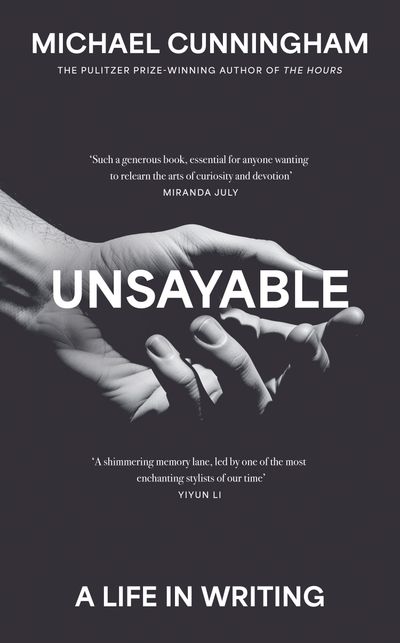
Michael Cunningham - Unsayable
The novelist's recollections of queer self-invention are funny and generous. His reflections on the mystery of writing have less to give away.
Michael Cunningham remembers announcing to a new friend that he worked as a rent boy at weekends during his final year at Stanford. The disclosure belongs with carefully chosen jeans, a tight T-shirt and a particular pavement in a version of himself he is attempting to make convincing. Confession is another part of the performance. Marta's newness helps: she has fewer memories of the earlier Cunningham against which to test it. He is funny about wanting recognition and an impressive entrance at once, without allowing the older writer to dismiss the younger man's need as merely ridiculous.
Cunningham has put together a book of short recollections, moving through childhood, sex and friendship, with thoughts about writing along the way. The pieces don't add up to a conventional autobiography. He is more interested in returning to something he remembers and asking what might have escaped him the first time. A young gay man offered few welcoming identities by his surroundings might have serious reasons to invent another, however theatrical it looks in retrospect. Cunningham recognises the embarrassment without treating it as the end of the memory. His generosity allows the pose to remain a plausible attempt at living rather than an anecdote about youthful foolishness.
The memoir is also careful with people who might not want to appear in it. Cunningham has withheld stories involving living subjects. That is a reasonable limit for a writer whose memories include other people's lives. They haven't all agreed to become evidence in the account of how he became a novelist. The restraint gives his warmth something practical behind it, beyond simply being kind about the people he chooses to describe. Some published pieces nevertheless feel slight. 'Unsayable' is a fine title that can make holding something back sound more intriguing than the result deserves.
The craft passages are uneven, too. Cunningham doesn't promise a manual, but his reflections on beginning to write and turning memory into fiction offer little practical detail. The recollections show him revising an impression or reconsidering what he wanted from somebody. Those examples are more useful than his general account of how difficult writing can be.
The short sections help him avoid turning the whole life into a procession towards literary success. There is room to return to an experience and consider what he wanted from it at the time. The famous novelist doesn't have to arrive with the correct explanation. Cunningham is often better when he leaves the younger man with desires the older one can understand without fully resolving. The warmth and humour towards that vain, hopeful younger self make the memoir worth its evasions. Cunningham has better material in the effort to be recognised than in reverent accounts of writing's mystery.
Get more Dork

Sessions · Playlists · Behind the scenes