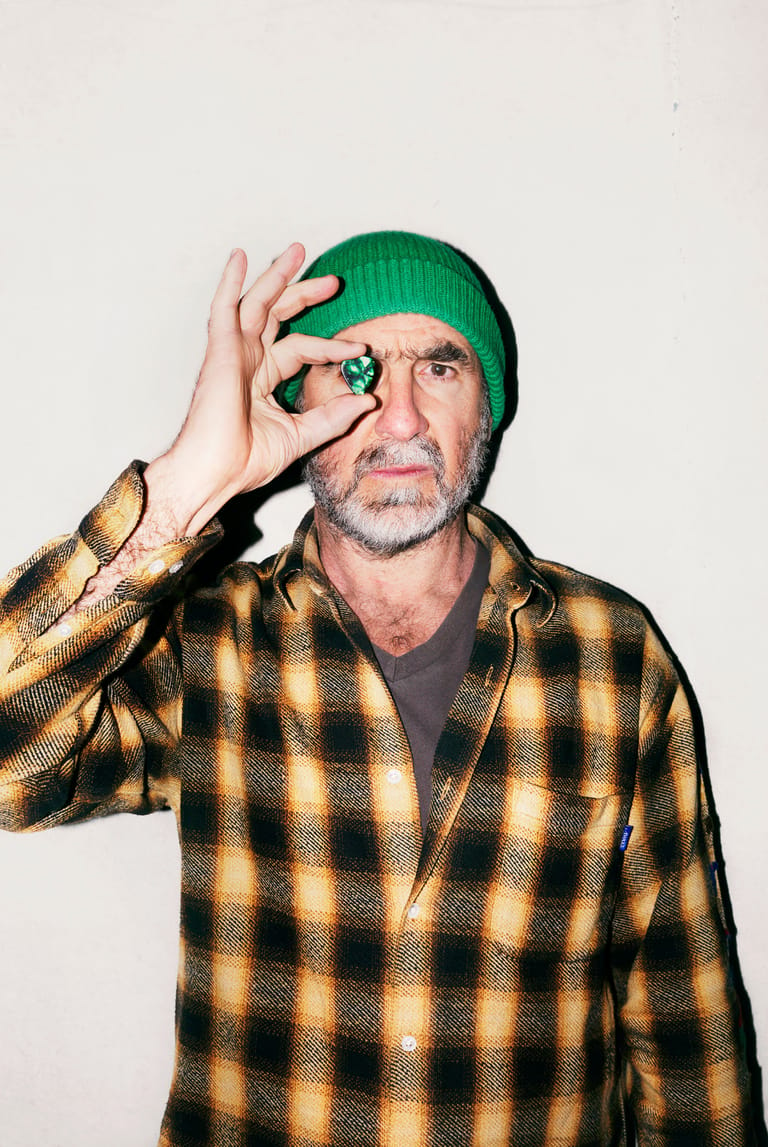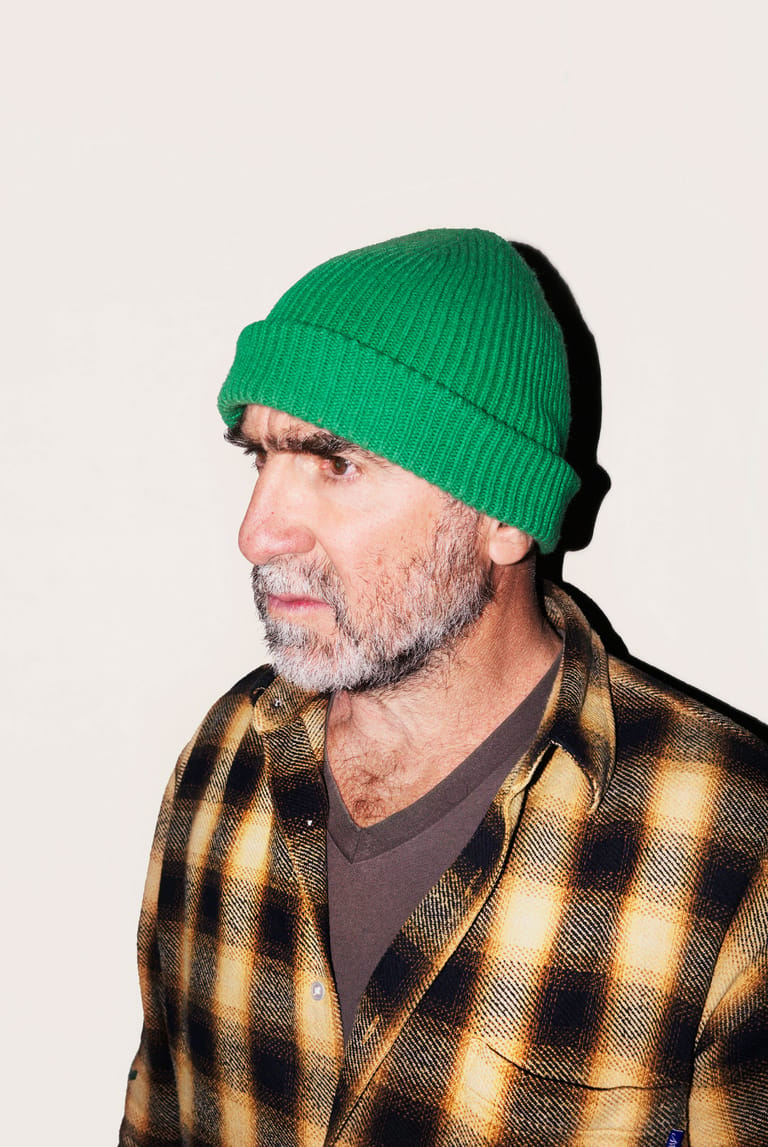



"I'm afraid of emptiness," says Eric Cantona as he ponders the creative spirit that has driven him his entire life. "In emptiness, doubts can come." In the glorious life of the French footballing legend turned actor, poet and musician, you get the feeling that he has rarely allowed doubt to cloud his mind. He has always been a singular and idiosyncratic character. He does what he wants when he wants to do it, and right now he wants to make albums. 'Perfect Imperfection' is his debut record and an encapsulation of all the qualities that have made him such an enigma.
Adored by millions on the pitch, most notably during his five-year period with Manchester United at the height of the 90s Premier League boom, Eric Cantona was a rock star before he even discovered he could actually write songs. He was a mercurial figure with his own particular iconography that made him stand out over everyone else. Think of the popped collar, the footballing genius, the terrace chants ("Ooh, ahh!"), the fierce competitiveness and, yes, the controversies: the kung fu kick that got him banned for nine months, and his wonderfully inspiring and philosophical response about 'the seagulls following the trawler…" All of these images are indelibly etched in our cultural memory banks, no matter what generation you are from.
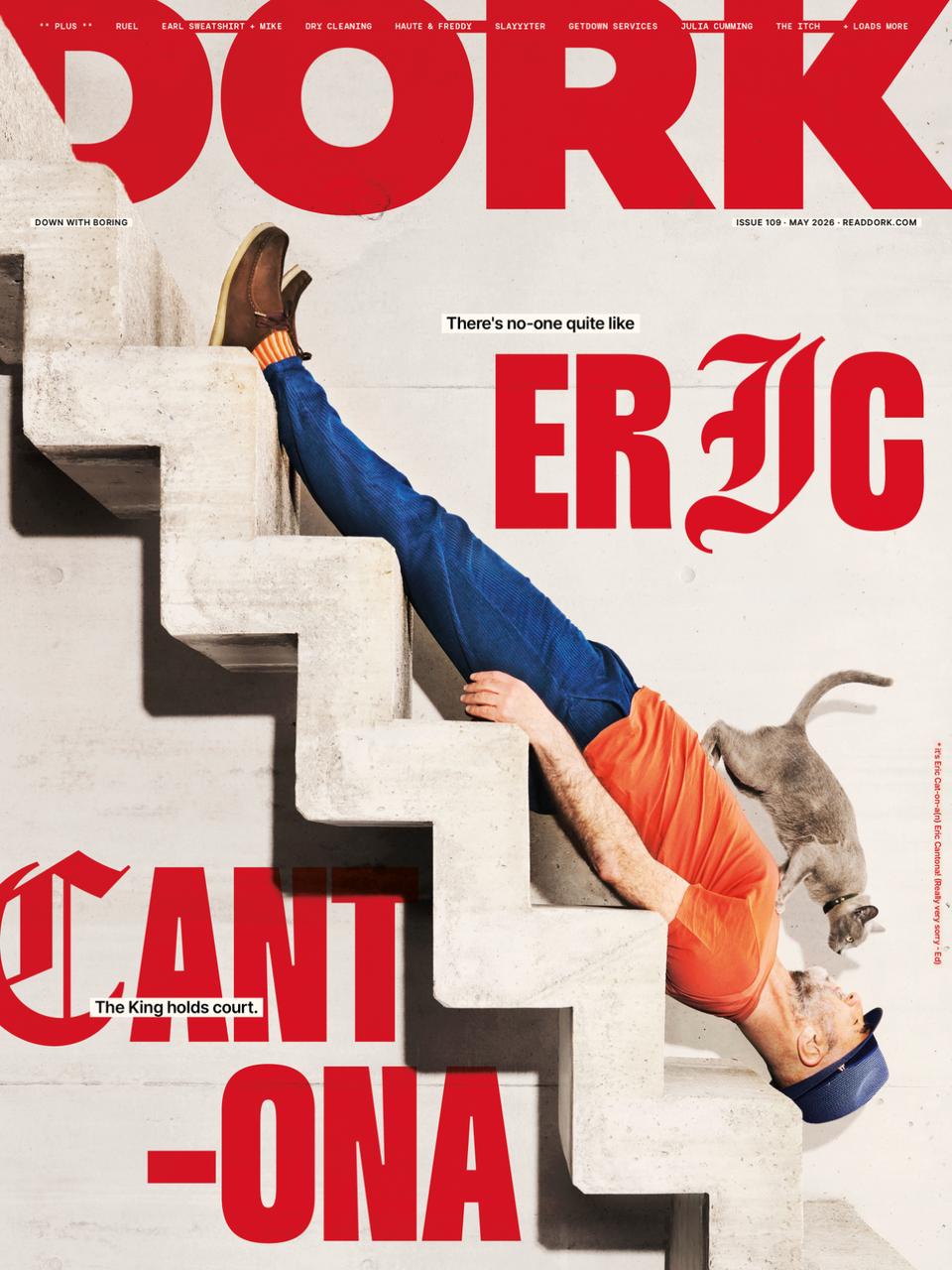
Almost 30 years after he retired from football at the peak of his career, Eric Cantona still has a larger-than-life presence and aura about him. Today, he's impeccably dressed in a luxurious and quite lovely mustard-coloured cardigan, twinned with a bowler hat, exuding the enlightened wisdom and eloquence of a man who thinks deeply about every aspect of his life and the world we live in. "I'm interested by any kind of art," he says as he begins to tell the journey of how he ended up with his debut album. "Since I retired from football, I've been an actor. I love to paint and I love to write. I've been writing since the age of ten. I've always loved music."
The earliest entry into songwriting in a more professional sense for Cantona came in the form of writing songs for his wife, French actress and producer Rachida Brakni. "I wrote songs for my wife, who is a great artist and a great writer. I wrote the lyrics for her first album and a song for the band she created with French musician Gaetan Roussel, which is Lady Sir. I wrote this song under a pseudonym," he explains.
In this case, the pseudonym is Auguste Raurich. The desire to write under different names is something he regularly returns to, but for this specific project, it was important to do everything under his own name, as the project started organically. "It came during Covid because I had a lot of time, like everybody else," he says. "I said to myself, I will use this time to do something. I started to play guitar." It comes as no surprise that when Eric Cantona says he is going to do something, he turns out to be quite good at it. Or is he? "I'm still a very bad guitar player," he laughs. "I'm good enough to create songs. Sometimes you have a great guitar player but they feel they are not able to write songs or they would love to write songs, and sometimes you have bad guitar players who are able to write songs."
For Cantona songwriting was a natural extension of his love of poetry and language. "Most important for me is to write the lyrics first because the musicality is in the lyrics. It's like evidence that the melody came naturally," he says passionately. "When I was younger, I listened a lot to The Clash. I've been lucky enough to meet Joe Strummer and Mick Jones. I remember Mick Jones said that Joe came to me with the lyrics and not the music. I'm not Mick Jones or Joe Strummer, but I'm brave enough to try. The talent is also in being brave enough to try. You have a lot of great people who do some wonderful things, but they don't want to try, or they feel shy or not confident enough."
Bravery is a key word; a tenet Cantona has always lived by. 'Perfect Imperfection', the album's title-track, feels like a mission statement for his life: "You are in freedom boulevard," he croons in his rich husky voice. It's deeply atmospheric and evocative. The freedom he is celebrating is something he has always felt, as the opposite would be too hard to bear. He was the same on the football pitch: he had to create. He couldn't be constrained. Sometimes it would get him into trouble, but that was all part of the magic. Perfect imperfection. "I try to be as free as possible," he enthuses. "I love the feeling of being free. Maybe I love this feeling because in my subconsciousness, in my life I feel like I'm in a kind of jail. I need to express myself."