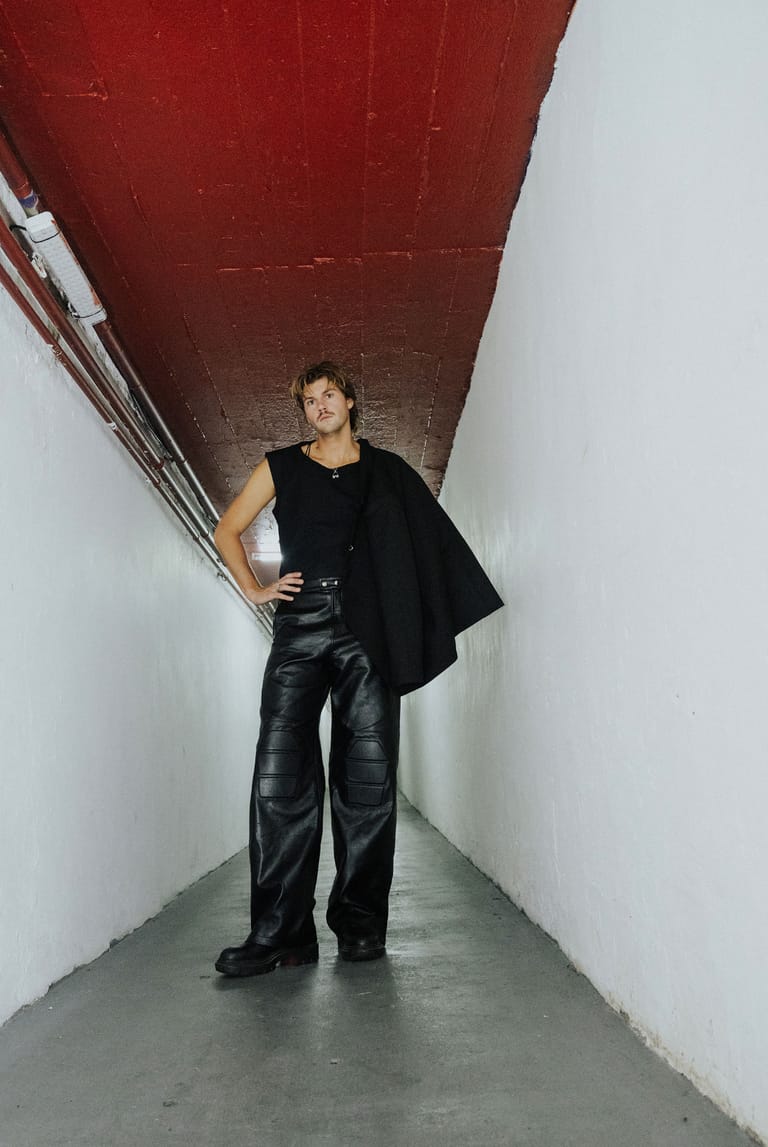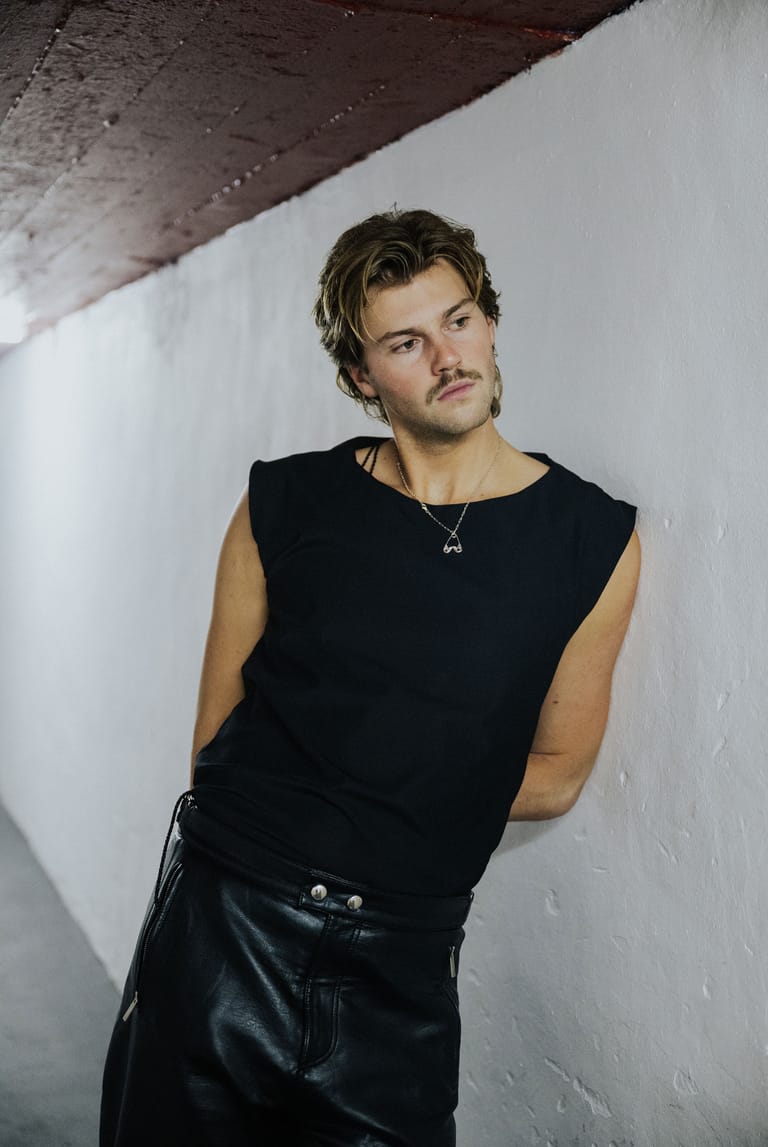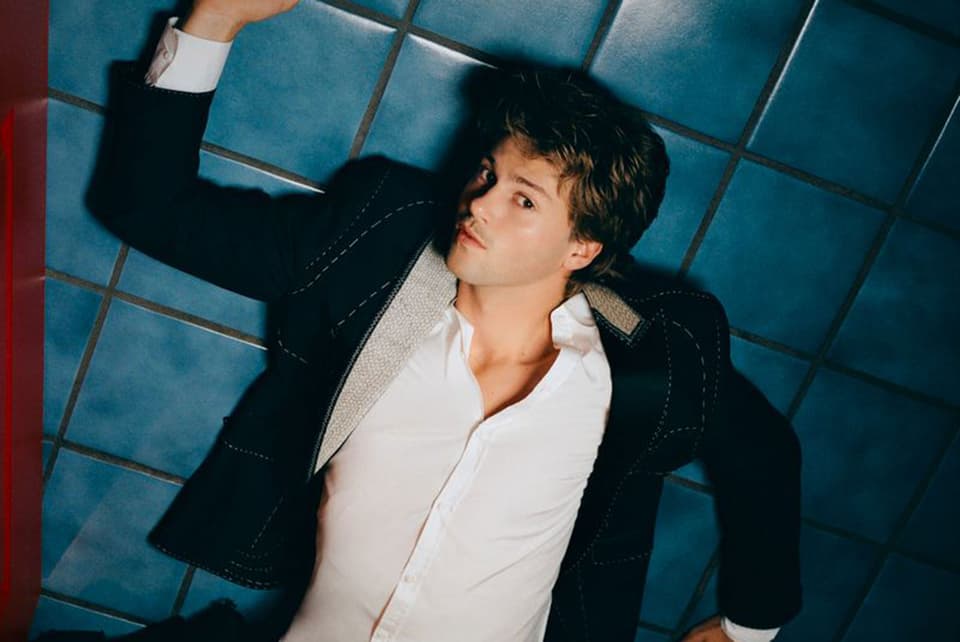

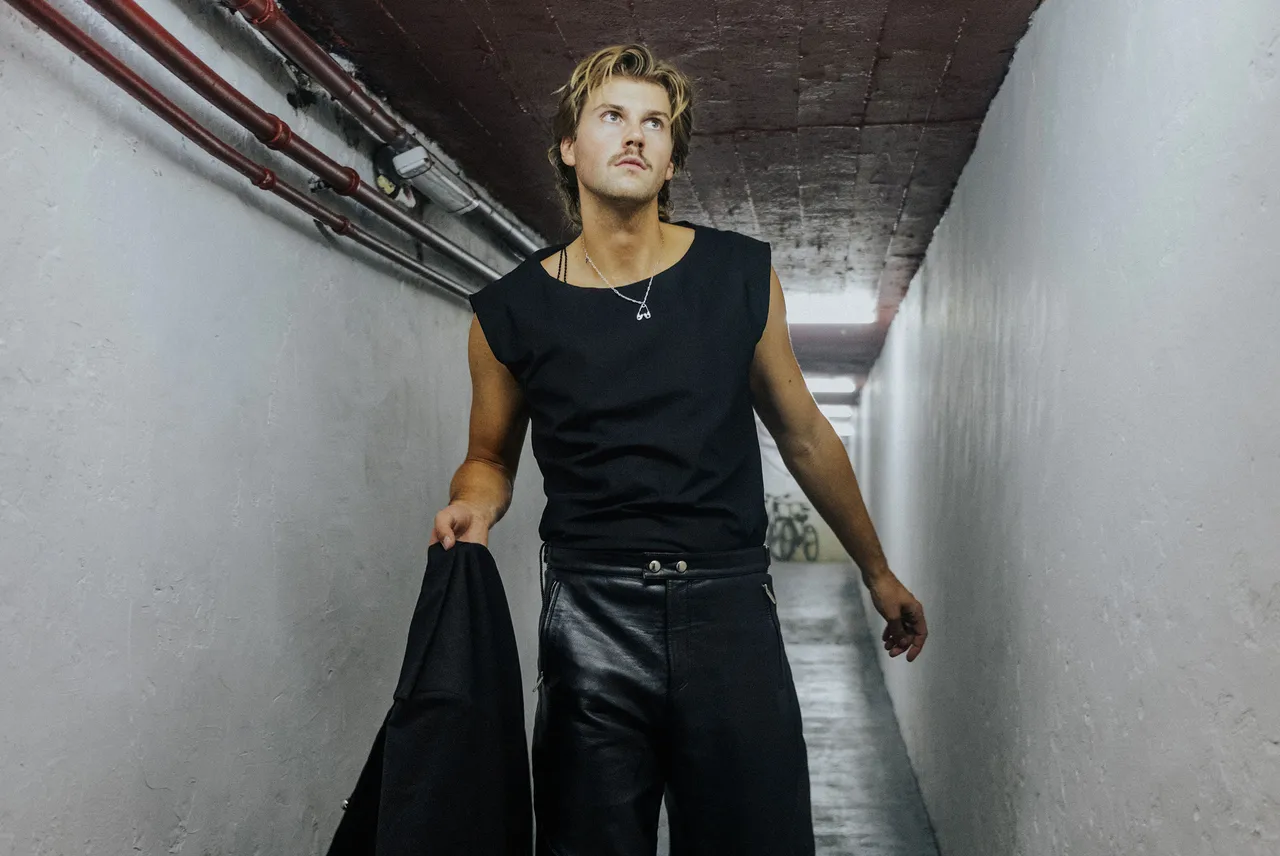
Ruel has been releasing silky smooth pop bangers for almost a decade now, but he fell into stardom almost by accident. The London-born, Sydney-raised musician first picked up a guitar when he was eight and started sharing DIY covers on YouTube a few years later. He'd rack up a few hundred views if he were lucky. "It was just fun. I had no reason to think it would ever turn into a job," he says today, midway through his latest US headline tour.
He was obsessed with Amy Winehouse and James Morrison ("His album 'Undiscovered' shaped who I was and 'Better Man' is one of the most insane ballads ever released") and was a self-confessed pop kid who loved Bruno Mars and Ed Sheeran. He also drew a lot of inspiration from the old soul, jazz, and hip-hop records his dad would play around the house. Whenever someone asked the young Ruel what he wanted to be, he'd reply with either singer or basketball player. "I held both up to the same standard, but even with the smallest amount of self-awareness, you know it's never really going to happen… until it does. "
See, everything changed when Ruel's dad, a well-connected advertising executive, proudly showed one of his covers to DJ and music manager Nate Flagrant. He put Ruel in touch with producer M‑Phazes, who's previously worked with Eminem, Zara Larsson and Madonna. "It just snowballed into a career from there," says Ruel. Their first collaboration, the pulsating 00s dance banger 'Golden Years', was released when Ruel was just 14, while the string of R&B-infused hits that followed saw the young singer compared to Justin Bieber and Shawn Mendes.
Continue reading with Dork+
Subscribe to Dork+ for instant access to this article and our entire archive of exclusive content.
Unlock with Dork+For a while, Ruel balanced blossoming pop stardom with homework, playing support tours during school holidays and spending evenings and weekends in the studio. "Outside of a very small circle of my closest friends, no one knew what I was doing." When he was offered his first world tour, though, he knew he'd have to give something up. "My parents were really supportive about it, though. They encouraged me to fully lean into music, if that's what I really wanted to do." And he really did. "I've always adored being on stage. I've always been an attention seeker, and playing live is all the attention I can get. I just love it."
"I still find it all pretty mind-boggling how it popped off from the start," says Ruel. "It's something I'll never take for granted, but honestly, I have no idea why those early tracks resonated with people." He still plays breakout hits 'Younger', 'Dazed & Confused', 'Face To Face', 'Painkiller' and 'Free Time' every night on tour. "The crowd reacts in such a special way to them, but now I feel like a different person than when I first wrote them. Those lyrics have taken on such a different meaning."
As well as making radio-friendly tunes, Ruel established a fierce fanbase through his tender, emotional lyrics. 2019's 'Unsaid' was written after the suicide of a close friend; 'Don't Cry' is a moody post-breakup ballad that never tries to hide the hurt. It's little wonder his headline shows were emotionally charged pandemonium.
"Playing live is just the best feeling in the world. There's a certain type of adrenaline that I get from being onstage that you can't get anywhere else. It also made me feel seen, and gave me a sense of belonging," which is hard to come by when your teenage years are spent on the road. "I started to create this community of fans, most of whom were the same age as me. Growing up with them has been so special."
He might not have planned to become a pop star, but he was a natural at it. "Seeing the effect that my music was having on people was insane. Even as a 16-year-old, you can't ignore how impactful that is," he says. "It felt like my music mattered. It felt like I was doing a little bit of good in the world."
Still, the success was disorientating. "It was really strange because I didn't know that it wasn't normal," says Ruel, who had nothing but wins for the first few years of his career. He got signed to Sony's RCA Records without releasing any music and was constantly busy with live gigs. "There was no ten years of grinding and getting nothing back. I just assumed that maybe it happened to everybody like that…" says Ruel, who now knows just how lucky he was. "At the time, it was easy to take things for granted, though."