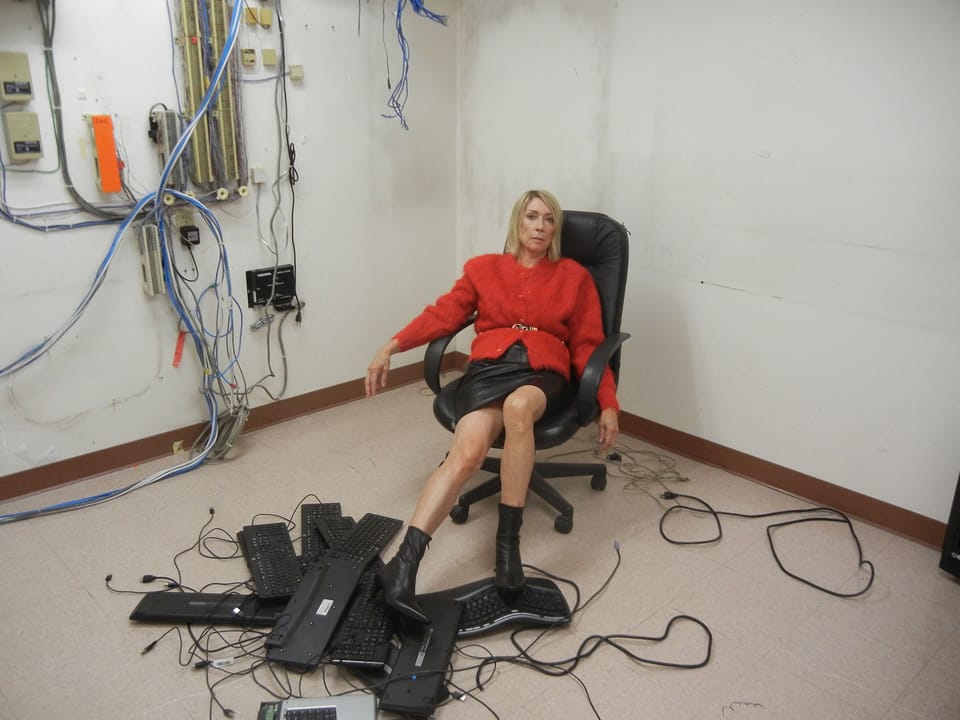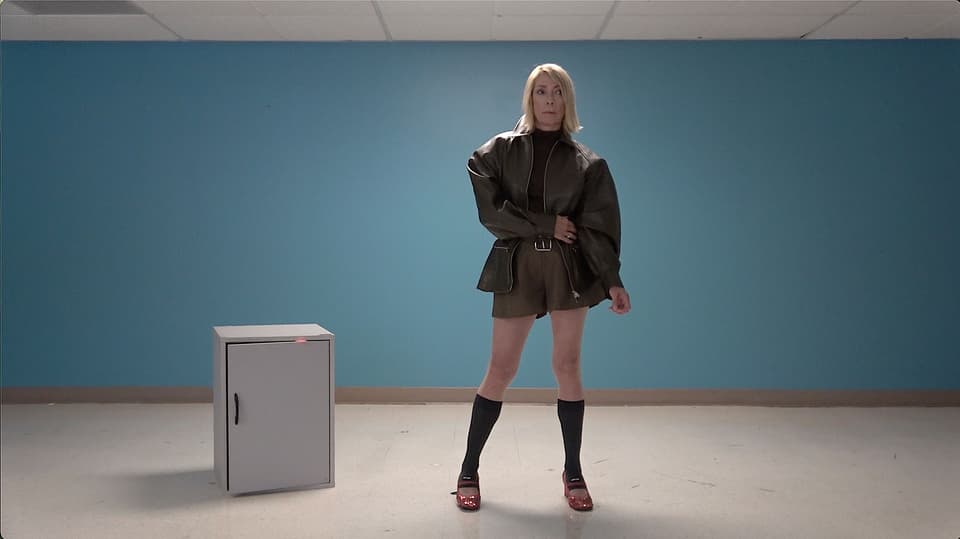

'Play Me' starts with Kim Gordon reading off a stream of Spotify playlist names over a groove-driven beat. The cheery-sounding Spring Pop and Make Out Jams are namechecked alongside more pointed collections – Stand Up, Hold The Line, Villain Mode. There's a clenched fist anger about how, in 2026, our choices are becoming increasingly curated in the name of convenience. "I find that interesting, and also really offensive," she wrote in a press release. "How do you even compete in that marketplace?" she asks Dork today, shortly before the record is officially announced.
Still, the third solo album from the Sonic Youth guitarist isn't her attempt at a breakout viral moment or a collection of algorithm-pleasing anthems. "It's more like – take this really fucked up thing, are you going to be able to handle it?"
While her peers are trying to recreate past glories, Kim Gordon has spent the past few years pushing things forward with abrasive electro punk made alongside producer Justin Raisen. 'No Home Record', an exploration in disconnection, was released in 2019, while the snarling, uptempo, community-focused 'The Collective' followed in 2024.

'Play Me' is made up of 12 intense tracks, and only a couple last longer than three minutes. It dashes between nightmarish, surreal, abrasive and scrappy. The whole thing is unrelentingly confrontational as well, a gnashing reflection of what's going on in the world with no sugar-coated escapism on offer. "It's the only way I know how to be," says Kim.
"I'm not trying to prove anything intentional with 'Play Me', I just like showing that there's a way to make music that isn't like how other people make music," she explains, finding a lot of modern records a bit dull. Neil Young is still her go-to artist for when she needs comfort, and while she's been told to check out Geese, she hasn't got around to it yet. "Music provides a space to think and reflect [on what's happening around you]. Ideally, that doesn't have anything to do with the commercial world," she says before issuing a challenge. "I dare AI to try and copy 'Play Me'."
AI is just one of the topics that Kim skewers on 'Play Me', with fascism, tech billionaires and toxic masculinity all shredded over scuzzy, industrial beats. "I felt bombarded by what was happening as soon as Trump got into office. We had Elon Musk, his Department of Government Efficiency... everything was happening so fast. This album is my reaction to that," Kim explains.
Even though she delivers barbed digs at Musk ("You want to go to Mars, and then what?" she asks on 'Subcon') and the president ("You don't trump me, I trump you"), Kim Gordon is hesitant to describe 'Play Me' as a political record. "It's definitely a joyful one, though."
"It just feels more emotional [than what I've done before]. It doesn't feel angry. It's intense, but it's more reflective," she continues. Why? "I don't know. It wasn't really premeditated; I just liked the challenge of it. I just feel like it has a lot of joy in it despite the darkness."
A lot of that comes from the absurdist humour in 'Play Me', which takes our bleak, dystopian reality to playful extremes, highlighting just how bizarre things really are. "There is a lot of humour to 'Play Me', and I'm glad that comes across because I can look very serious, and I do tend to just go off talking about politics in interviews," she says. "I'd rather do that than talk about the music, because each song is meant to be open for interpretation. There needs to be space for the listener's own emotions." What she wants people to get from 'Play Me' is a good time.