

Dork
Dork Radio
Live
Dork Radio

Recently Played

No tracks played yet - check back soon!

Listen Again

No episodes available yet
When robots learned to cry: decoding the genius of Radiohead's 'Kid A'
Features

WHEN UNBOUND

With ‘Kid A,’ Radiohead tossed aside their guitar anthems and conjured a futuristic soundscape beamed in from another dimension, creating an audacious, bewildering masterpiece that redefined modern music.

Written by
Published
Artists


With ‘Kid A,’ Radiohead tossed aside their guitar anthems and conjured a futuristic soundscape beamed in from another dimension, creating an audacious, bewildering masterpiece that redefined modern music.

Words: Dan Harrison.


As the clock ticked over to the year 2000, while most were busy fretting about the Y2K bug and whether our toasters might suddenly develop a taste for world domination, five lads from Oxfordshire were quietly orchestrating a revolution. Radiohead, a band that had already redefined guitar rock with 'OK Computer', were about to pull off an even more audacious feat: they were going to make an album that sounded like nothing else on Earth.

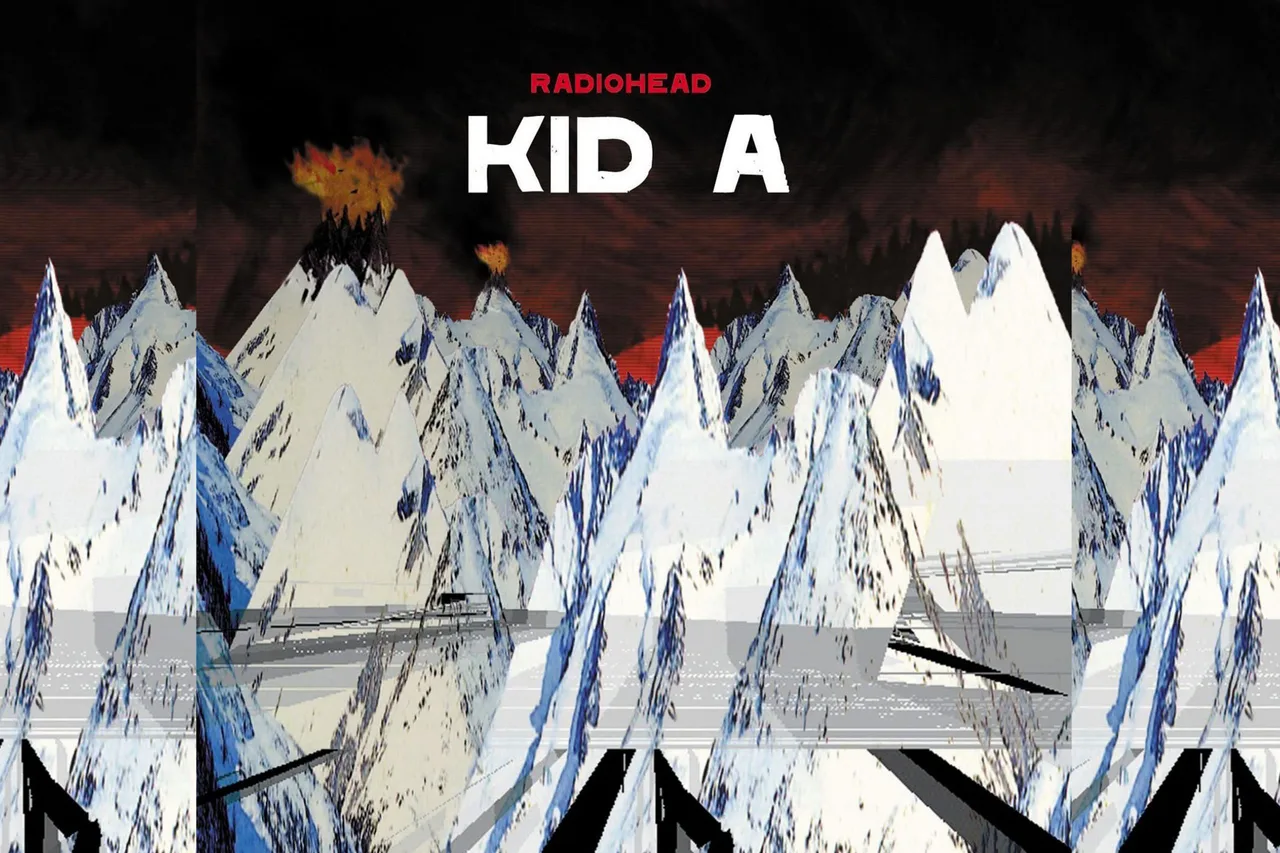
'Kid A', released on 2nd October 2000, wasn't so much a left turn as a teleportation to another musical dimension. Gone were the soaring guitar anthems and existential alt-rock that had made Radiohead the thinking person's band of choice. In their place? A soundscape that seemed to have been beamed in from the future, or perhaps an alternate universe where synthesizers had evolved to develop feelings, and very complex ones at that.

To understand the seismic shift that 'Kid A' represented, we need to cast our minds back to the aftermath of 'OK Computer'. That album, released in 1997, had captured the pre-millennial tension with such uncanny precision that you half expected each CD to come with its own portable bunker. It was a critical darling and a commercial triumph, the kind of success that usually sees a band either imploding spectacularly or churning out increasingly tepid versions of their big hit until even their most devoted fans start checking their watches at gigs.

Radiohead, being Radiohead, chose option C: total reinvention.

The gruelling 'OK Computer' tour left the band, particularly frontman Thom Yorke, feeling rather like they'd been put through a musical wringer. Yorke, it seemed, had developed a severe case of writer's block, or perhaps more accurately, a severe case of not wanting to write anything that sounded remotely like what he'd written before. As he later told The Guardian, with all the cheer of a man describing his own root canal without anaesthetic: "When we finished the OK Computer tour, I had a sort of big... block. I basically thought that was it."

Most bands faced with this conundrum might have resorted to some light plagiarism of their earlier work or perhaps a hastily arranged 'back to basics' album. Radiohead, ever the overachievers, decided instead to tear up the rulebook, feed the remains into a synthesiser, and then rebuild modern music from the ground up.

The result was an album that starts as it means to go on - by wrong-footing you entirely. 'Everything in Its Right Place' kicks things off with a synthesiser riff that sounds like it's been composed by a particularly melancholic AI, while Yorke mutters cryptically about sucking lemons. It's about as far from 'Creep' as you can get without actually leaving the solar system.

And that's just for starters. 'Kid A' is an album that delights in confounding expectations at every turn. 'The National Anthem' sounds like a jazz band having a collective existential crisis, 'Idioteque' is a dance track for the apocalypse, and 'Motion Picture Soundtrack' closes proceedings with the kind of weepy, orchestral grandeur that wouldn't sound out of place soundtracking the heat death of the universe.

Lyrically, Yorke seemed to have swapped his notebook for a Rorschach test, assembling phrases that ranged from the ominous ("We're not scaremongering, this is really happening") to the frankly baffling ("Yesterday I woke up sucking a lemon"). It was the kind of album that had critics reaching for their thesauruses and casual listeners reaching for the repeat button, determined to crack its code.

Written by
Artists