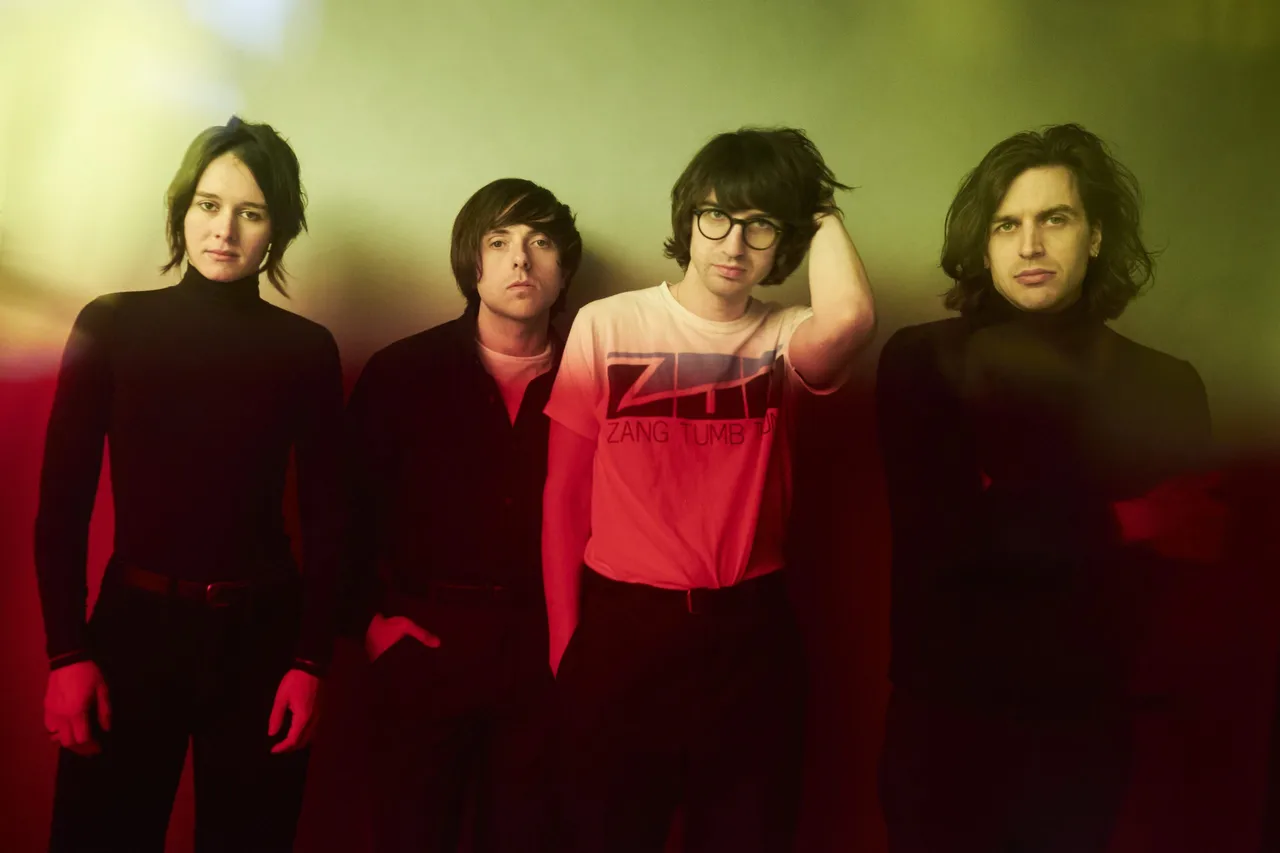
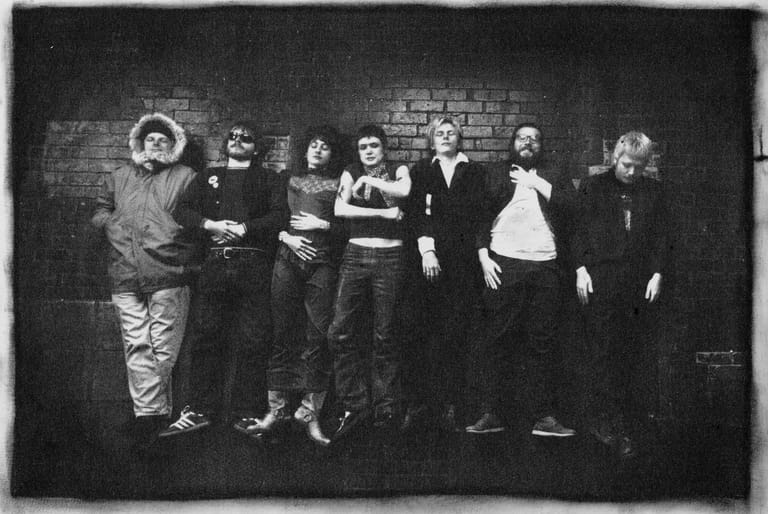
SPECTOR are back with their fourth album 'Here Come The Early Nights'. Recorded in less than two weeks, it's also their most accomplished work yet. Check out the latest cover story for our New Music Friday playlist edit, The Cut.
Words: Jake Hawkes.
Being a band can be a tough job. Those first album nerves, the pressure of the follow-up, the 'difficult third album' - it's not all champagne and stadium tours.
For Spector, this journey has often felt like it's been played out in slow motion. In fact, their fourth album, 'Here Come The Early Nights', is coming a full decade after they stormed onto the indie-rock stage with their polarising debut, 'Enjoy It While It Lasts'. The intervening years have seen new music, new band members, and a global pandemic. But with their latest LP coming less than two years after album three, have things finally stabilised for the band?
"I think we felt very geed up during the last album, " says vocalist and frontman Fred MacPherson as he waits for an order of Turkish eggs with guitarist Jed Cullen in a North London cafe. "We did a new album tour straight into the anniversary shows for the debut, and it really felt like the completion of a circle. To see ten-year-old songs resonating with people at the same time as having just come off a tour where a lot of new stuff was resonating made it all feel like a worthwhile pursuit.
Jed nods his agreement. "We only had thirteen days to record it," he says. "That meant we weren't spending a whole day changing the bass sound and then changing it back again, or other pointless distractions.
"Over time, we've learned to trust in the process a bit more and not get too caught up in it all. If someone had told us that we had thirteen days to record our debut album, we'd have point-blank said that wasn't possible. But we've realised there's just as much integrity in capturing the initial takes of stuff and that overthinking doesn't necessarily make things better. The end result, to me at least, is that it sounds less contrived than some of the other things we've done - less overthought and less overwrought."
It's a limitation the band have turned to their advantage, but one that comes borne from necessity. Major label backing and a lack of commitments may let some bands spend months whittling away at a new project, but as time marches on, things change.
The result of this pressurised timeframe is the band's most accomplished album yet. It's still shot through with Spector DNA like a musical stick of rock, and lyrics like "Fear and loathing in Lea Valley / Sean Williamson's Mustang Sally" from 'Not Another Weekend' are as evocatively ironic as anything Fred has written in the past.
Alongside this, though, there's a melancholy earnestness which stops 'Here Come The Early Nights' from devolving into pastiche. For every sarcastic aside about the drudgery of 21st-century life, there's a moment of genuine depth right around the corner to throw everything into sharp relief. 'Some People' is so steeped in nostalgia and a sense of world-weariness that it's easy to forget that just a few minutes earlier, you were listening to lyrics about limousines with stained glass windows on the preceding track 'Driving Home For Halloween'.
"If someone had told us that we had thirteen days to record our debut album, we'd have point-blank said that wasn't possible"
— Jed Cullen
This depth and expansion in lyrical content is most obvious on the title track, a piano-led reflection on fatherhood which swaps out the typical ironic smile for an unexpected level of vulnerability and emotion. Are Spector (whisper it) maturing?
"We were writing songs about our life and grappling with trying to find meaning in things," says Fred. "But what's funny is that these songs already feel to have more meaning to them than they did while I was writing them. 'Here Come The Early Nights' was written as a song about parenting and being a father, obviously. But then a friend of mine died a couple of months ago, and suddenly, all the lyrics have taken on a new meaning to me. One of the opening lines is, 'You didn't say it was your birthday', and the last time I saw him was on his birthday, but he didn't tell me.
"The title 'Here Come The Early Nights' had a very literal meaning about going to bed early once you have a kid, but to me now, it feels like a reference to dying earlier than expected - not getting to live out the night as you expected it to be. Nick Cave always talks about how he feels his songs have brought stuff into existence or at least had some underlying sense of what might happen in the future. Without wanting to sound like a crazed hippie, it really does feel like an energy that's worth attempting to wield. To listen back to something you've written and experience it as being about something else, about someone else - it's genuinely special.
It's a worldview on making music equivalent to something you'd expect a keen angler or painter to say about their hobby, but clearly, one that works for both Fred and Jed. Ten years ago, they were touted as the next big thing, promised huge headline slots and a glittering career in music. It isn't quite how things have panned out, but by the simple virtue of still being active and reaching new audiences, they're doing better than most bands a decade into their existence.
"If we were making music that we could fully live off of, it wouldn't be able to sound anything like it does at the moment," Fred says with a slight smile. "Even 'Chevy Thunder' wasn't a proper hit, so to be the ultimate commercial version of us, we wouldn't… be us.
"Something gets in the way of working on that scale, and once we realised that, everything became so much easier. Now we know we aren't going to be pop stars; we know we can actually just make the thing that sounds like us, and people will still enjoy it. We'll never be Cliff Richard, but we'll still find an audience." (Nice up-to-date reference there, lads - Ed).
It's an attitude that's seen them through the lean times, and if festival lineups are anything to go by, has started to see them being given their flowers. 2022 saw them play the main stage at Truck Festival to an absolutely massive crowd, while 2023 saw them headlining one of the tents at both Truck and Tramlines. "It definitely feels good," acknowledges Fred. "I think that's the other reason we were keen to make another album so quickly because playing those shows and feeling that connection was so great.
"Having said that, we're careful not to only ever look at it as going up or down because if you're going up, it's only so long before you come crashing back down. When we first started, our record label was obsessed with the number of likes we had on Facebook, but now nobody even cares that we have 50,000 likes on there! What a waste of time.
The choice is between making music we love or watching Disney+ in my underwear.
— Fred MacPherson
"It's about bringing a non-careerist mentality to it all," says Fred. "Of course, we'd love to be huge and be making exponential amounts of money, but that isn't really the choice. The choice is between making music we love or watching Disney+ in my underwear.
"We played Rough Trade on the day our last album came out. It was a cold, Covid-riddled January, and so many people turned up, bought the album and told us a story about their relationship with the band. It's tempting to think of albums as a product you need to sell a certain amount of and bring in x amount of money, but if you can make something that even for 10 minutes has added something into someone's life, then it feels good - that's not to say it's worth that £20, but time will tell!
"Being in a band is a psychic deal with yourself, where 90% of it is wanting to throw in the towel, and the other 10% makes it all worthwhile. You drive to Glasgow, and you think the drive will never end, then you soundcheck, and you feel really cold and eat a weird chilli con carne, and you're still wishing the gig didn't have to happen and wondering what went wrong with your life and then you walk on, and it all makes sense. It's the full spectrum of hopes and fears - wait, that's the name of a Keane album, isn't it?" He pauses, searching for another way of putting it.
"Life isn't always good, but sometimes… the worst moments have a lot of beauty? Everything I'm saying sounds like a cliché now; I'm trying to give a grand sweeping statement to end the interview!" ■
The track previews her second album, co-produced with Jack Antonoff and Yves Rothman.