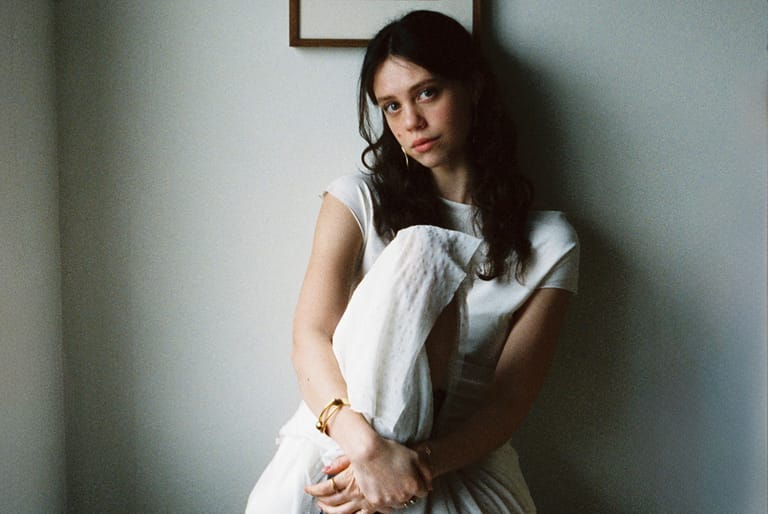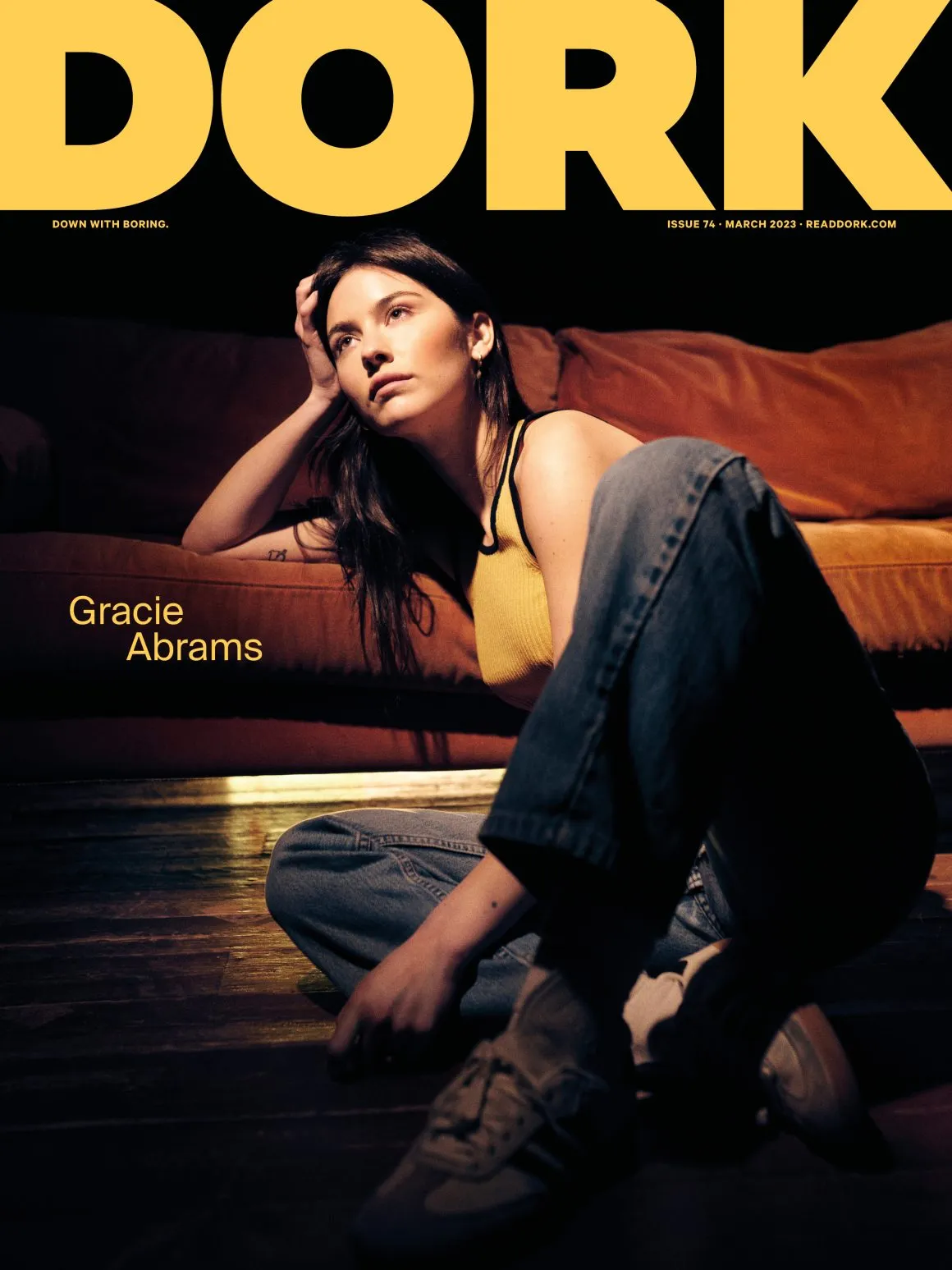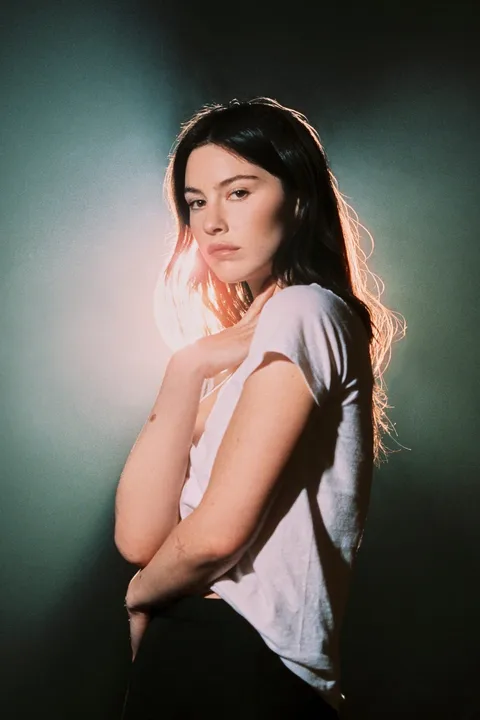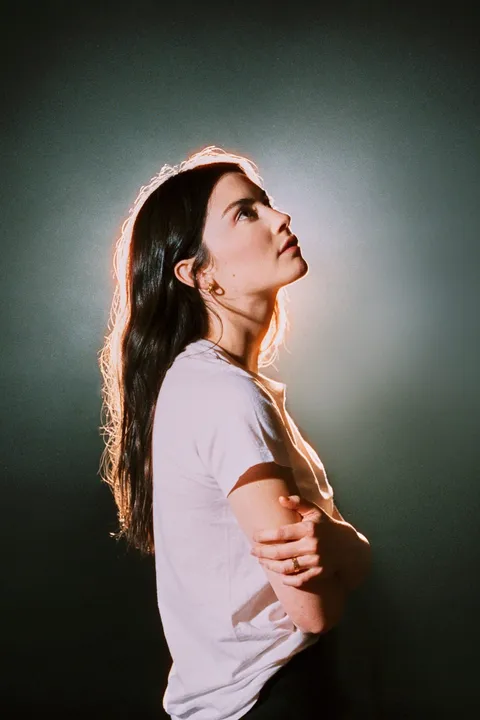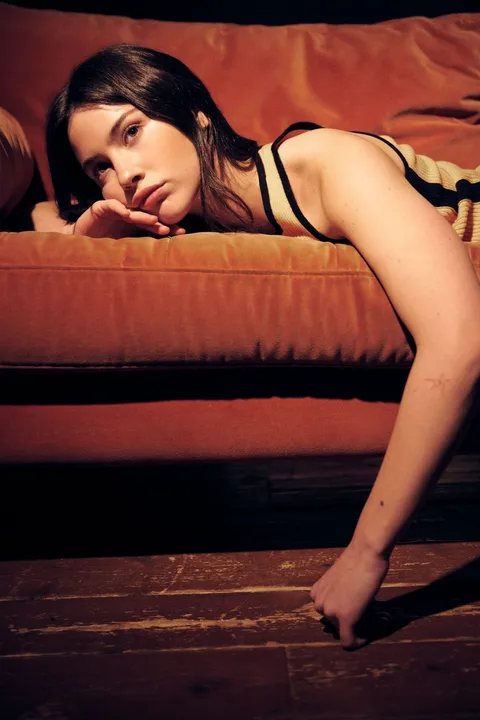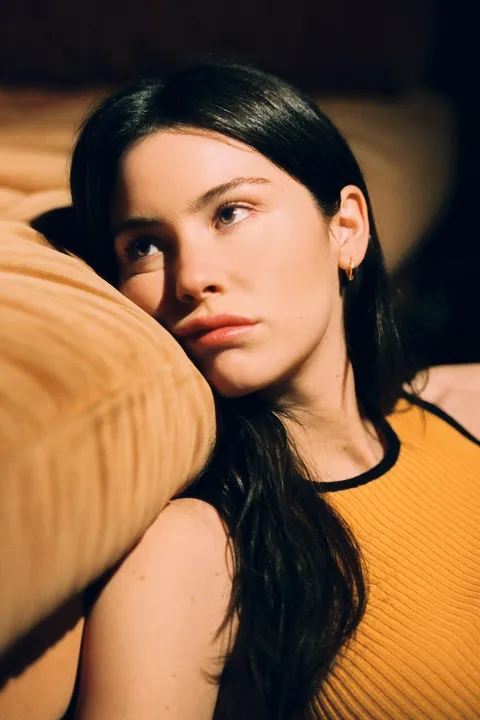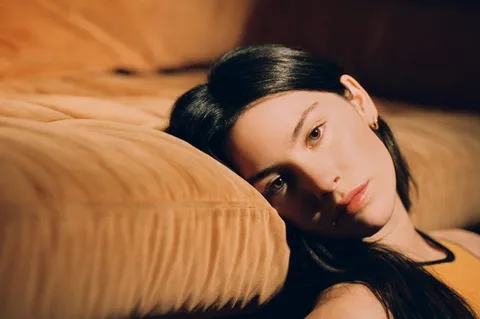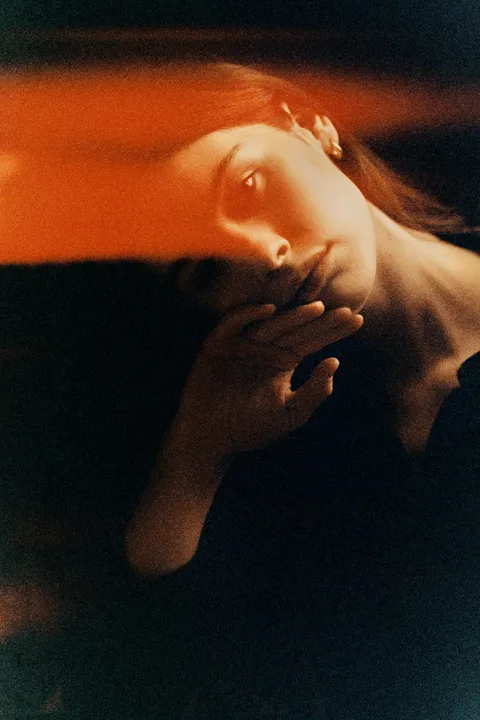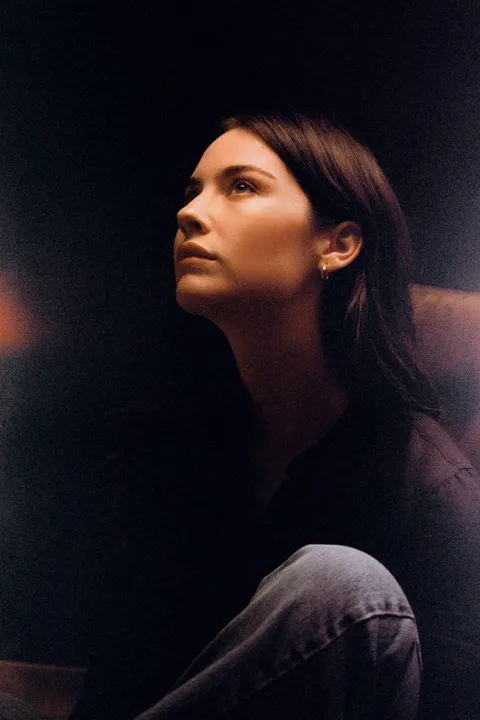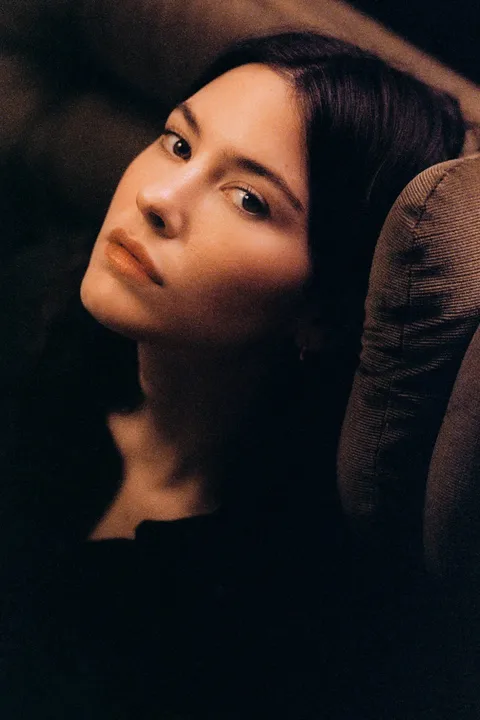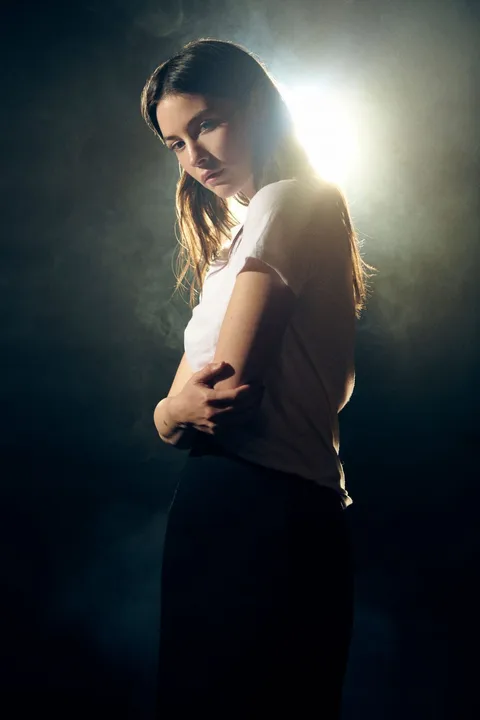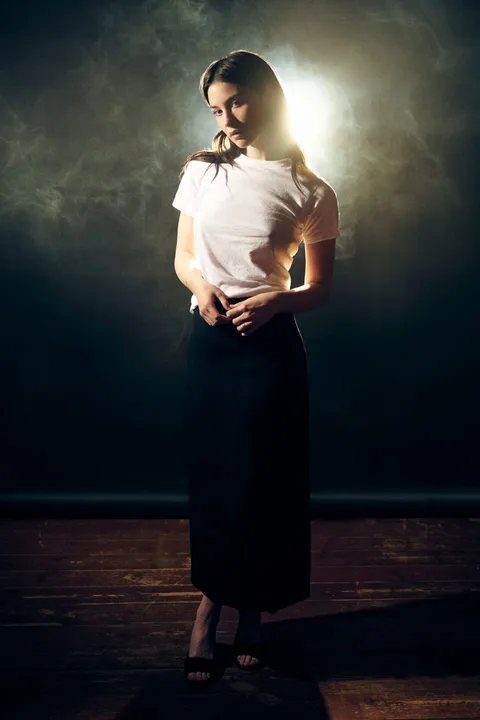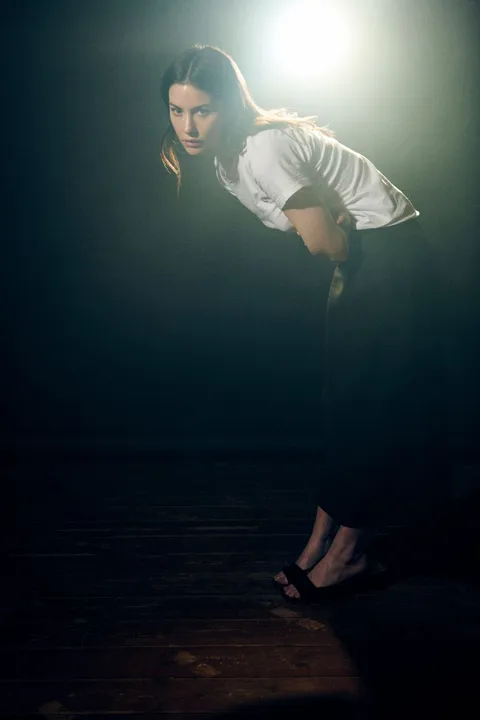

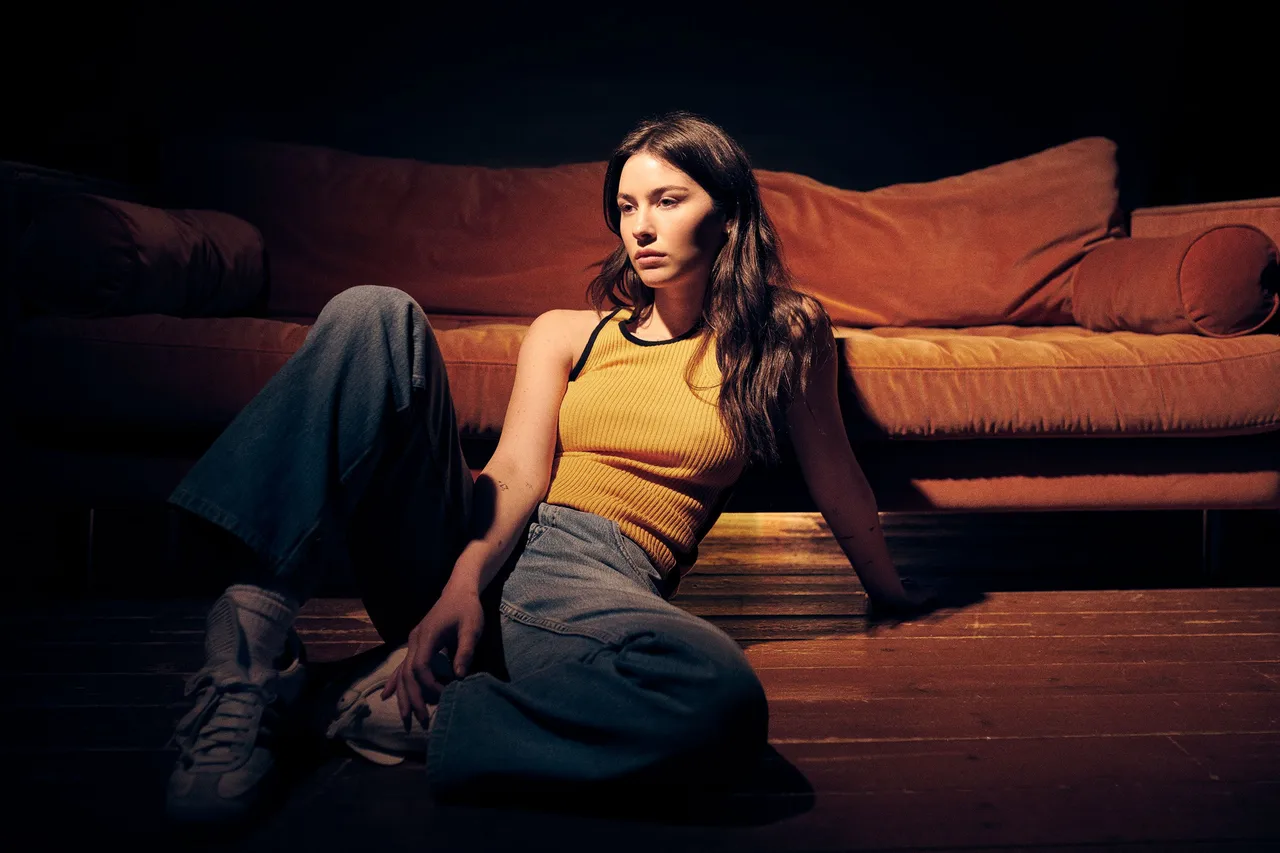
Gracie Abrams’ debut album ‘Good Riddance’ is the story of a young artist finding her way to the top of the mountain on a journey of self-discovery, healing and brilliant potential fully realised.
Words: Jessica Goodman.
Photos: Sarah Louise Bennett.
Photo Assistant: Patrick Gunning.
Hair: Kei Treads @ Julian Watson Agency.
Make Up: Celia Burton @ CLM Agency.
Photos: Sarah Louise Bennett.
Photo Assistant: Patrick Gunning.
Hair: Kei Treads @ Julian Watson Agency.
Make Up: Celia Burton @ CLM Agency.
Nestled in the Hudson Valley, there’s a mystical, secluded place called Long Pond Studios. The pride and joy of The National’s Aaron Dessner, it’s amongst those ethereal trees that a certain kind of musical magic has happened time and time again. This time around, it’s the debut album of Gracie Abrams – an alchemic, mist-hazed journey through learning to understand yourself and your emotions through every peak and trough. There’s something specific about the music nurtured in the respite of Long Pond, and ‘Good Riddance’ is that embodied: a tender, open wound, slowly closing up by the enchanting nature of that environment.
“Working in the bubble that we did, in the middle of nowhere, removed from everything and everyone that I felt had sometimes hindered my ability to completely focus on writing the best songs that I could,” Gracie Abrams muses over Zoom, fresh from a chaotic week at Paris Fashion Week and having just dropped ‘Where do we go now?’, the second snippet of her album thus far.
“I think being in such a far-removed space, it wasn’t like either of us felt super actively conscious of anything other than each other and making the album that we wanted to make. It was really like discovering and moulding the sound in real-time was just part of it.”

Gracie’s second EP, ‘This Is What It Feels Like’, dropped at the tail end of 2021 and saw her dive deep into her true emotions, feelings and experiences. It seemed, at the time, like there was no holding back. And yet, with ‘Good Riddance’, Gracie invites you to inspect every truth – each flaw, each mistake, each sage decision that was unbelievably difficult to make. Here is an artist who has truly laid her cards on the table, and she invites you to do a reading.
“I feel super grounded in what I know the album already gave me in my personal life,” Gracie explains. “That is what songwriting has always been about for me. I think to feel it on all sides, and at this stage in my life with this album means something different to me. I definitely wanted to have a more transparent element of accountability in myself. It’s super easy, often easier, I’ve found, to blame others in a relationship when something starts to feel off or wrong. Instead of looking at yourself really hard in the mirror and identifying your own faults, I feel like the quicker cop-out is to point fingers. That’s definitely a quality I’ve desperately tried to crawl my way out of doing. I’ve just found that all that does is leave me feeling: a. embarrassed for having that instinct, and b. equally as stuck because you’re not doing the work on yourself to get to a place that will be fairer to somebody else in any kind of relationship that you enter.”
Even from the first track, ‘Best’, Gracie doesn’t hesitate to scatter those harsh truths – self-isolation, little white lies, self-destructive tendencies. “I never was the best to you,” she admits, gracefully taking the blame. There’s a resounding sense that she is putting herself on full display here, a warts and all examination of the self that can only come with a willingness to work through these things as carefully as possible. “I think there were lots of instances though with the songs where in the middle of writing them, I would finish a verse and look at Aaron and say: ‘I can’t ever fucking release this. I’ve never said these things to this person that I’m writing about’. But it was my side, this whole time. Fear and embarrassment would get in the way sometimes, and they’re all things I wrote about. But Aaron’s constant reminder to me was of the importance of acknowledging it all and doing it not only for yourself, but the people who choose to spend their time and energy listening to the music. How all of my favourite artists that I’ve ever admired, in their writing they’ve probably asked themselves the same question. Choosing brutal honesty for the sake of connection with others is an okay thing to do. I love Aaron for pushing that on me.”


"<strong>Choosing brutal honesty for the sake of connection with others is an okay thing to do</strong>"
— Gracie Abrams
By leaning into those unspoken words, Gracie managed to carefully craft a narrative throughout the course of ‘Good Riddance’. We meet her dejected, unsettled, and mentally sorting through how things went sour so quickly. That trajectory continues for the album’s first half. ‘Full Machine’ sees her dwell on all the ways that differences can cause things to not work out, though, amidst the track’s steady drumbeat, there’s a yearning that never quite disappears. Latest single, ‘Where do we go now?’ continues to navigate that uncertainty after a loss – it’s all nostalgia and regret rippling under deliciously pensive pop. Slowly, however, as the album plays out, there’s a levity that grows under the gracious care Gracie allows herself. With the space to learn and discover these things about herself, Gracie unlocks a newfound hopefulness that occupies the album’s latter half.
“That was very much a priority in some ways,” Gracie recalls. “Whenever I’m writing anything, I feel very present with it, so it’s nice to have those moments with each song but to then look at the big picture and be very intentional about it. This was the first time I went into the studio knowing that we were making an album, start to finish. It mattered so much to both myself and to Aaron that we tried to go for something that would feel like the kind of thing you’d be intentional about when it comes out – going home and putting in your headphones and listening to it, or getting in the car and driving for an hour, listening to it in order. That matters to me a lot. I love the collection of songs as a whole so much, and I think because this storytelling element of music is my first love, really, in this world, I definitely was very thoughtful about the arc. Even sonically, it does something that I really love. The bookends of the album mean a lot to me, and so I think and I hope that anyone who chooses to listen – which, thank you – but I also hope that it’s in order.”
Even from just the two tracks released ahead of the album, Gracie demands the full attention of her listeners; both ‘Difficult’ and ‘Where do we go now?’ utilise her signature stop-in-your-tracks lyricism that means you cannot help but give them your all in return. It’s only fair, after all, given the vulnerability with which Gracie shares her thoughts. Though that could be daunting, however, she finds some power in unleashing them on the world.


“I felt so fulfilled by finishing all of this music, just the two of us, that it’s such a joy and a gift to see other people feeling the same way we do about it. It was us crossing our fingers that would happen, but also already feeling deeply satisfied with the work that we’ve done, just in terms of the way it helped me get through what I was writing about. I think it’s been really sweet to sit back a little bit and start to see it exist in places other than my phone, Aaron’s computer and my journal.”
It’s likely that a great deal of that gratification from creating these tracks, which cascade so easily into a line-up, is because their conception stays true to Gracie’s style. Her career began through a series of covers posted from her bedroom floor, and whilst ‘Good Riddance’ sees her ambitions launch skyward, there’s still a stripped-back quality that feels akin to those early days. Here, Gracie has stepped into a new, powerful version of herself, but it’s a truthful, rooted one.
“It’s the honest version, and that’s the way I make music still,” Gracie affirms. “I think that’s why working at Long Pond was one of the reasons it was so seamless. It feels so ground up, coming from a feeling and going from there. I write by myself all the time in any room that I’m in. I’m in Paris right now, and I have my guitar, and in the jetlagged hours of the night, I’m doing the exact same thing. Nothing’s different; it’s just fun and lucky to have more resources now than I had before in terms of exploring versions of everything. And having a greater imagination and ambition for doing it. There’s less fear, for sure, and weirdly zero anxiety in the way that I knew anxiety before.


"<strong>This whole album feels like the deepest, darkest version of honesty sometimes, but also the most light and free</strong>"
— Gracie Abrams
“Only quite recently did that change as a result of many, many hours of working through the shit that I needed to with a medical professional and getting real tools. I feel so grateful that I had access to that when I needed it. It’s such a privilege to have access to that. Even being in a place now where I have significantly less anxiety around all of this, the underlying feeling is just such deep gratitude for that. It’s so lucky to be able to tap into the kind of help that I needed when I did, so now I’m just deeply grateful that I am where I am. This was not meant to be some therapy thing, but I think it’s the best thing that a person can do for themselves even if they don’t think they need it; it’s so helpful. It helped me a lot, and I’m not a doctor obviously, but I loved it.”
In making the time and effort in her personal life to get to the bottom of who she is and find those stable structures to lean upon, Gracie unlocked a whole new potential in her artistry. The Gracie we meet on ‘Good Riddance’ is incomprehensibly more assured than before – braver, more confident, bolder. She’s not afraid to say what she feels, make what she wants and push herself to the limits. From the quiet ache of ‘Amelie’ to the outrage of ‘I Should Hate You’, she creates a new sonic world that establishes her as on the cusp of becoming the artist she has always longed to be.
“I grew up being addicted to folk music and these acoustic elements that made me feel so close to the person who was playing and singing and telling their stories. The intimacy there is something I was so attracted to growing up,” Gracie reflects. “At the same time, I love pop music with my whole heart and have not ever until this album really felt like I got to a place with the music where the ‘pop music’ I was making was like my version of it, and not trying to do someone else a little bit.


“I think that came with the confidence of having been in therapy for a couple of years, choosing myself over relationships that maybe felt like they weren’t working anymore, meeting Aaron and having space that was so free to explore every version of myself and every outcome of a situation. The sounds are so indicative of the kind of music that I love, and to really say that and feel that about my own stuff at this stage is a huge step for me.”