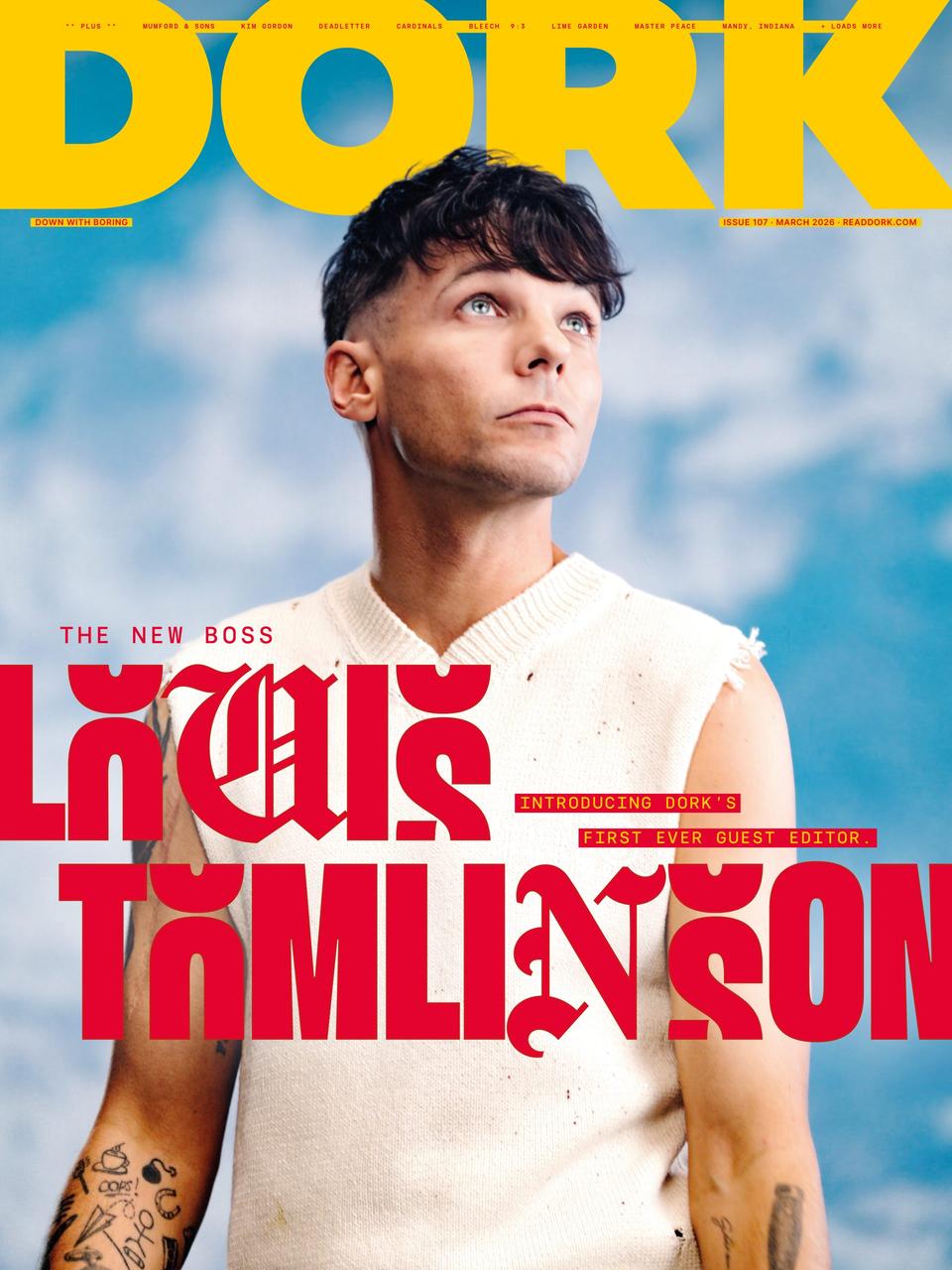
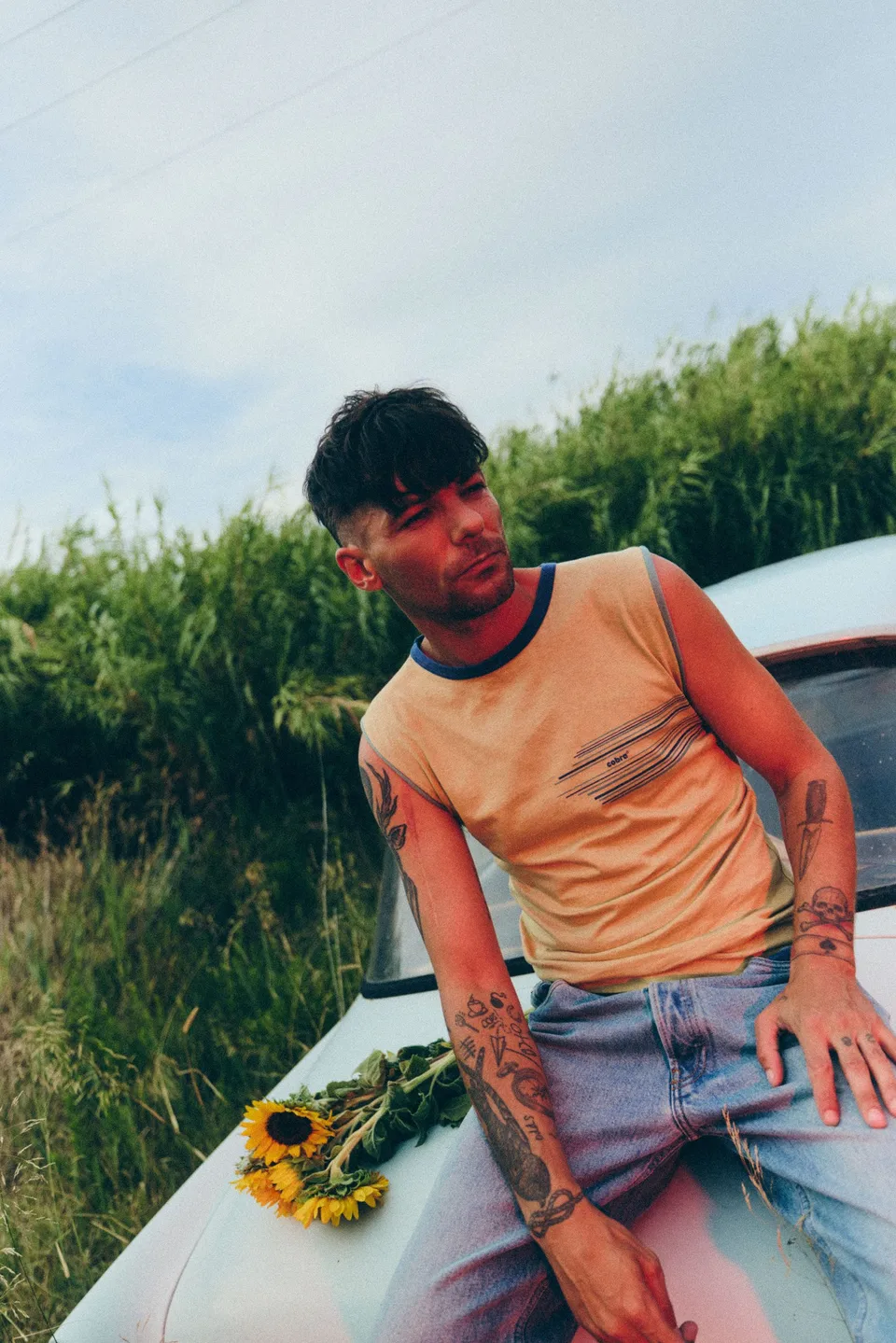
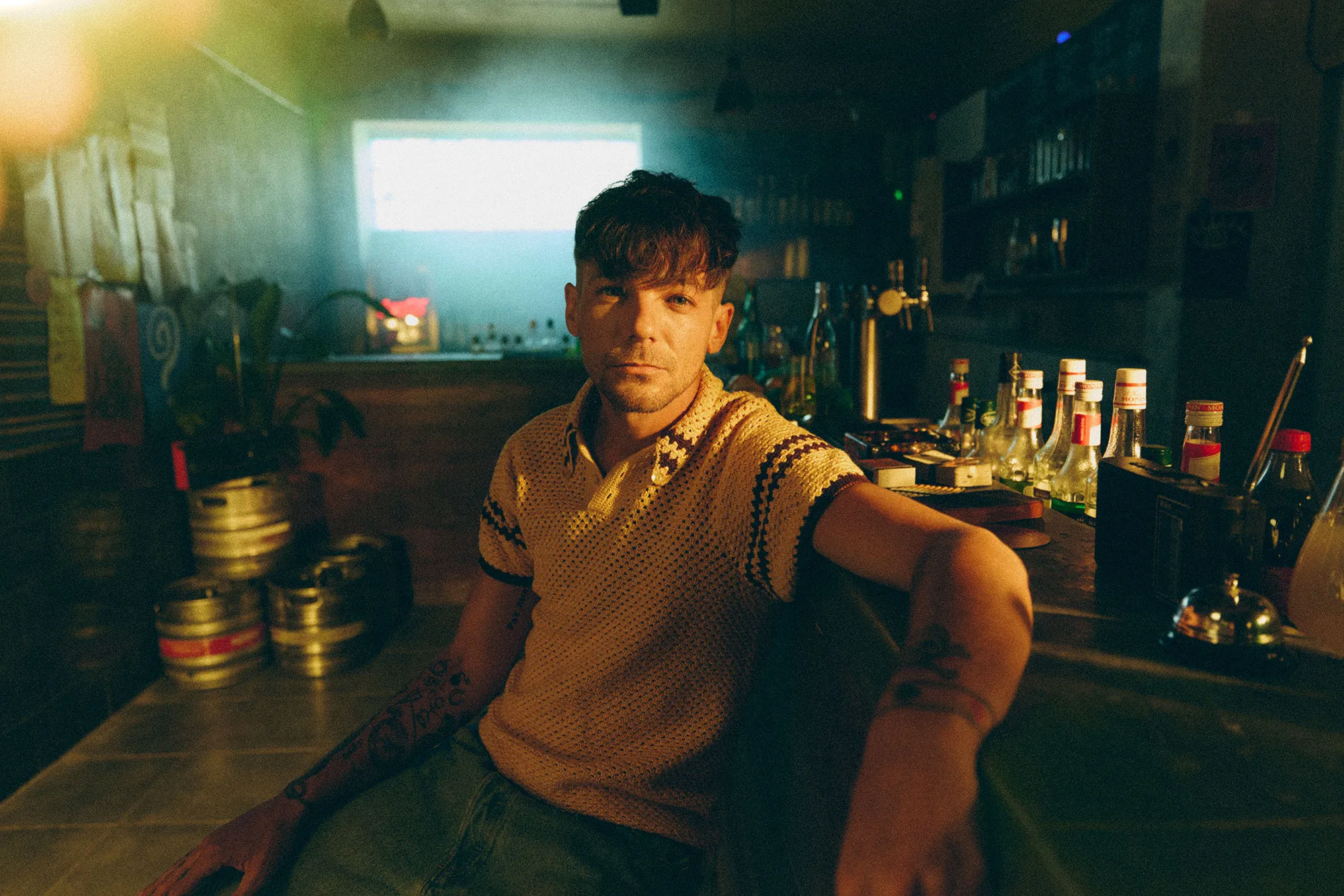
With ‘How Did I Get Here?’, Louis Tomlinson slows everything down, chases joy over expectation and discovers a lighter, braver version of himself along the way.
HOW DID I GET HERE?
Features
HOW DID I GET HERE?
With ‘How Did I Get Here?’, Louis Tomlinson slows everything down, chases joy over expectation and discovers a lighter, braver version of himself along the way.
There's a Costa Rican phrase, "pura vida", that translates to pure life. It's more than just a throwaway saying, however. It's a way of life. A conscious choice to be optimistic and laidback and put joy at the forefront of the life you live. If life isn't about chasing happiness, what exactly is the point?
The reverberations of that mantric notion are felt throughout Louis Tomlinson's third album, 'How Did I Get Here?'. Whilst its title might conjure up vaguely existential, nostalgic sentiments, the record feels much lighter than that, thanks in part to the relaxed, carefree atmosphere Louis was craving this time around. Coming over three years after his sophomore offering, 'Faith in the Future', it was a record that he immediately knew would need the benefit of time and space to figure itself out.
"I took quite a while to make 'Walls', the first record," Louis explains over the phone, just a week before 'How Did I Get Here?' is unleashed on the world. "I was really still working out who I was as an artist, and trying to work out who I liked working with. Because of that, I rolled pretty much from 'Walls' straight into 'Faith in the Future' in terms of writing. I didn't really give myself a rest like that, and I think creatively I needed one. I built up a lot of confidence on the tours that I did, and I wanted to feel that before I really started this record.
"You learn a lot on tour, both musically and on a confidence level. I felt ready to make this record, but I didn't want too much time constraint. That was not what this record was about. I wanted to try and do it in the most relaxed way possible."
“I didn't give myself a rest, and I think creatively I needed one”
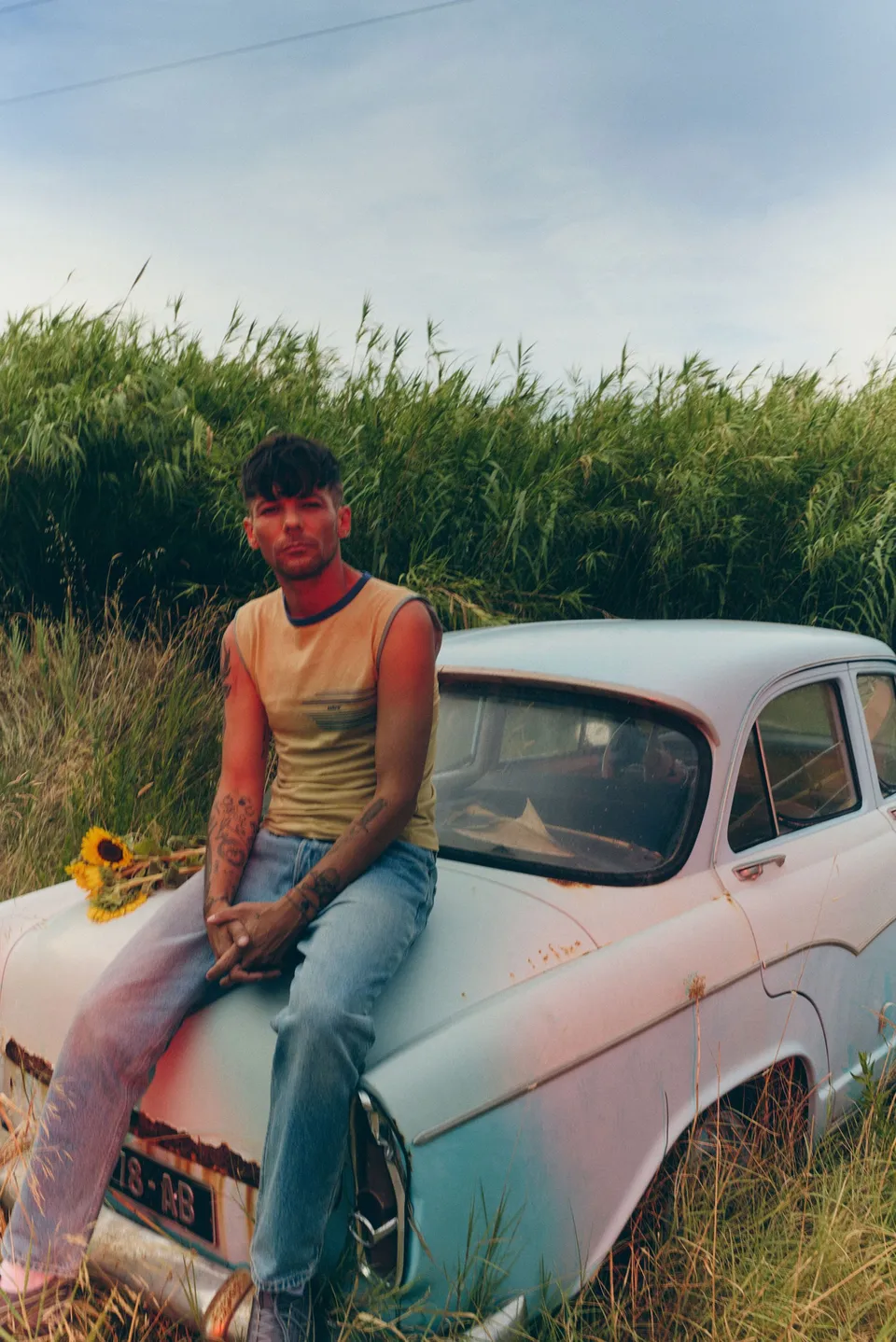
In need of a looser environment, it made sense to chase that feeling to Santa Teresa, a luscious Costa Rican surf town where the pace of life is slower, and free-spiritedness is the name of the game. Having previously written predominantly in the UK, the sun-soaked location was a much-needed change of scenery that befitted his freshly confident, at-ease outlook and, in many ways, heightened it.
"When I'd been speculating after 'Faith in the Future', and thinking that I wanted some real time to make this record. I'd heard that some people go to pretty beautiful locations to write and record; I definitely liked the sound of that," Louis says. "When I was a young lad, I didn't buy into that hippy stuff. I really wouldn't have thought it'd make any difference on the song, but it absolutely does.
"It's exciting to be in a place like that, especially when it looks so beautiful, and you're surrounded by nature and all of that stuff. Even the most cynical mind would be challenged in a space like that. That's really good for creating. I wanted to create this relaxed feeling, and in a place like that, there's so much tranquillity; it's really lovely. Those kinds of moments and those kinds of feelings shine through in the record, and that was really important to me.
"In the back of my mind, there was still part of me thinking, 'Is it going to make much of a difference being in Costa Rica or being in a beautiful location?' And it absolutely does. The album at times has that kind of island feel, and that feeling of tranquillity, and I love that."
“I'm a bit of a psychology nerd; I've always known that I've had imposter syndrome”
Embodying that headspace meant that rather than pursuing an album that would please others, Louis was solely focused on doing what felt right to him. There's a line on 'On Fire', the second track on the album, where Louis sings: "No compromises, the only thing that matters is if I really like it". It's that sensibility that echoes throughout 'How Did I Get Here?' - it's about making an album that feels good, every step of the way, with no pandering or relenting.
"My ear always goes to that line; it always makes me smile. I like that," Louis reflects. "I think it also gives a sense of where I'm at in my confidence, in my decision making and stuff like that. What I've realised from what I've done historically is that the more I do what I want, the more that resonates with the fans. I'm a pretty black-and-white, honest guy, so those kinds of things feel true to who I am. It was about really leaning into making the record that I always wanted to make. I look back on 'Faith in the Future', and I'm so, so proud of it, of course, but I was still putting limitations on myself at that point in my career, in my head. I was ready to make this record this time around."
It seems he was not only ready to make this record, but also ready to make a record that feels distinctly different to its predecessors. It's more brash, more experimental, leaping into territory that would undoubtedly have been out of his comfort zone before. If 'Walls' and 'Faith in the Future' were the sound of a man finding his way, burrowing in and baring all to try and make sense of himself, 'How Did I Get Here?' sounds like surety. He's done the work along this journey, and now he's prepared to have some fun and see what else he can pull from up his sleeve.
"I felt really good post-tour," reminisces Louis. "I got a bit paranoid about this idea of the third record. What I really don't want to do, and I think people might've been expecting, was 'Faith in the Future' part two. As much as I love that record, I really wanted to show that I've got more depth than that, and I wanted to make it exciting. That was always in the back of my mind.
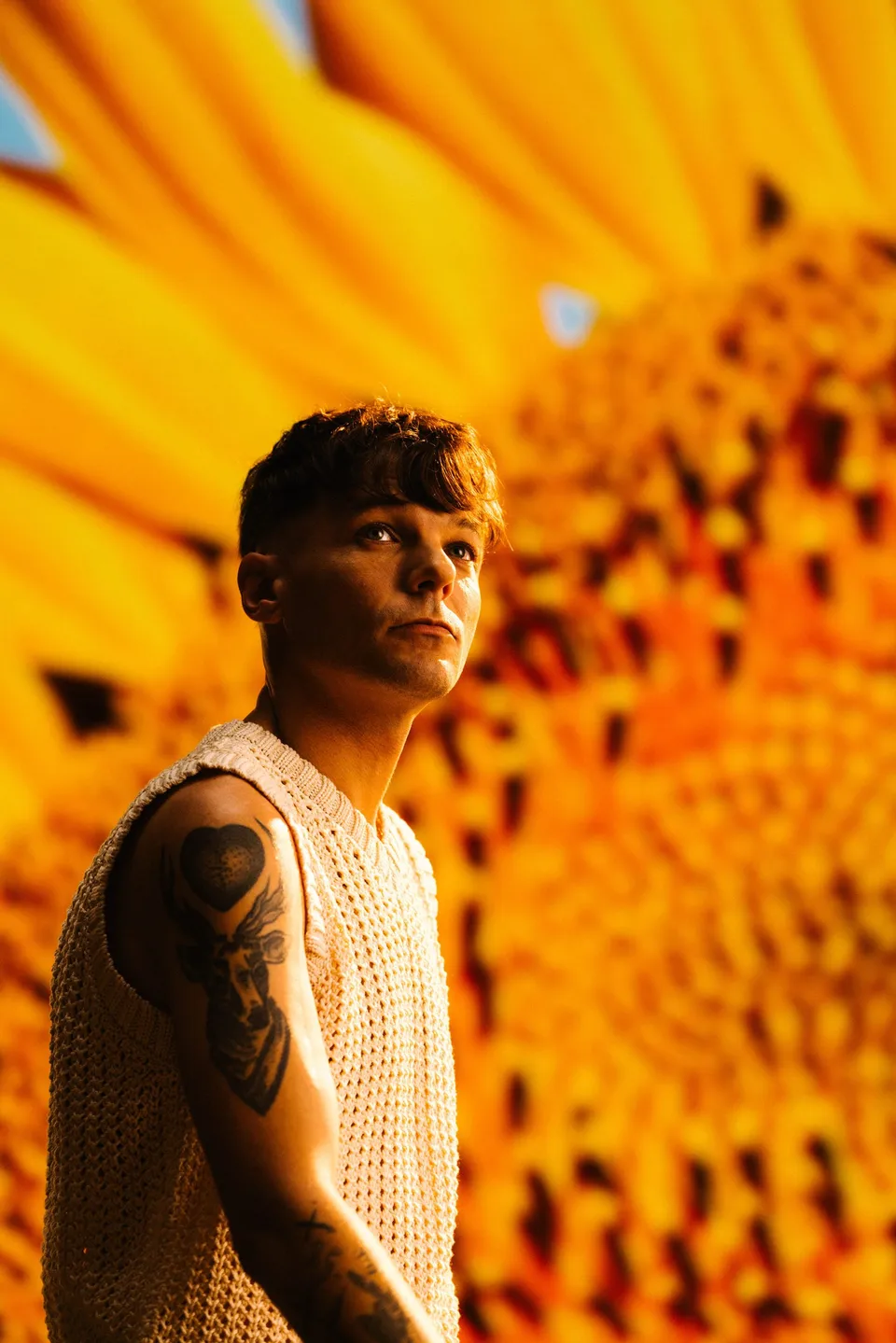
"One of the first songs that we wrote that ended up on the record, we wrote about two and a half years ago, was 'Lucid', and that closes the album. That's a really cool, trippy production. I love the concept; the lyric is quite out there. That's quite different and ambitious from what I've done before, so that was a really good starting point and gave me a lot of confidence to push the boundaries a little bit more. Then, things like 'Sunflowers' happened, which again, I would never really have expected. There were moments within the record where we tested ourselves, and I felt like we got a lot back from those songs, and that only makes you more confident to push the boundary a little bit more."
“That writing atmosphere is what I've been chasing - that idea of camaraderie”
Its willingness to take risks is what makes 'How Did I Get Here?' shine. There's an effervescence to the album, bubbling away in the sprawling falsettos of 'Lazy', or the shuffling percussion on 'Last Night'. It's emboldened and empowered - more willing to set off in pursuit down unmapped tracks and just see what's on the other side. For Louis, there's also something igniting and appealing in throwing people for a loop, too.
"Not in a nasty way, but I am a mildly disruptive guy," Louis admits. "I do like that kind of decision-making, I do take enjoyment in those kinds of things. There are definitely a couple of songs that I think will catch people off guard. Even the first ten, fifteen seconds of 'Lemonade', it's very different to anything that I've done in the past. The single we're about to release, 'Imposter', that's another one that will catch people off guard. It's quite different-sounding, and that makes me proud. I've been doing this for quite a while now, so those things make it still feel really exciting."
Surprising it may be to some, but in this spontaneity and free-wheeling state of being, Louis seems right at home. 'Imposter' is, as he suggests, the best example of this. A standout track laden with synths and a fire-starting energy, it's a new side to Louis's artistry that rightfully demands to be heard.
"I'm a bit of a psychology nerd," Louis declares. "So, I've always known that I've had imposter syndrome, but I was intrigued by how that looks in the idea of a relationship, and that whole metaphor. It's a cliché thing to say, but it felt like it wrote itself; it literally took us two or three hours to do. There was great momentum that day. That was also a song where I was instantly like, this is cool, I've not done anything like this before. That creates its own excitement and momentum in the room."
It was vitally important to curate a space where that energy could thrive in the studio, too, which entailed assembling a small but trusted team. With those like-minded individuals surrounding him in Nico Rebscher, Theo Hutchcraft, Dave Gibson, Dave Sneddon and Joe Cross, there was a bouncing collaborative atmosphere in the room, which meant spiralling in new directions was encouraged, and seeing things from a different perspective was crucial. With that spirit solidified, the vision of this album was quickly brought to life.
"I'd worked with all of these lads before, so I knew that we'd already had a great working relationship. A lot of them are artists or in bands; they have a different kind of attention to detail. They built me up massively. Since the band, that writing atmosphere is what I've been chasing - that idea of camaraderie, doing stuff together with collective intentions, it feels like a football team. There's something really sweet about that. I feel really lucky to be able to work with the brains that I do. A relationship like that and getting on with people is vitally important. You can be more clinical in songwriting for sure, and you can write with strangers, it's possible, but those really vulnerable songs, you only really feel confident to share stuff like that in spaces where you've got good relationships with people."
There are, indeed, moments of sensitivity and earnestness amongst the album's bright palette - 'Dark to Light' is perhaps the most tender moment, with Louis's vocals at their most cut open. The group around him were committed to instilling this confidence in him, though, whether that be to dig deeper and be as raw as he needed, or to be more intrepid. Sometimes, a little nudge was needed to get the most out of a track and the album as a whole.
"I'm always fighting against things like 'Palaces'," muses Louis. "If I were just going off what my ear likes, I would put 12 'Palaces' on there. The record needs more depth than that; it needs to flow and go on a journey, etc., etc., but I'm interested to see how long I can fight that urge…"

“I'm in a really happy place. I feel really good”
The album embraces the pop genre far more than Louis has in recent times, something that was the source of a lot of apprehension for him. While 'How Did I Get Here?' undoubtedly took on a more colourful, vivacious shape, that didn't come without a dose of reluctance from a man who has been loyal to a slightly grungier aesthetic thus far in his career.
"That's why I had to be a little braver, I am quite cynical about that truthfully, I've always believed that quite heavily. Even my version of pop, or cheesy, is still going to have some kind of grit. I had this a little bit on a couple of the songs with 'Faith in the Future'. DMA'S had just released a dancey-indie record, which, at the time, I was quite close-minded when it came to dance music, but I thought it was a really cool interpretation of it all. On this album, I feel less narrow-minded creatively."
Of course, there's always going to be space for the music he loves and returns to time and time again. As he says, there will always be some kind of grit, and on this record, that comes in the form of a snarling guitar riff that finds its home amongst the overwhelming warmth. Louis has always been vocal about his love for the indie rock genre, and that continues to rear its head on this album, though perhaps with different qualities of it taking centre stage.
"Someone like Sam Fender is always a concept and lyrical reference, or someone that will always come up, because I absolutely love what he does. I'm always keeping half an eye on that. At the time, I was absolutely obsessed with 'Favourite' by Fontaines D.C. It has that really summery, festival kind of feel, that will have been a loose reference for 'Palaces' at some point. That, coupled with that feeling and being surrounded by the sun and Costa Rica, those things definitely inspired the record the most. But the M.O. of the record was that I wanted it to be a proper reflection of my personality, which isn't quite as gloomy as the first two records imply. I am a glass-half-full kind of guy. We touch on emotional stuff on this record, but it's done in a lighter way, in a more positive way. I think that's truer to who I am."
He credits his time at Glastonbury for putting him in the headspace of making "big, anthemic singalong choruses", the finest of which appears on the gigantic 'Broken Bones'. There's a real release on tracks like that, and it is threaded through the album as a whole - as if in landing on this version of himself, he can breathe a sigh of relief. It's lighter in sound and atmosphere, of course, but there's a levity in his artistry now, too.
"It's just the way I feel it myself," Louis says. "I'm in a really happy place. I feel really good. I feel really good in myself, in my personal life, in my career as well. Those kinds of things… You can't fake that. That hopefully comes through in the record."
That sense of contentment can only increase for Louis as he prepares to head out on an extensive tour that will see him traversing across Europe and North America. Though it will present another challenge to reimagine this new style into a live setting, it isn't one Louis is likely to shy away from.
"We've rehearsed three or four of the new ones, and they're sounding really good," Louis teases. "The ones that we've tried are the ones that will be a little bit more self-explanatory live, the ones with a bit more tempo and a bit more behind it, so 'Broken Bones', 'Jump the Gun'. But I'm interested to hear how things like 'Sunflowers' feels, 'Sanity'... They're less self-explanatory, so I'm excited about that. I'm excited to mix it up a little bit on tour. We'll see how long I last in this space.
"I want to try and do something a little bit more colourful and something that has a more positive feel to it. I am a sucker for a low-lit red - I love red on stage. I've rinsed that for the last two tours. We'll see how long I stay away from that. I'm really excited about it. That's the punchline for me to everything that I do. I'm excited to get the album out, but I'm more excited to tour for sure."
“It's the first time that I've thoroughly enjoyed making a record”
There's some huge venues on the list, but it inarguably feels fitting that it is at this moment in his career he will be filling these rooms. More settled than ever, more sure of his direction and ready to enjoy every second of this chapter, it's a perfect opportunity to showcase that joy.
"It's really the right time," Louis agrees. "Don't get me wrong, I never anticipated some of these venues, that's for sure. But it's definitely the right time for me to be doing them. I feel just about worthy of them, I suppose I could say - I couldn't fully commit to that statement. But now I'm really, really excited. I feel really, really grateful.
"I want people to think about the title when they're in those venues. We've definitely come a long way from the first few shows we played, and that really is thanks to everyone. It's an obvious thing to say, but an important thing to say. I'm really excited to share those moments with everyone in those big spaces. The O2, that was the last tour, that was the first time I played a big show, and had loads of friends and family there, and I thought I'd fully delivered. Those shows can often beat me a little bit. I struggle with the big ones, because there's more pressure, but I really delivered on that and felt like I did a really good job, so it has put me in good stead for those big shows.
"I feel really confident going into them now. I'm excited to see how I deal with the pressure of places like Madison Square Garden - it sounds fucking nerve-wracking on paper, I will say that."
If anything, Louis has never been better equipped for shows of this size. 'How Did I Get Here?' does ask a pivotal question, but the answer is really through a lot of hard work - chipping away at who he wants to be and who he could be to get to where he is, and finding the happiness entangled in that. It's been a long journey, but a valuable one that sets the tone for where he moves from here. For now, Louis is soaking in this moment, but there's a great deal to be taken from the making of 'How Did I Get Here?' that could well define what comes next.
"It's the first time that I've thoroughly enjoyed making a record," Louis concludes. "It's not that I haven't enjoyed moments of the previous records, but there was just a certain amount of pressure around them, and timescales, and it didn't feel like the singles were really connecting. It was a tougher time for me. I'm really enjoying everything about this process this time around. That's a good experience. It's a good way to feel, and I'll be feeling good going into the campaign after this, and that's really good for me. I'll carry that forward."
Taken from the March 2026 issue of Dork. Louis Tomlinson's album 'How Did I Get Here?' is out now.