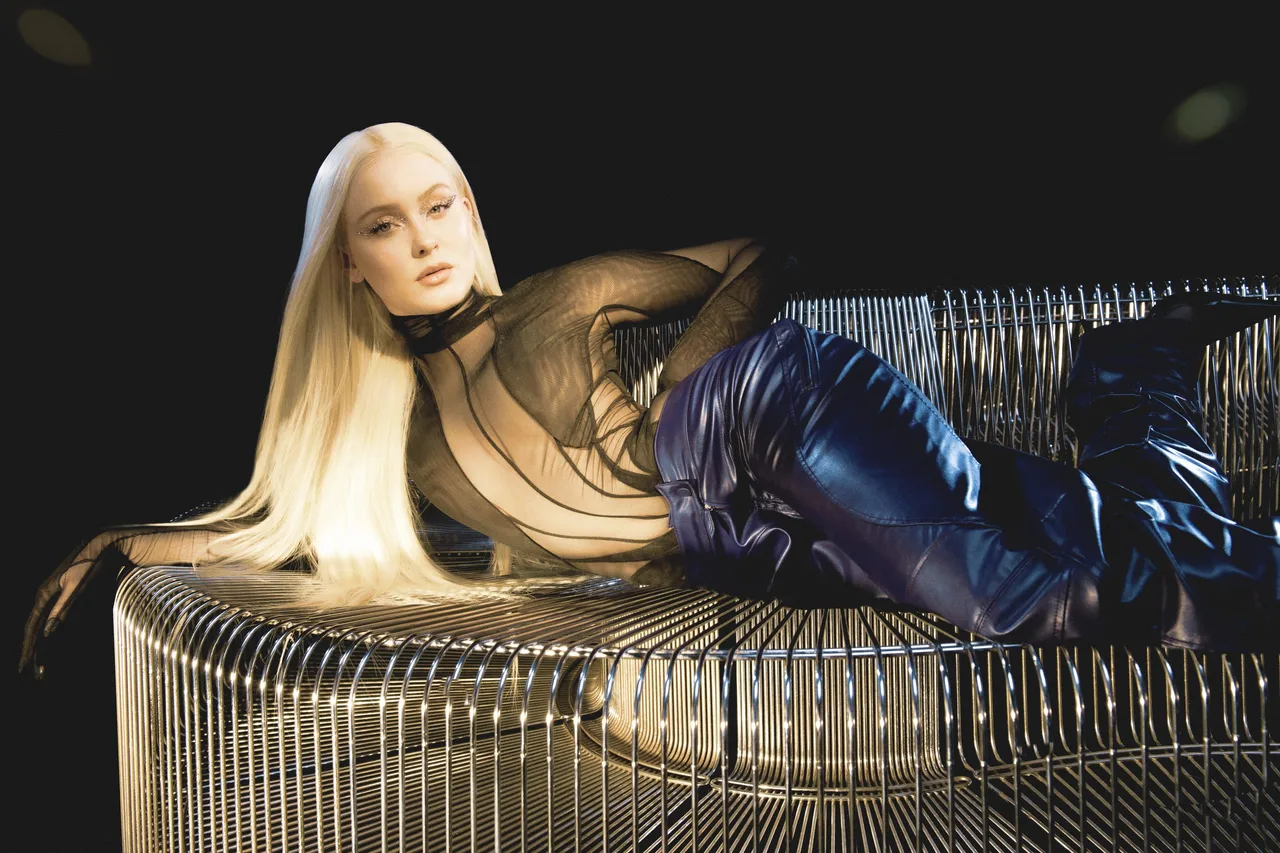
Zara Larsson has already proven herself as one of pop’s main characters, and with album two, she’s embracing fun.
Words: Abigail Firth. Photography: Benjamin Vnuk.
Zara Larsson was born for the stage. She knew at six years old that she wanted to sell out stadiums and by ten she was on national television, winning Sweden’s answer to Britain’s Got Talent. By 17 she had an international smash hit to her name and still she was just getting started.
Now, at 23, she’s about to release her second album ‘Poster Girl’, four years after debut ‘So Good’, and it’s a roaring disco spectacular that puts its foot down on track one and doesn’t let up for the whole ride.
“I just want the bangers!” she says, revealing herself as a pop star who truly understands Dork. “I want the bops. And I want it to be pop and fun. I fucking love pop, and I’ve always loved pop. It takes me somewhere in my head where I can just live out my fantasies of being super powerful, and very glamorous, and just kind of escape every day. Still, at 23 years old, I stand in front of my mirror, and I put on makeup, and I feel like a bad bitch, and I sing songs, I dance, and I pretend I’m performing. Like I still do that. And I’ve been doing that my whole childhood.”
The central idea behind ‘Poster Girl’ is the two sides of Zara. There’s Zara Larsson the pop star, glamourous, confident and world-famous, she’s the one up on the wall in the cover art. Looking wistfully off-camera is the other side of her, the one who isn’t afraid to admit she’s not perfect, and that’s the one we chat to today. She’s in Stockholm when we ‘meet’, where she’s been living for the past year, sitting in the corner of her couch (that’s where she’s been, specifically, for the last year), caught a little bit off guard when the front camera comes on. She’s in her workout gear, opening a parcel that turns out to be her dad’s Christmas gift arriving way too late (a classic in the Larsson household according to her), and trying to order a burger because it’s lunchtime in Sweden; if we’d have known better, we’d have brought a snack too. Perhaps one of the best things about this Zoom interview era is getting to see celebrities entirely de-celebrified, and in this case, it feels really appropriate for the album promo.
It’s been a long year for Miss Larsson, who wrapped up her album last March just before the world shut down. “It’s weird because when I think about my life, I always think I don’t really do anything,” she says from the floor of her living room. “It doesn’t matter if I’m literally on tour, I will think, why does nobody have me working? So I said, oh, 2020 was definitely me sitting on my sofa. It really wasn’t, but that’s how I feel because I don’t feel like I’m working.”
Obviously, 2020 is accounted for, but what about those other three years since ‘So Good’? There have been singles since 2018 – two of which are featured on the album – but nothing fell into place properly until much later.
“It’s really hard to say what took so long because the truth is, the majority of these songs, even though I’ve been working on my album [she half air quotes and rolls her eyes] for four years, the majority of the songs I wrote the last week of writing the album. So now, when I look back at it, I’m like fuck, this could have been my third album or my fourth. But it’s very easy to be to look back at something and say, oh, I should have done this like this, but I think whatever happened led me to this point, and I’m really proud, I’m very happy with how it turned out and how it sounds.”
Feeling the pressure to live up to the sales and accolades of ‘So Good’ (which became the second most-streamed debut by a female artist on Spotify and earned her four BRIT nominations) and getting caught up in a ‘better = more streams’ phase, and letting that go to express herself properly took time. She says, “Sometimes, just because something is more popular, it’s not objectively better, but when you do mainstream pop, then it’s hard to ignore that part, you know? Of course, I want my albums to be successful, but I think I am also in a state now where I feel very proud and very involved in everything I do, and when you are, it becomes more about the actual art than the numbers. But I would lie if I said I didn’t care.”
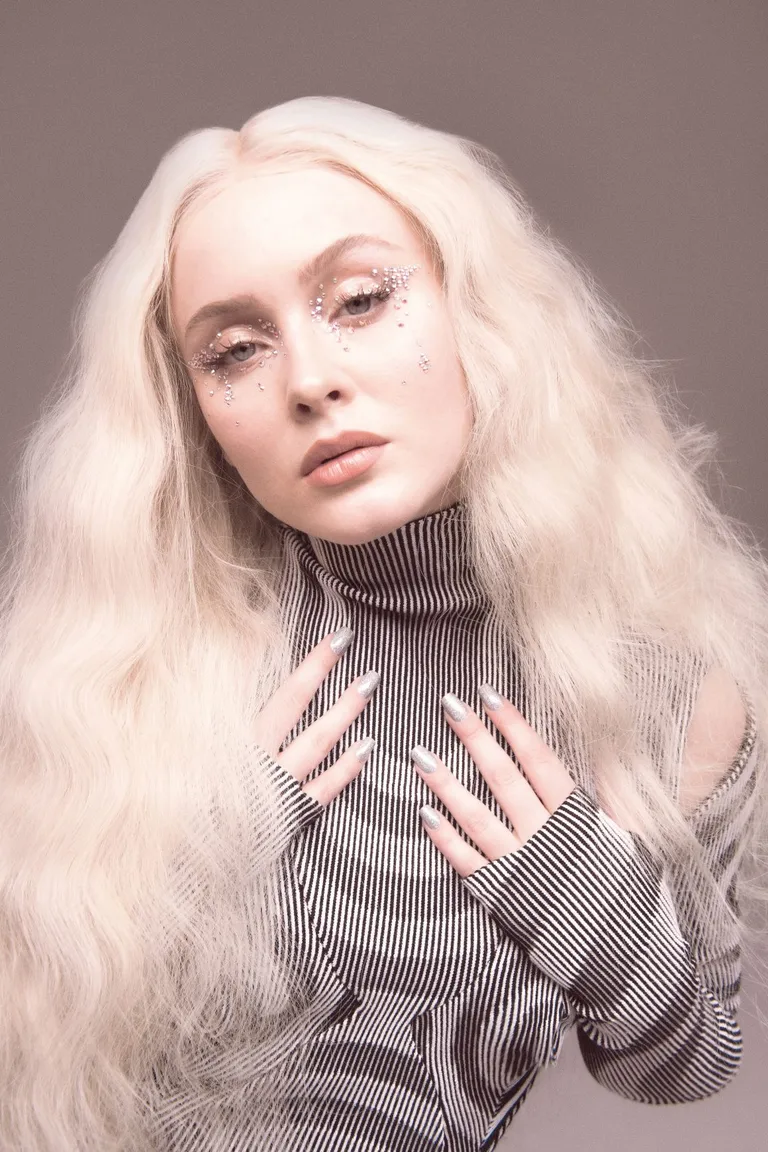
“I want it to be pop and fun. I fucking love pop”
— Zara Larsson
The hold up was also probably slightly down to the fact she doesn’t seem that bothered about making an album. Not in a way where doesn’t care about the final product (clearly she does considering it’s bloody brilliant), but she’s just very Gen Z in how she consumes music. She notes that the only full albums she really listens to are Beyoncé’s ‘Lemonade’ and Frank Ocean’s ‘Channel Orange’, but she’s a singles and playlists girl at heart. With that in mind, it makes sense why she’d brush off the ballads in favour of back to back bangers. Her selection process is as follows:
“Could this be a single? Yeah. Could this be single? Yeah. Could this be single? Yeah. I feel like every song has the single material.” She’s right BTW. “Obviously I would love people to listen through my album track by track, but I think how most people listen to songs is like, ‘this song’s good, yeah, let me add that to my playlist’. I mean, hopefully they’ll just add the whole album to their playlist.”
When we quiz her on why 2019 singles ‘All The Time’ and ‘Don’t Worry Bout Me’ didn’t make it onto ‘Poster Girl’, her solution is genius. “Sometimes I’m like, guys, ‘All The Time’ is out there, like you can listen to it if you want! It’s not like I took it away! Just make a playlist of the whole album, put it on the end… ta-da!”
On ‘Poster Girl’, Zara gives us total escapism, the kind she sought out as a child. Much like Dua’s ‘Future Nostalgia’ and Gaga’s ‘Chromatica’ of last year, it’s pure pop relief and a flicker of light in what’s looking to be another dark year.
The record is deliberately optimistic. From the opening lyric “never thought I would love again, here I am lost in love me land” built around gigantic vocals and a pulsing, string-led beat, to the closer ‘What Happens Here’, which wraps a story of self-assurance and a free-spirited fling up in Carly Rae Jepsen sized euphoria, there’s no way you’re feeling down for the whole listen.
“I think that’s how most of my songs are, even if it’s a sad song. The delivery of it is usually quite happy. It’s the same with ‘Never Forget You’, it’s very uptempo and fun, but if you listen to the lyrics, it’s kind of sad. Or even ‘Ruin My Life’, it doesn’t feel like a sad song to me, it feels like hey, let’s go dancing.”
It’ll be a travesty if this album doesn’t hit clubs and stages as soon as physically possible. It’s made for dancefloors and belting out with your besties. Arriving well into the second half is one of ‘Poster Girl’’s biggest tracks, ‘Look What You’ve Done’, who’s title suggests it’ll be a crooning, heartbroken ballad, but instead it plays out, lyrically like ‘thank u, next’, and sonically like a 21st Century iteration of ABBA. The title-track finds Zara feeling out of character as she develops a crush, again backed by glittery disco production and falsetto vocals you’ll struggle to hit on the karaoke machine. Even the more relaxed tracks like ‘Need Someone’, which has an airy, easy-going vibe, builds into a much funkier, bigger anthem, tied together by a groovy bassline reminiscent of Tame Impala’s ‘The Less I Know The Better’ and a twinkly piano line.
“I think pop is so great because it’s so accessible and it doesn’t have to be absurd like, ‘oh, no, you wouldn’t get it’,” she says of the album’s sound. “I wanted it to be fun and easy and accessible. I think that’s why I love pop because anyone could join in.” As soon as those clubs open we will be joining in! But for now, we’ll have to sing into our hairbrushes in front of the mirror for our pop star moment.
As an artist who thrives on stage, Zara is desperately missing performing in front of a crowd. Of course, live streaming shows are a common thing now, but the really special part is experiencing the music and joy together with others, and as we know by now, that just can’t be captured properly when you’re not there in person.
“Performing is my number one thing. Everything else is just a bonus to that. I also don’t really see myself as a writer particularly, even though I do write and I’m pretty okay at it, I don’t, you know, sit in my bed and write lyrics. I stand in front of the mirror, and I pretend I’m on stage, I’ve always been like that.
“Being in the crowd standing around all these people singing the same song, that’s really powerful. It’s the same with sports; sports, and music are the only things that will really bring people together like that, and when you root for someone, or like, you sing along to your favourite artists because you love this song, because you had so many memories to this song, or that artist was just a part of your life or whatever it might be, that’s what makes it so special.”
“Girls are being taught that sex is something that happens to you, and not something that you’re a part of”
— Zara Larsson
“He’s so funny, man. He’s funny,” she says of the icon. “Like, I was in the studio, here in Stockholm, working on ‘Don’t Worry Bout Me’, and he came down like, ‘Hey, what’s up? Can I sit here?’ And I was like, first of all, it’s your fucking studio. And you’re Max Martin. You can do whatever you want. But he’s so humble and sweet, he kind of like, sits on the floor, then we started working on ‘Stick With You’, and he was like, ‘Could I please say something?’ And I was like, yeah? You can do whatever you want!
“As a writer and as a human, he’s always down to listen. And I think that’s why he’s still so relevant. Because he’s not like, oh, I wrote like a Number 1 20 years ago, and I’m the shit. He’s always like, ‘Tell me, what do you think?’ He’s very tuned in, and he’s someone you just want to be around to write with.”
She also talks about her vulnerability in the writers’ room, even for songs that don’t sound so deep, being creatively assertive doesn’t come easily.
“When you’re sharing your thoughts, I have to feel comfortable in that, because you feel a little naked in a way like, ‘Hey, what do you think about this?’ Someone has to be the judge of that. It’s very important to be with people that you feel comfortable with, and that you can share whatever you might think, because there are no bad ideas, but still in my head, I’m like, should I tell them what I’m thinking? Oh, maybe that’s such a bad idea. Maybe it’s not a good idea at all. And then someone says the exact thing to what I’ve been like thinking about, and everybody’s like, that’s great, let’s go with that, and I’m like fuck! I should’ve said it!”
Despite how she might feel about sharing her thoughts in the studio, the result is remarkably vulnerable at times. On ‘I’m Right Here’ she pleads ‘Why do I even try?’ and ‘Why can’t you look at me?’ over the chorus, while the verses are open in a different manner, as she sings ‘I could be naked at dinner and touching the waiter… it wouldn’t even get your attention’. Similarly, on ‘I Need Love’, she belts its title as the refrain. The contrast is that on a lot of these songs, Zara is the one in control.
“I do think being, quote, unquote, weak is also in a sense, not weak. I think being vulnerable is a sign of strength. And to say, like, I’m fucked up, or like, I’m really sad. I think there’s something strong about that. But also, traditionally, girls have always been seen to need a man or like, you need this and this and this to be happy, which is not the truth. So a for little bit of [those songs] I was like, well, actually, I’m fine without you, I don’t need you, but I want you,” she says raising her eyebrows.
Since the start of her career, she’s been known for being outspoken, particularly on topics surrounding feminism and politics (in one iconic tweet, she said: “Feminism and man-hating are two different things. I support both”). We know her lyrical choices aren’t exactly revolutionary, but they’re empowering in their own way. When she starts telling the story of ‘What Happens Here’, it becomes clear that these tracks are in fact a little more vulnerable than their perfectly polished shell might suggest.
“On ‘Look What You’ve Done’ it’s like I’m shining without you, I’m glowing, I’m on fire. ‘What Happens Here’ is really powerful too because it’s like if you want to talk about me and what we did, that’s cool for me, because I was down with it. I wanted you just as much as you wanted me. Sometimes we, in society, like girls are being taught that sex is something that happens to you and not something that you’re a part of. It doesn’t happen to you, you are equally a part of this. Hopefully, you want it like you’re horny, you want to have sex, and that’s it. So if you want to talk about it, that’s fine on me, I don’t care. I wrote that because, when I first got together with my ex, we were in school, and he was like, I don’t have to tell anyone about it. I was like, what? I was real