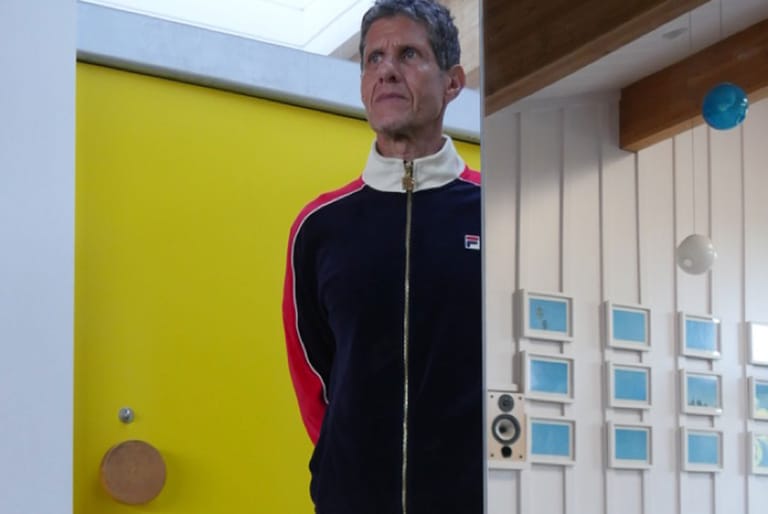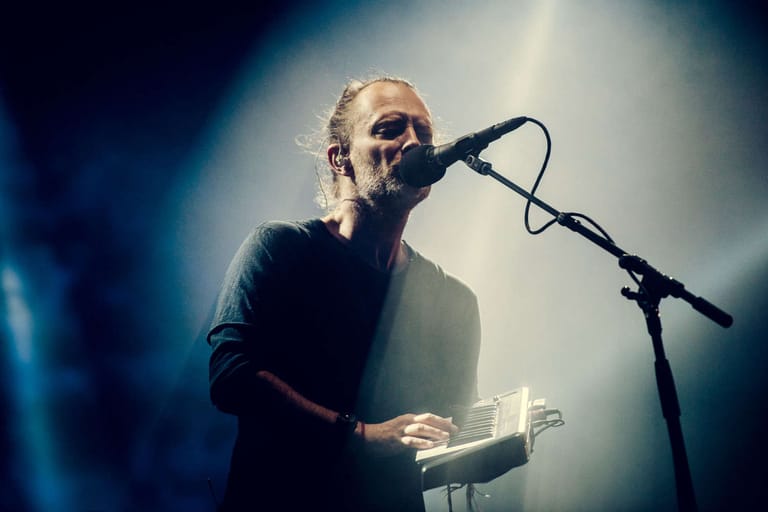



For a town with nearly 250,000 people, Luton is starved for music venues. Aside from The Castle, a small pub venue doing admirable work at keeping the town's music scene alive, going to a gig usually requires taking a train ride into London. It's a situation which has only got worse with time, although the town council's announcement that a new development by the train station will include a 600-capacity venue offers at least a faint hope for the future.
Luton is also an incredibly working-class town and one with areas of incredibly high deprivation, two factors which make it even harder for anyone who grows up there to find a way into music as a career. For Myles Smith, a proud Lutonian and one of the biggest new acts on the planet, these are difficulties he knows all too well.
"I think the landscape has changed massively even in the last few years," he says, calling in from his home in a rare moment of downtime. "When I grew up, there was an abundance of opportunities to put yourself out there, whether it was one of the million open mic nights, or local band contests, or even going to neighbouring towns and playing there.
"Having access to those opportunities and being able to see a band play really gave me something to target and reach for. It's really sad that we're seeing a decline in those venues and grassroots spaces."
Continue reading with Dork+
Subscribe to Dork+ for instant access to this article and our entire archive of exclusive content.
Unlock with Dork+
On the cusp of releasing a debut album which is pretty much nailed-on to do stratospheric numbers and with two genuinely global smash hits already under his belt in the form of 'Stargazing' and 'Nice To Meet You', it feels strange to talk about Myles Smith as a local artist. But then, it wasn't so long ago that he was still playing those local venues, and he's keen to assert his continuing ties to Luton town.
"Luton has probably shaped every facet of me," he says. "Not only as an artist, but as a person. Growing up in a town as multicultural as this one, you get a global experience. It's so diverse that everyone you meet is from somewhere different, so you get to travel the world before ever leaving home. It's such a unique experience, and it's part of the reason I've always thought bigger and seen bigger as an artist.
"Growing up, I had the opportunity to learn so many different styles of music and incorporate different rhythms and melodies, all just from that multicultural background and upbringing that I had. Whether it was being in Irish pubs and playing trad music or being with my friends and listening to Bhangra, there was just so much music, melody and culture going on from an early age. Music from Luton and being in Luton shaped me quite a bit."
That exposure to different styles of music is one part of the story, but if it weren't for Building Schools for the Future, a scheme implemented by the Labour Government in 2005 and shuttered by the Tories in 2010, Myles might never have been able to access the vital equipment he needed to develop his musical abilities. As a story of how poorly the UK values the arts, it's perhaps not a remarkable one, but as Smith knows all too well, these cuts hit the poorest far harder than those with their own resources and are at least in part responsible for the current musical landscape, which is sorely lacking in working-class representation.
"A lot more needs to be done," he acknowledges. "Partly that comes down to individuals, too. With Ed Sheeran, we've been doing a lot of work through his foundation and lobbying governments, but at a personal level, it's something I try to do too. I'm going out to help with regional creative agencies or startups and seeing how we can get intertwined with them to build alongside local community groups that are doing music and fostering those environments.
"It's inspiring to see artists like Sam Fender starting their own touring initiative, too. There's so much happening at a personal and independent level, but it'd be great to see a national shift away from where we are and towards understanding that music is one of the biggest cultural and financial exports that the UK has. It's weird how undervalued it is."