


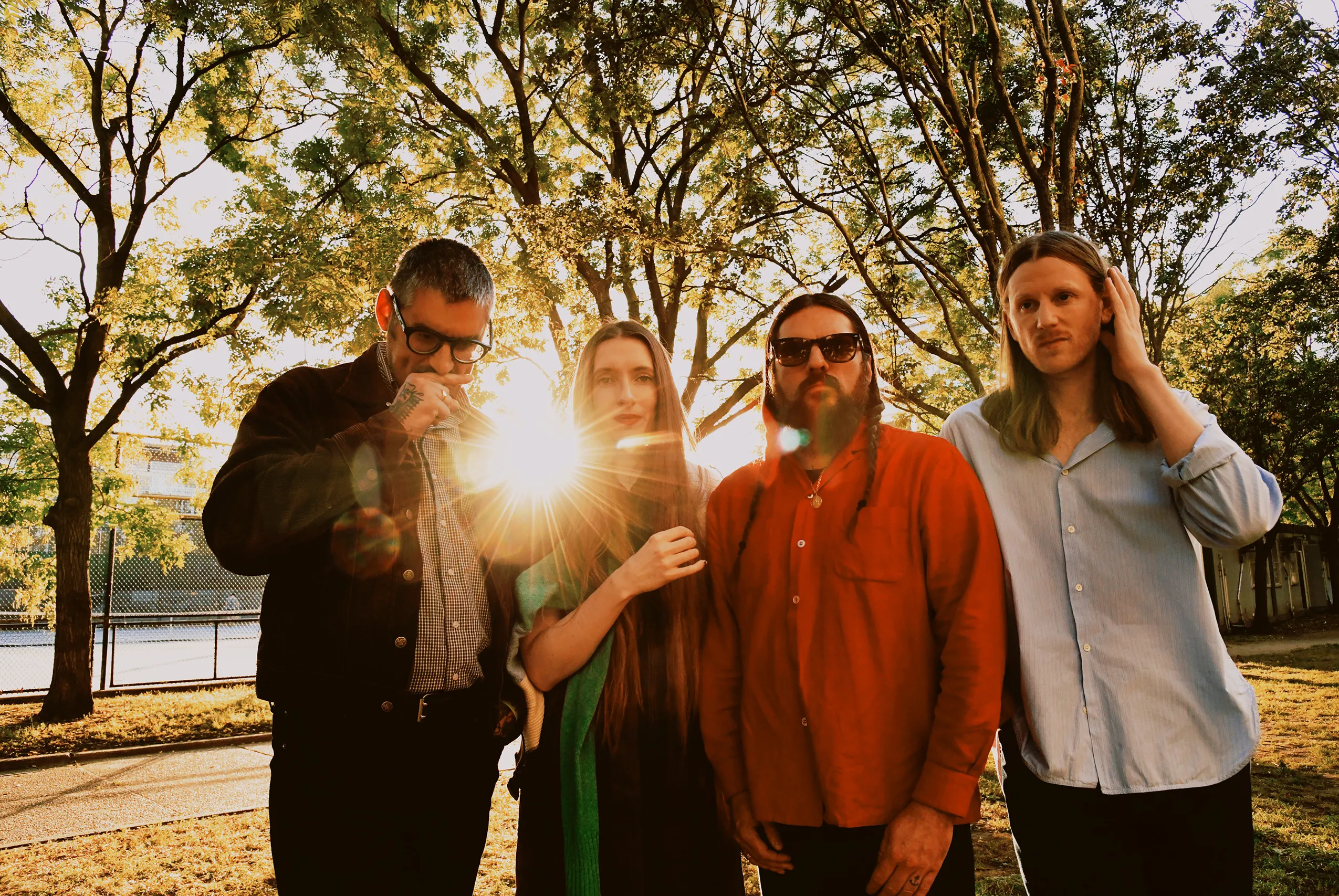
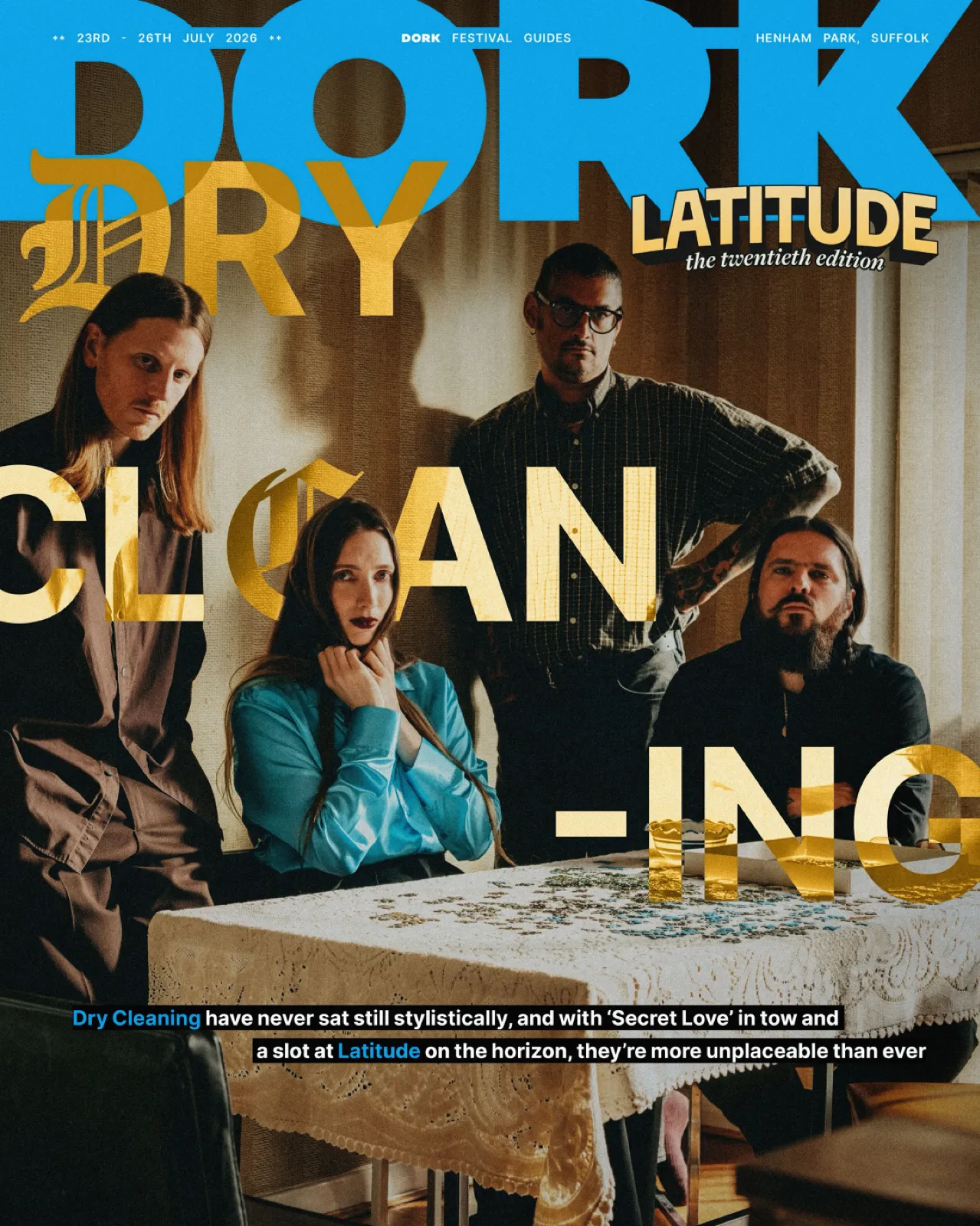
How many times in recent years have you heard the term 'post-punk'? And how many times has that actually been the right term to use? It's a label attributed to anything that isn't immediately understandable as one thing or another, the exact sweet spot within which South London's melting pot magicians, Dry Cleaning, find themselves.
The release of their defiantly dramatic and wonderfully weird third album 'Secret Love' in January of this year saw them delve even further into their creative niche, searching new enveloping depths to underline the fact that they cannot and will not be defined.
"I listened back to our EPs when we re-released them in 2024," drummer Nick Buxton reveals, "and I was like, 'Oh, this actually does sound like post-punk!'.
"But that's become the line in the sand we've tried to push away from, and it's kind of defined the band."
'Secret Love' sees them as far from the norm as they've been, splicing together Florence Shaw's winding, oftentimes quite niche sprechgesang narratives with fiery guitar lines, moments of shimmering synth, and a real sense that the band have made a home in the hole they carved out in their anti-normcore landscape.
When lead single 'Hit My Head All Day' first hit the shelves – or streaming services, really – it revealed that the quartet were expanding who they were and what they were doing, acting almost as a precis of the album as a whole. Moody goth-pop drumbeats provide an ominous backing for guitarist Tom Dowse to overlay with screeching, scrawling riffs, all while Florence unfurls her desire to live a life out loud.
"It's such a different feeling once things are public," Florence posits. "I don't feel a huge amount of ownership over it once it's out, but I think in a way that's natural and right.
"You feel super sensitive and very close to it before you release it, and then as soon as it's in other people's lives, I think about other things."
Bassist Lewis Maynard agrees. "You're processing it yourself a lot and learn about it about it as you answer questions about it. We did two weeks of press before it came out, and I feel like I learned more about the record then than I did actually recording it!"
This diverse, sprawling collection of influences – David Byrne, The Stooges, and Suicide are all cited by different bandmates – could make the album feel muddled, pushing the envelope that inch too far.
Where it would be tempting to tune up all the things that had made their second album 'Stumpwork' such a cult classic, all of the tiny, nuanced details shine brighter because of the increase of space, a collective deep breath as the band chipped away at what the third album would become.
"I've been listening back to it a bit recently," Tom explains, "and I really enjoyed it, which I don't think I did with the other ones.
"Normally, you listen back and just hear the things you did wrong, all the mistakes, but that hasn't really happened on this one. I think because we've got more layers, there's more depth to it, but also more space in there; I'd always hoped we'd make an album like this."
A crucial part of the record was entrusting production duties to Cate Le Bon, someone who knows a thing or two about turning down the noise to allow the central sentiment to punch that bit harder.
Thinking back to the recording process, one which saw the band explore new rooms and new techniques, Lewis says, "We wanted to try out different techniques in different rooms because we realised how much we react to a room.
"It could be even the temperature; in the pandemic, we rehearsed in our friend's venue, which was really cold, so we wrote really fast songs to keep us warm. Then Cate was the final bit that kind of brought all that together."
Tom nods: "I feel like a lazy producer would have tried to iron it out a bit. We weren't certain about how to make the record. It wasn't off the table that we just used the demos - you know you get those discographies of bands with all their B-sides and rarities and stuff? – but Cate insisted that we record everything again, and, obviously, she was right.
"I think it's because she was coming from the same point of view, whereas maybe if she had said she wanted to record everything again so she could smooth off all the edges and make it more similar, it would have been bad; I think we were lucky we worked with someone who fundamentally got that."
Crucially, too, re-writing was kept to a minimum – minus Flo's lyrics, which she admits she "tends to edit and edit" – meaning there was no reliance on what Tom calls "production trickery" to get a song to sound better than perhaps it might otherwise.
"The songs are, at their base, just really good songs," he states. "They're very hooky, and they're very pleasurable to listen to, even if they are quite gauzy and dark at times. That's a really nice thing about the record, like, that I think it works as an album; it's not just a collection of songs. I think it actually works as one living organism."
Lewis adds, "There's a lot of confidence that comes from the freedom of how we write and how we are in a room together. There's never an expectation of what someone's bringing, or how someone's gonna respond to an idea.
"'Hit My Head…' is a good example: it started with Nick with a keyboard loop and Flo on the harmonica. It just started from that jam, and I think that kind of freedom breeds confidence as well."