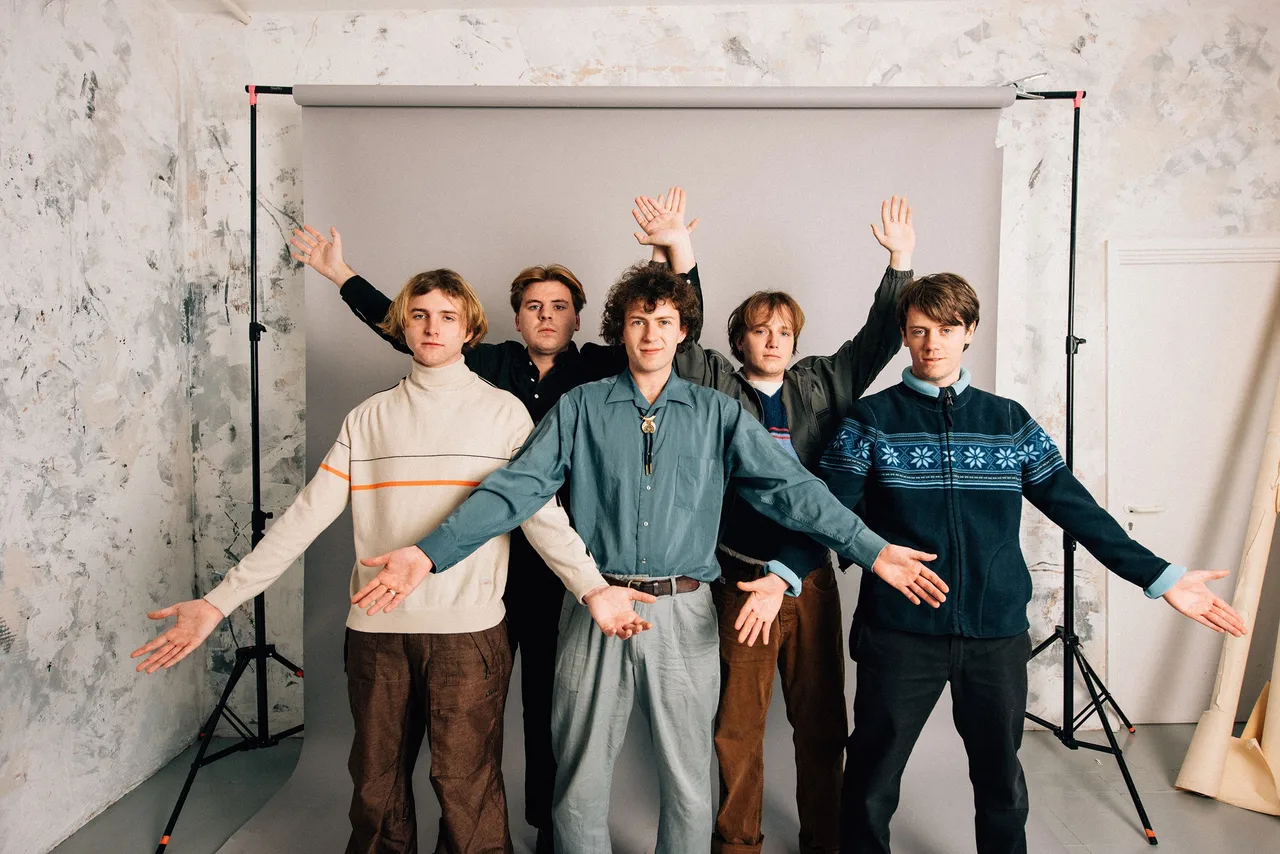
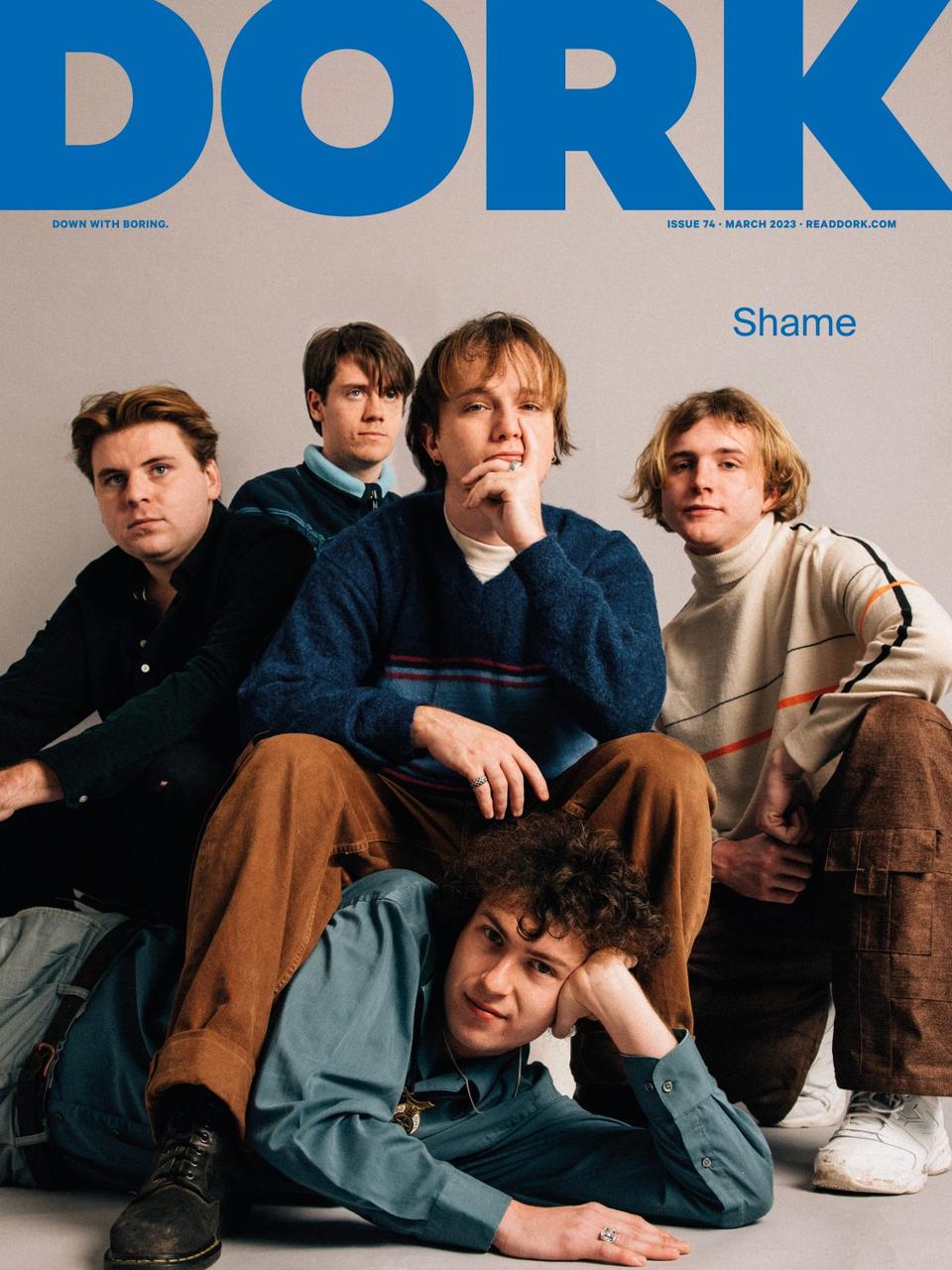
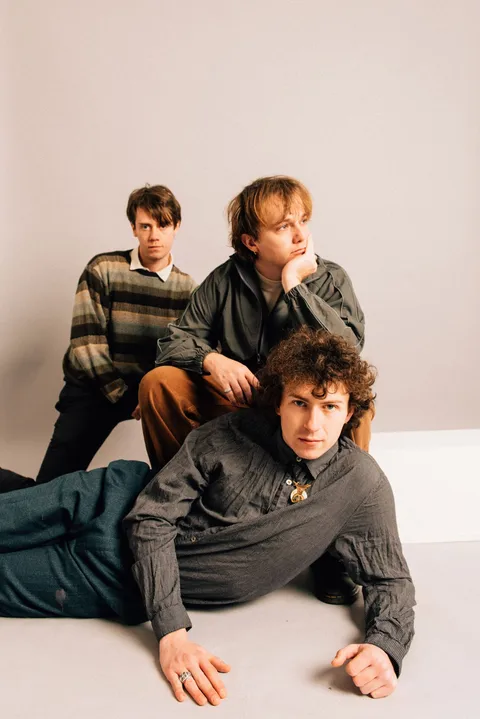
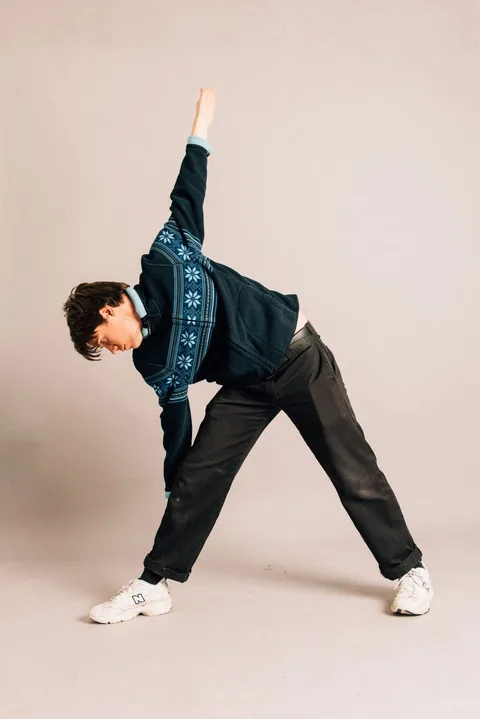
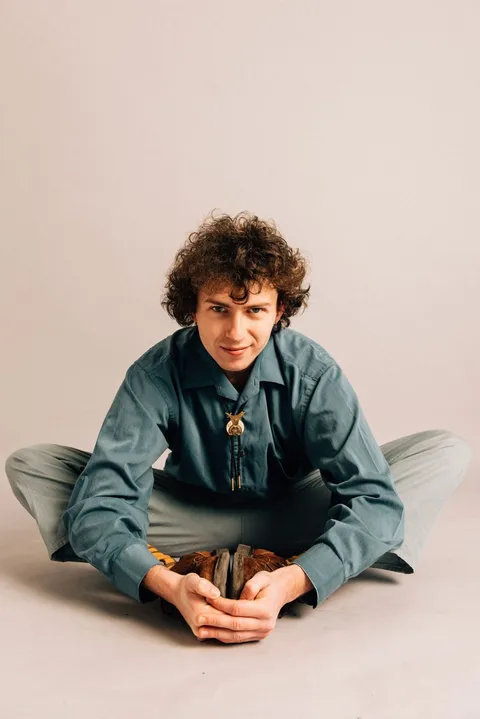
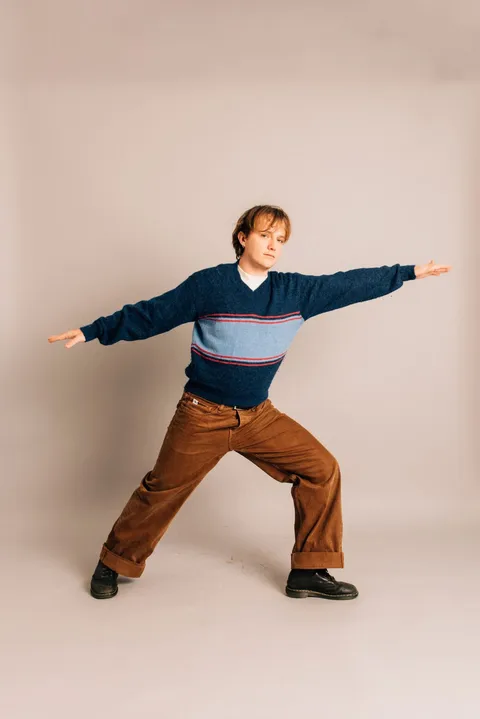
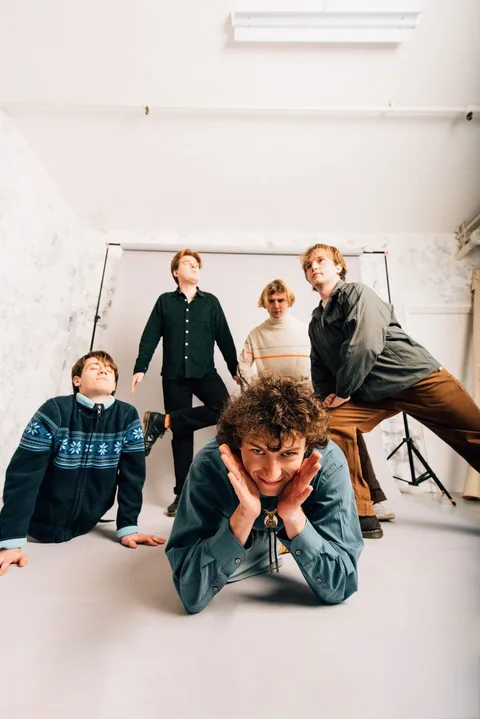
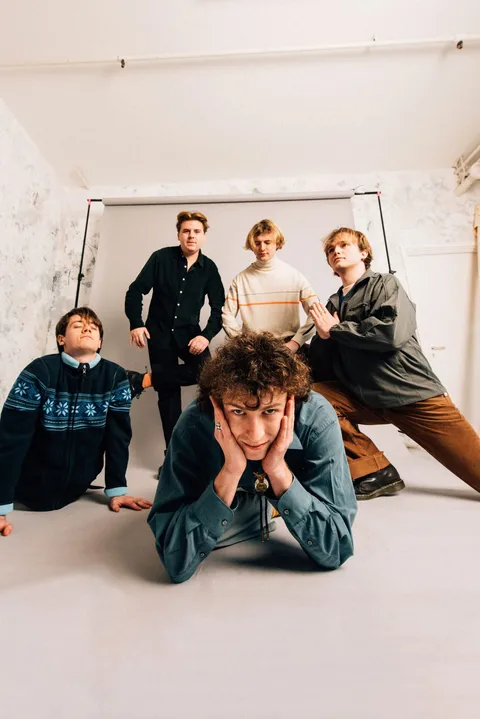
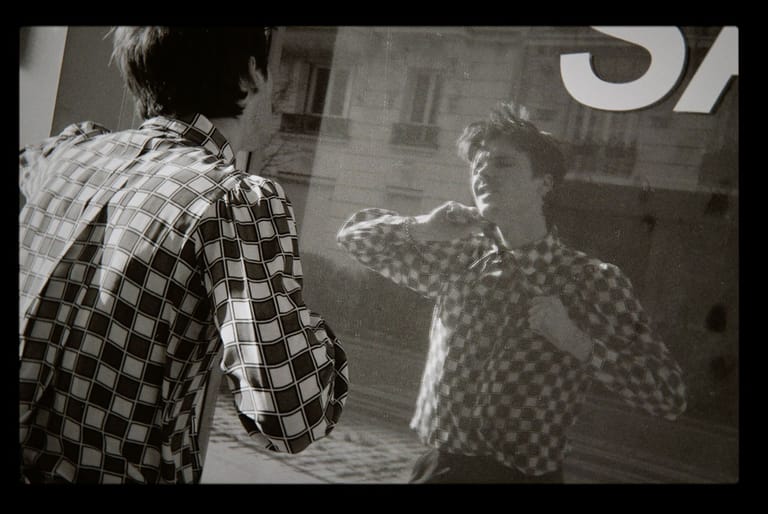
From the pubs of South London to the big leagues, Shame have come a long way. Now with their upcoming release, ‘Food For Worms’, they’re honing their sound, playing with humour and promising there really is a cameo from Phoebe Bridgers. Honest.
BURNING
BURNING
From the pubs of South London to the big leagues, Shame have come a long way. Now with their upcoming release, ‘Food For Worms’, they’re honing their sound, playing with humour and promising there really is a cameo from Phoebe Bridgers. Honest.
From the pubs of South London to the big leagues, Shame have come a long way. Now with their upcoming release, ‘Food For Worms’, they’re honing their sound, playing with humour and promising there really is a cameo from Phoebe Bridgers. Honest.
Words: Jake Hawkes.
Photos: Patrick Gunning.
We’ve come a long way from the days when the new wave of shouty bands were referred to as the ‘South London Scene’. And for good reason: it’s a name that doesn’t exactly stand up to scrutiny when groups from across the UK get in on the action. Post-punk may not be a perfect moniker, but it makes more sense than referring to bands like Fontaines DC as if they come from Streatham.
One band the original name does make sense for are Shame. Growing up in the capital and cutting their teeth in The Queen’s Head, a pub so close to Brixton Academy that you can pretty much see it out the window, South London is in the band’s blood.
A lot has changed in the years since then, with the five-piece releasing two critically acclaimed albums, one of which hit the Top 10, and playing pretty much every country in the world. One thing that hasn’t changed is that The Queen’s Head still puts on regular live music – something we found out as we sat down there for a chat with frontman Charlie Steen and guitarist Eddie Green and were promptly drowned out by a soundcheck taking place 15ft away.
“God, there’s not a band on, is there?” Charlie says with a grin. “Still, could be the next Shame, I suppose.” We decamp to the beer garden and shiver under a broken patio heater as the mercury hits -1C. Not exactly a glamorous start, but an excuse for Charlie to show off his new Shame scarf, on sale now in all good stores.
The scarf (and the interview) are tied to the band’s upcoming third album ‘Food For Worms’. It’s their most accomplished work yet, mixing the ferocious, snarling hits of their debut ‘Songs of Praise’ with the more meandering and emotionally mature work of follow-up ‘Drunk Tank Pink’.
“A lot of it is to do with that confidence,” agrees Eddie. “We had the confidence on this record to appreciate space a little bit more. Particularly on ‘Drunk Tank Pink’, I think we’d see a bit of space in a song and instantly look for ways to fill it, but we’ve realised that actually isn’t necessary. ‘Food for Worms’ is an album where we didn’t overcomplicate things – maybe that’s conditioned by the circumstances under which we wrote it, but for me, it just feels like a completely honest Shame record.”
<strong>"Friendship has all the same themes as love or a breakup; it’s just a feeling that doesn’t end as abruptly. Friendship is still romantic"</strong>
— Charlie Steen
Despite the band’s increased musical confidence, the album wasn’t an easy one to write. After touring album two, Shame found themselves struggling to write and lacking in direction until their management booked them two shows at the Windmill, another iconic Brixton pub which they’ve played “about a hundred times” according to Eddie, who also used to work there pulling pints (long-term and loyal readers may remember that Eddie left our last cover chat early for a shift there – Ed).
The enforced deadline of an upcoming performance shook the musical cobwebs loose, and what followed was an intense period of work forming the skeleton of album three. “We definitely tweaked stuff after the Windmill show,” says Eddie. “but the pressure allowed us to hone in on how we make a song good, or good to our collective mind anyway. We write, and then we finesse things on stage; it’s always been a big part of what we do. Those shows were the catalyst and helped us work out which songs we wanted on the album, but we didn’t go straight into the studio afterwards. We tinkered, we gave things colour.”
That tinkering included extending ‘Adderall’ beyond its original two-minute length and giving ‘Six-Pack’ a proper ending. “We played those songs and realised they needed to be longer,” explains Eddie. “You just get that immediate feedback playing live – it genuinely feels like co-writing with the crowd.”
This ethos of angling everything towards the live show isn’t surprising from a band who have had a reputation for being phenomenal in concert since their first days as a band. It’s an approach that has seen each of their tours get bigger than the last, but it’s not something Shame have tried to apply to the recording process before. That changed on ‘Food for Worms’, with all of the album being recorded live in the studio save the melancholic and introspective ‘Orchid’.
“It’s a lot more chaotic, but it worked out… hopefully,” adds Charlie. “As a continuation of the Windmill gigs, it helped us tighten up the album even more. We went into those gigs playing the songs so roughly, and by the end of them and the recording process, it felt like we had them completely nailed.
“Or in the case of the Windmill, if you aren’t in danger of getting a monitor to the head, then it’s probably not a great track.” laughs Eddie.
“I think also it’s worth remembering that we didn’t know we were going to get an album out of the songs we were writing,” says Charlie. “Anything you write can be dismissed or not work out, so thematically, it’s only cohesive because we did it all in one three-month period. The way I feel in January is different to the way I feel in November, but this is a really clear snapshot of how we all felt in that very condensed timeframe.
“Not to keep contrasting it with ‘Drunk Tank Pink’, but where that album was really insular, this one is based around stories of friendship. Some of my favourite films – ‘Withnail and I’, ‘In Bruges’, they’re written about friendships. Your best friend is your priest and your therapist, and you’re theirs, so that was what I was thinking about at the time and what hopefully comes through on the album. Friendship has all the same themes as love or a breakup; it’s just a feeling that doesn’t end as abruptly. Friendship is still romantic.”
<strong>"Look, I know people think we’re trying to be clever with this, but Phoebe’s actually just really nice and did us a favour…"</strong>
— Eddie Green
Tales of friendship and openness are a long, long way from Shame’s early material, with their satirical stories of sugar daddies (‘Gold Hole’) and send-ups of the Tory party (‘Visa Vulture’), but expansion and growth is to be expected from a band who hit the spotlight in their late teens and have weathered an entire pandemic together. As for specifically aiming at big topics or wading into politics with intent, they’d rather not.
To be fair to the band, we’re not sure they could ever be accused of just doing what’s expected. From a live video where a topless Charlie gets greased up between songs to a twelve-hour livestream to promote ‘Drunk Tank Pink’ which devolved into bassist Josh Finerty beatboxing (“the quality did take a dip at that point,” admits Eddie with a smile), they’ve always been a band who are willing to have a bit of Dadaist fun. Case in point: the video to recent single ‘Six-Pack’, which features a low-resolution CGI Napoleon Bonaparte taking steroids and pumping iron to get ready for world domination.
“Ah, Napoleon,” begins Charlie, with the air of someone reminiscing about an old colleague. “We really wanted to focus more on videos for this album run, because it’s something we’ve neglected a bit in the past. The hard part is that it tends to be more atmospheric songs that have better videos, and we aren’t exactly Mount Kimbie. The solution was obviously for Gilbert Bannerman to make us an animated video about Napoleon in the gym. We basically had nothing to do with the planning or execution of that, but it’s one of my favourite music videos.”
‘Six-Pack’ itself is a perfect encapsulation of the way Shame play with humour in their music. An absurdist video and the repeated refrain “now you’ve got a six-pack!” grab your attention immediately, but the lyrics themselves are actually a perfectly aimed smirk at the type of people who may have got a bit too comfortable during the Covid-19 lockdown.
“I wrote that when Covid eased and we were all allowed outside again,” says Charlie. “And most people were so happy to be back out in the world, but obviously, at the start of lockdown, everyone was saying they’d learn to play the flute and speak Arabic and get a six-pack. In your room, you can control what you’re going to eat, when you’re going to sleep, even the weather by using your thermostat. Then you step outside, and you miss your bus, or you step in a puddle. It’s just about that constant need for the delusion of what you could achieve if you stayed in.”
At the other end of the album’s range is ‘Adderall’, a contemplative exploration of addiction and its impact on those around you. It’s not autobiographical, with Adderall itself standing in for “anything you can lean on as an addiction,” explains Charlie. “There are a couple of people from America that I’ve met who were prescribed Adderall at a young age, and it’s had lasting impacts, so that is a part of it, but it’s not something I’ve experienced myself to any major degree.” Eddie laughs at the last part and casts a glance at Charlie, who grins. “Ok, I do have one experience with it,” he says. “I once took five of them in one night and did six months of art homework in six hours.”
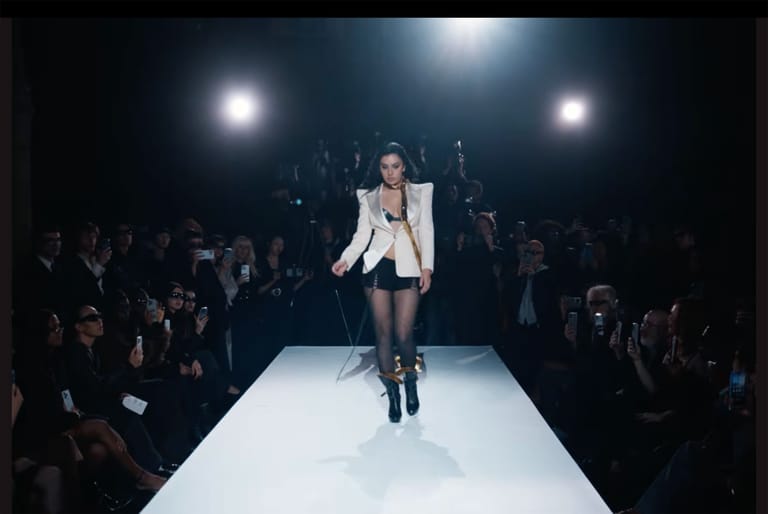
Charli xcx has shared a fashion-forward new video for forthcoming album track ‘SS26’
Further details surrounding the record have yet to be confirmed.