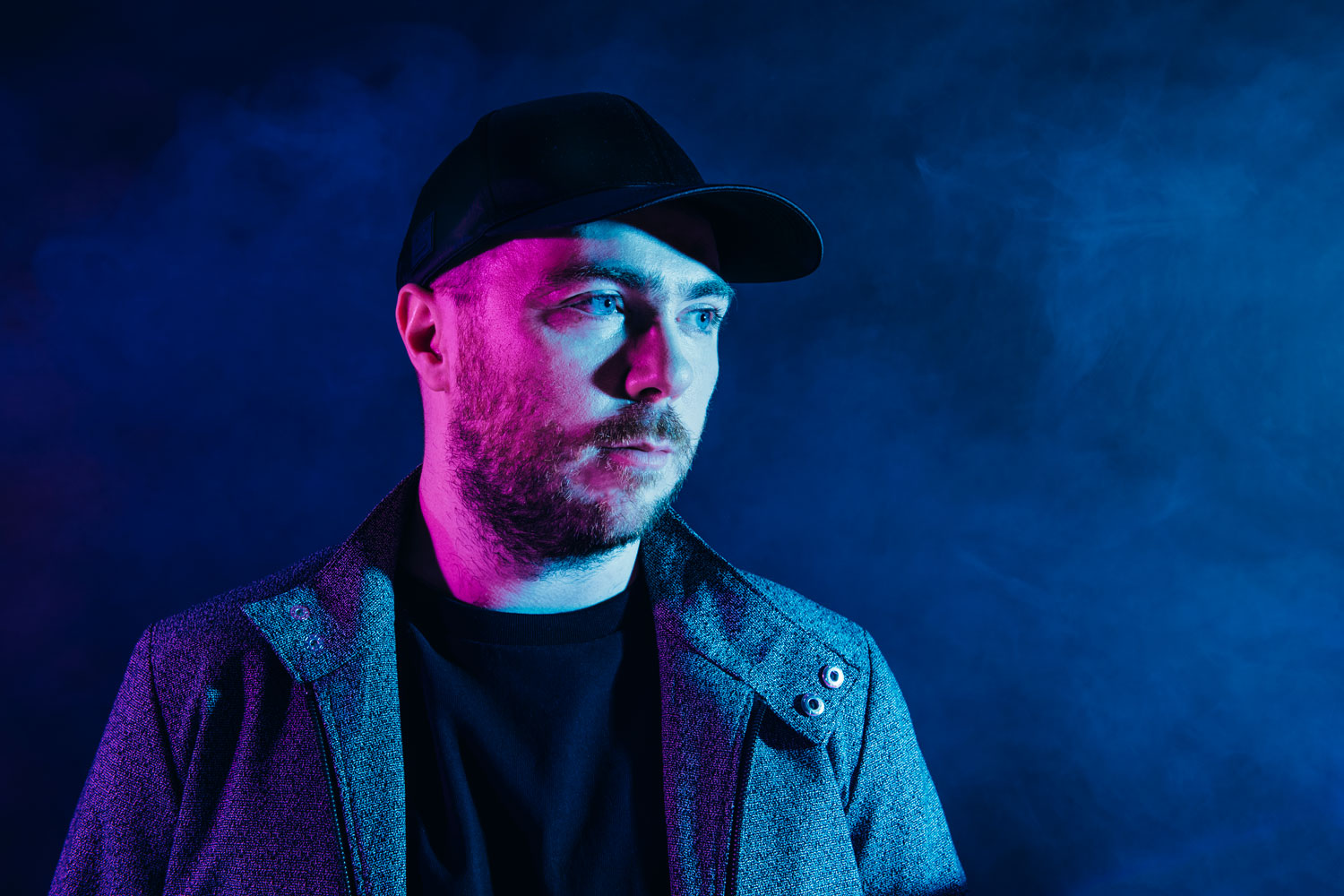
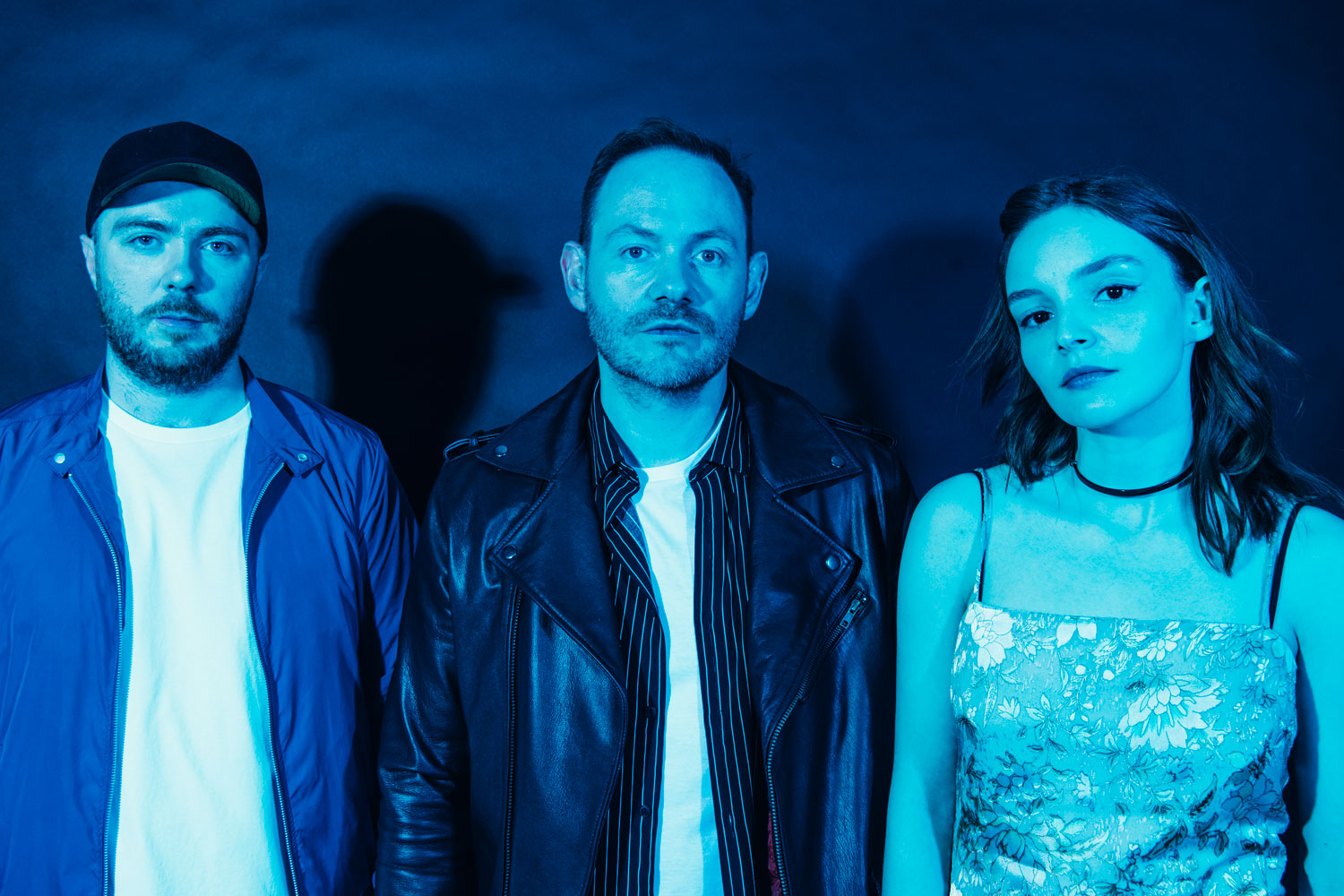
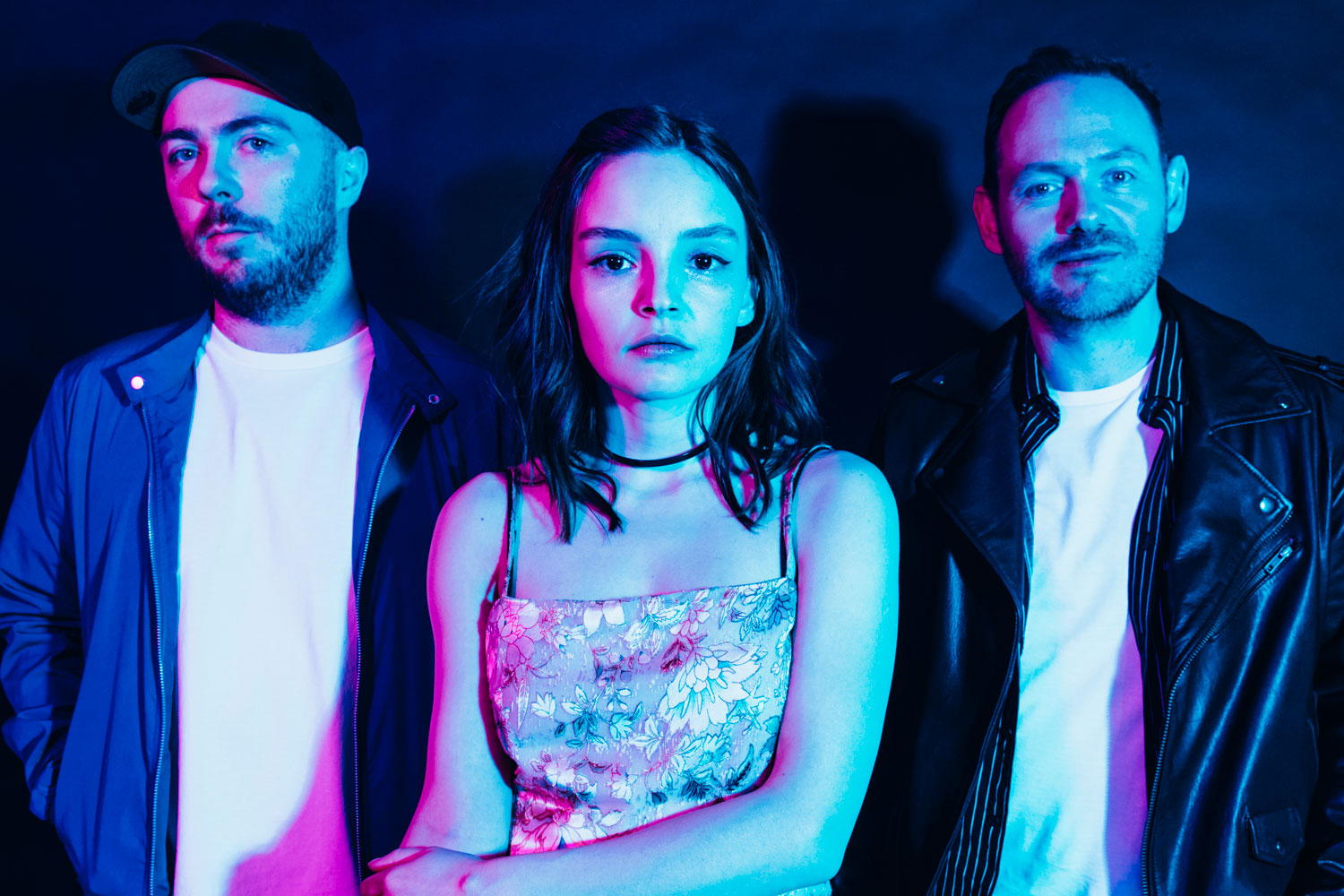
On their third album, ‘Love Is Dead’, CHVRCHES have worked with some of the brightest minds in pop for the first time - but rather than lose themselves in the zeitgeist, they’ve never been more themselves.
“It felt like this random, scrappy gang of people managed to somehow trick people into actually giving us a shot,” starts Lauren Mayberry on CHVRCHES’ story so far. Since the release of ‘The Mother We Share’ in the autumn of 2012, everything around the band has been a constant whirlwind.
“It was a busy time, and we were conscious of wanting to put two albums out in reasonably quick succession. There weren’t people telling us we needed to do that; it just felt right to us. You don’t want to lose momentum.
“We were lucky with what happened to us on the first record, but if you sit around and think about the second record for too long, I think you’d get lost inside your own thoughts,” warns Lauren.
Her bandmate Martin Doherty agrees: “The longer you leave it, the more insurmountable the task of a second album seems.”
This time, they took their time in crafting new album ‘Love Is Dead’. “For us, it doesn’t feel like we’ve been gone that long because we took a few months off at the end of 2016, then we started writing at the beginning of 2017,” Lauren explains. “In our minds, it’s what do they mean we’ve been gone for two years?’”
‘Love is Dead’ is a different CHVRCHES record, but it’s the one they’ve been building towards since the group were scratching around Glasgow on their own. Labelled a political pop band from the get-go, their third album amplifies both those sides, dousing them in neon and pushing them to the front.
But there’s more to it than that: there’s friendship, celebration and a belief in one another as the band craft a kaleidoscopic landscape that offers escape but also pulls apart the real world.
“The only thing we really talked about before we went into the studio,” considers the third member of the trio, Iain Cook, “was that we wanted it to be more live sounding, moving in the direction of live drums and guitars and bass.
“Also it was more just the concept of taking our time with this one,” Martin adds. “I loved the frantic, intense way we worked on the first two albums, but it didn’t feel right to do this time around. To me, a third album is a defining statement, certainly in the history of the bands I like.
Despite the wild ride and all they’ve achieved, CHVRCHES have always looked in control. They’ve built this band from the ground up. “Even though it was moving exceptionally quickly, we were always in control of what we were trying to build and the identity we were trying to shape as writers and producers,” offers Martin.
“So much of what we were doing at the time was reactive,” reasons Lauren. “It went from putting a song on the internet, to something quite substantially different in a few years. I do look back on that, and maybe we did seem more cool and in control of it from the outside. But then when people ask us about the conversation around #metoo and stuff like that now, I didn’t have it figured out at all at the time. You just have to ask yourself how you want to do things and what feels right, that’s always what we come back to. Let’s run through a scenario and then what feels right.”
CHVRCHES have always been a tough band to place. They sound like a pop band, write lyrics that cut like an emo band and carry themselves like a punk group. ‘Love Is Dead’ is no different, it’s just bigger. More sure of itself and what they can get away with, it sees the band blend colours, make bold movements and apologise for nothing.
“Suspicious of you, suspicious of you,” grins Lauren. “Especially suspicious of you,” she continues, pointing at herself. “You’re getting to know people. We’d all been in bands for years and years and years (“Were you in Years and Years?” pokes Iain. “I was the third Year,” she grins.) and you get to the cusp where you’re finally getting to do the things that you’ve always wanted to do. But, you don’t know each other that well. There’s this fear that maybe someone’s going to make you do something that you don’t want to do, or somebody’s going to say something that’s going to take away the thing.
“The fact that we know each other better now definitely helps. And I guess, at the time we were lucky that we were so savagely honest with each other. There were some awkward and uncomfortable conversations, but at least we knew up front what everyone was about. You have to try and block out the fear aspect as much as possible. You have to try and not make decisions out of fear wherever you can.
“As much as there isn’t a huge age gap between us, before CHVRCHES, we were doing the same sort of things, just a few years apart. It’s funny that we were trotting around a couple of years behind each other, sighing, I just want to do something good, I just want to believe in stuff.
“I do think, in these times, people want something to believe in. I know I want something to believe in. I think people are too smart and too jaded to have stuff shoved down their throat that they don’t want. I like the idea that this band can be pop and emo and punk. It can be popular; it can be emotional, it can still be kinda punk and DIY in the execution. That’s kinda cool, it doesn’t need to be all of one thing or the other, maybe that’s what makes it what it is?” she asks before getting sidetracked.
Lauren, Iain and Martin are still that random, scrappy gang of people. They mock each other for their choice of coffee, they bump fists before TV performances, and they get carried away in each other’s company. At one point, they get sidetracked and start talking about all the awful job interviews they’ve had.
“Back up, what’s your autobiography going to be called?” asks Iain.
“I thought it was funny and pithy, and I had enough people before me that I could think about it,” reasons Lauren. “If I was going to name a Nora Ephron style book of short stories, I would call it ‘Sometimes I Eat Things Off The Floor, And Other Stories’. Nobody laughed. It was really bad. The guy next to me said ‘My Story’ (delivered in a thick Glaswegian accent).
“That, or he was dumb enough to take instructions. People that think for themselves, they don’t want that,” reassures Martin.
For the longest time, it felt like CHVRCHES against the world. On ‘Love Is Dead’ though, they opened the door. For the first time, they worked with different producers, let other people into their songwriting process and have hired a live drummer for the upcoming tour.
“I still think it is ,” starts Lauren.
“Our worlds just got a wee bit bigger,” grins Iain.
It might sound like the start of the end - band from Glasgow go to L.A. to record their third album with superstar producer Greg Kurstin (Adele, Sia, Lily Allen) and lose themselves in the process - but ‘Love Is Dead’ sees them stand tall behind everything they’ve ever wanted.
The people they’ve brought into their world are people they trust, Martin explains.
“We tried different types of chemistry; we spent so long building up this identity because we knew that if we ever did open this project up to collaborators, we wanted it to be on our terms and only work with people who could enhance what we do rather than change it. That was a big part of the conversation on this album.
“And I think we feel tougher and more unified than we’ve ever been,” reasons Lauren. “Maybe it’s just a passage of time thing, but I just feel like I reached my ‘fuck that’ factor on being defensive about things. When I think back on what’s made me the happiest in the band, and what’s made me the unhappiest, the constant feeling of fighting your corner and defending yourself is definitely this thing that feels the heaviest to me.
“It was about a level of security for us all on the first two albums, because we were inherently a little bit suspicious of the people outside the nucleus,” continues Martin.
“It’s a scary business,” shrugs Lauren.
“More than that, I was 28 when we started this band and felt like I was an underachiever up until that point, creatively. And this band was about really going hard and heavy to establish ourselves as worthy producers, worthy writers, and we did that over such a long period.
“It’s something we would be particularly defensive about, ‘You want to try co-writing?’ Fuck no. Fuck everyone. That used to be the first reaction when it was the wrong time. That wasn’t coming from a particularly healthy place, but there was method in it, and there was reason to it because we wanted to do our thing, to a point.
“It’s easier to open yourselves up to those things when you’ve established the foundations,” Lauren explains. “We’d established ourselves as A Band, not as a thing created in a development meeting by a label. We’d established ourselves as writers, and these guys were established as producers. You’ve figured out what the identity of your band is, so then when you go and work with somebody else.
All that change, movement and staying true turned into ‘Love Is Dead’. The title, scratched into desks, sprayed on walls and scribbled in the margins, is the first sign that the band are more direct and less afraid this time out.
“We knew when we were naming it that it was a little bolder and more theatrical than the last albums,” starts Lauren, “but it felt like this collection of songs, when we looked at them, it needed a title to name the body of work.
And it’s funny, because as blunt as the title seems, the record within is so fluid. It’s just another example of CHVRCHES playing with expectations.
“The next album is going to be called ‘Long Live Love’, and it’s going to be a really horrible album about how love is actually dead,” laughs Martin.
“We don’t have to abide by a certain set of rules,” explains Lauren, “and that’s really freeing in terms of the creativity but also freeing as people. Even when we were figuring out how to start putting the album out into the world, it’s been fun to play with those kinds of things and think about how to use new technology.
“It was this really weird circle of life to see people who had watched the video on the internet; some people would then phone the number on their landlines like you would in the 90s, and then go back onto the internet and talk about what was on there. It’s fun to do that.
‘Love Is Dead’ is brilliant and daring, but also feels like a CHVRCHES record. It’s new, deliberate and a purposeful step forward from a band who’ve always been on the move.
“It’s nice that you say the word deliberate because after the initial writing and figuring out, that’s where we got to,” starts Lauren. “We wanted everything to be deliberate. If you’re doing something that’s quite vulnerable and uncomfortable, you should deliberately do it like that and really lean into it. If you’re going to go for the jugular, you need to be deliberate about that too.
“When I listen to it, it sounds a lot more of a free record than the previous ones, probably ‘cos there’s a lot of live instruments on it, but we were also a lot less obsessed with precision for the sake of precision.
“In terms of the lyrics, we didn’t go in wanting to write a certain type of thing initially; it just became apparent over the course of time. I was conscious of wanting to write stuff that was very honest and direct, and if there is imagery in it, it should be to help paint the picture rather than obscure what you’re saying.
“That’s been the big learning curve ‘cos once people know about the band, you’re almost less inclined to write stuff that feels personal because people are nosy. ‘I wonder what that’s about; I bet that’s about this’. You just have to turn that part of your brain off as much as possible because otherwise you’re not really making what feels right to make.
“Or you build up all the walls again,” adds Martin.
“And now’s not the time to be building any sort of wall,” replies Lauren with a half-smile.
“The fearful creativity thing is disastrous when it comes to making an album,” Martin continues. “If you’re trying to make music worried about what anyone’s going to say when it’s done, you’ve begun on the wrong foot, and you’re really going to struggle. This is something I say because I’ve done it, I’ve been there, and that stuff doesn’t get a reaction out of people because people have never been harder to please.
“Every other aspect of the story has to fit, has to make sense, people know if you come out with a record that doesn’t make sense for you. It was all about fearlessly making an album, sharpening, not compromising either side of what we do but celebrating both of the sides, and everything in between. Sharpening the edges of something that was this wide, instead of this wide (you can’t see his hand gestures, but it’s wider now).
“I feel like we’ve achieved that, and that was the most important thing to us. And after the fact, you pay us a compliment about the record I feel like maybe we did, and that’s awesome, but ultimately, that’s for other people to decide.
‘Love Is Dead’ is a big record. At times, it feels like an album about romance and heartbreak, but it’s more than that. ‘Graffiti’ is soaked in nostalgia, running untethered with scabby knees and feeling like that freedom could last forever, the snarl of “time to kill” sees the band sadly put the past to bed, before ‘Get Out’ sees them searching for something new to lose themselves in.
‘Graves’ is a particularly important moment. “It’s a cheerful one, isn’t it?” grins Lauren as the track looks at the ongoing refugee crisis, Grenfell Tower and the Conservative government’s relentless inaction in the face of it all. “They’re leaving bodies in stairwells and washing up on the shore,” it sings with a curled lip. “Oh baby, you can look away while they’re dancing on our graves, but I will stop at nothing,” it promises.
“It’s such a defiant song, that’s what I love about it,” offers Iain.
“It’s that putting salt in something sweet,” adds Lauren. “Yes, it’s the only song I’ve ever sung the word ‘baby’ in ever in my life, but it’s in such a tongue in cheek way.
“We didn’t sit down and say, this song is very danceable so we need to have a lyric that’s really not,” she continues. “It just came out. The verses happened for that very quickly, the verses for ‘Graves’ and ‘Deliverance’ (a song about holding on to what you love and giving up on giving up) were two of the fastest things we wrote. Most of it happened in the room, and there’s a lot of imagery in it so that must have just been in my head, it just needed to get tapped into.
Elsewhere ‘Heaven/Hell’ sees Lauren sing about gender inequality for the first time. She has a history of speaking up about misogyny, writing an essay for The Guardian in 2013, sharing her story about an abusive ex for Lenny Letter in 2015 and refusing to stand by while people call out “marry me” at live shows or send her vile messages online. “Is it right if I’m a perfect actress, playing the princess in distress?” it asks. “Is it alright if I save myself and if I clean up my own mess?” it continues.
“That one for me, it’s about the frustration of knowing you’re always going to be too much of one thing for somebody and not enough of the other thing for somebody else,” she says. “Being encouraged by where we are now, and how much has changed in the past six months to a year, but also seeing a lot of hypocrisy in that.
“It’s interesting to see when we started doing press again, the tone in which a lot of people speak to us or about us is different than it was a couple of years ago. But it’s frustrating to think back to five years ago, and there were people that we know, who we play shows with, play festivals with, and they would tell you off the record that, ‘We totally get that too. It’s so sad, so upsetting, thank you for doing that’. But they don’t go out and do anything about it.
“Y’know, that’s everyone’s prerogative to do what you want to do, run your life and run your career how you want, but it’s frustrating to be the other person. If everyone said a little thing, maybe more of an impact would be made than one or two people having to carry the can. It feels depressing to me.
“In the 90s, it seemed like the female artists I was looking up to didn’t have as much of a problem talking about that. PJ Harvey, Shirley Manson, Karen O - those women were talking about it and making amazing art, but they were not afraid to call bullshit on stuff.
“I don’t know when it changed that people suddenly were thinking ‘Oh, this might make me unpopular or might piss people off’. Their popularity’s more important than being right, or not even being right, but just doing what’s right. The more people that don’t talk about it, the worse it gets.
“I’ve had enough,” the track admits.
“Yeah, I probably had,” Lauren reflects. “It’s funny when people ask us about it. We’re doing interviews now, and we were doing promo the past couple of days, and people ask ‘Why do you think women are so angry?’ I’m like, they’re justifiably angry, and they’ve been fucking angry but you didn’t notice, or it was easier to brush it off or put it in the corner.
“Now is a really encouraging time but hopefully it’ll stick, and it’s not just lip service to something. It’s really great to have people at The Grammys talking about these things, but it has to be more than a symbolic white rose. You have to change the way you’re working within the room, rather than just giving a platform to a female choir and having people wear white roses.
“If you don’t go to work the next day and think about how you treat women or people of colour, then I don’t think it’s going to make any difference. But it might,” she offers, unsure but still hopeful.
And that’s a stance that the band take on a lot of ‘Love Is Dead’. They’ve been let down time and time again, and now they’re not quite sure what to believe in anymore. ‘Miracle’ isn’t asking for one but it does want to know “If love is enough, could you let it show?” while ‘Never Say Die’ is full of surefire defiance and edge of the cliff confusion. ‘Wonderland’ looks up, “Can we live forever with my head in the clouds?”
“I don’t know if it’s just because we’re a bit older now,” Lauren muses, “but a lot of it was me figuring out what to do. Having always identified as a bit of an idealist, I don’t necessarily feel like that anymore. What do you do with the idealist when you realise the world isn’t ideal? And the people aren’t as ideal as you thought they were? I don’t know if I have an answer. But to me, that’s what was great about writing it, getting out that frustration and that confusion. Maybe that will resonate when people hear it.”
“It’s because Lauren was pushing thirty,” grins Martin
“That probably did cause me to look back and think about things,” Lauren laughs. “A majority of my twenties was spent starting this band, and being in this band, and I’ve been really lucky ‘cos most people don’t get to do that with their twenties. But I did wake up one day thinking, what the fuck happened? Where did it go? One minute I was a couple of years out of university, and then now here we are.
There’s a lot to unpack on ‘Love Is Dead’, and there’s a lot to fall in love with. What it does really well though, and will continue to do, is ask questions but also look at what’s next. From the personal to the global, it unapologetically shares its heart and its scars, churning up feelings of loss and despair while making sure that glimmering hope doesn’t get lost in the storm.
“It’s probably the only album with a pop song about refugees, in this current time anyway,” starts Lauren. “The themes seem like they came to a head more in the last couple of months. It’s interesting for us to look at the tracklist, because the first track is ‘Graffiti’, which is written about things that happened in the past, things that you remember fondly and things that you don’t. ‘Wonderland’, the closer, is the one that’s the most forward facing.
“If people take away the questioning aspect of the album, if people are encouraged to ask more questions and be less apathetic to what’s around them, that’d be a really good thing,” adds Iain. “But also, to take away a sense of hope, and hopefulness.
Despite it feeling like it’s CHVRCHES versus the world, they’re not alone in this. They’re joined by bands like The 1975, Wolf Alice, Years and Years and Paramore, who are all leading the charge in making smart, emotional pop music that means something to the individual but also talks about inequality, change and what’s right and wrong on a larger scale.
“People will look back on this time and the bands that aren’t like the ones you mentioned, will seem very fucking bizarre,” starts Martin. “With hindsight, this will look like a period of extreme transition if all things go well.
“We weren’t thinking about this consciously when we were writing,” continues Lauren. “We weren’t saying, ‘We should at least address some politics ‘cos of the times we’re living in’. It just feels right to be doing that, and that’s what art or music or any of these things are supposed to do. You are the conduit to feelings.
“I don’t like this idea that pop has to be vacuous or empty or meaningless,” Lauren continues. “You talk about the last Paramore record or The 1975; those bands have an awareness that there are loads of young people that like their band and what they say gets listened to.