Various Artists - HELP(2)
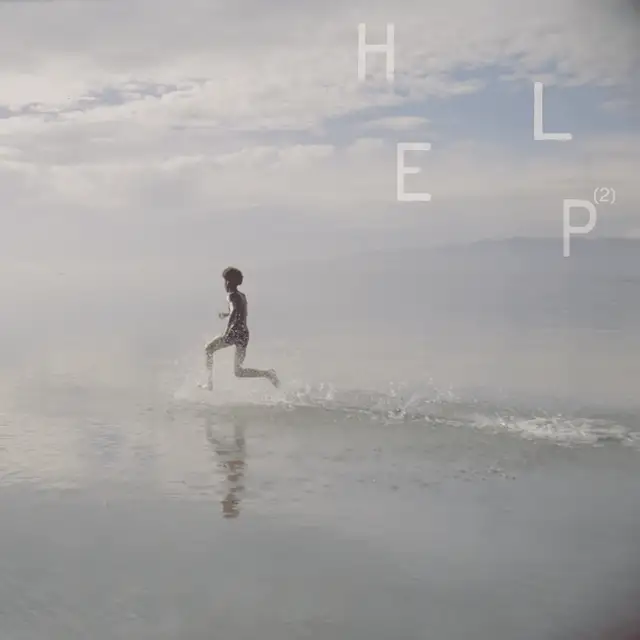
'HELP(2)' corrals 23 tracks from a roster deep enough to fill three festival main stages.
Thirty-one years after the original 'HELP' album threw Oasis, Radiohead and Portishead into a studio for a single weekend, War Child have returned with a sequel that not only justifies its existence but genuinely functions as one of 2026's most rewarding listens. Executive produced by James Ford and recorded across a concentrated session at Abbey Road Studios in November 2025, 'HELP(2)' corrals 23 tracks from a roster deep enough to fill three festival main stages.
The record's smartest trick is structural. Rather than sequencing alphabetically or by commercial clout, Ford arranges contributions so that moods bleed into one another with purpose. Arctic Monkeys open proceedings with 'Opening Night', both their best song in years and a title that feels perfectly self-aware, before giving way to Damon Albarn, Grian Chatten and Kae Tempest on 'Flags', a track whose spoken-word backbone and layered instrumentation would sound remarkable on any of its three contributors' solo records. Black Country, New Road follow with 'Strangers', and already a pattern emerges: Ford has coaxed performances that sit comfortably inside each artist's existing catalogue while sharing a tonal palette with everything around them.
Several of the cover versions carry enormous political freight. Fontaines D.C. take on Sinead O'Connor's 'Black Boys on Mopeds', a song about police violence and media complicity that has only grown sharper since 1990, and deliver it with a restraint that amplifies the fury in the lyrics. Depeche Mode's reading of Buffy Sainte-Marie's 'Universal Soldier' strips back the original's folk arrangement into something more electronic and glacial, making the antiwar message land differently without dulling it. Olivia Rodrigo's version of The Magnetic Fields' 'The Book of Love' sits at the record's gentler end, and her vocal - less ironic than Stephin Merritt's, more earnestly devoted - finds new weight in lines that once felt arch. Choosing these particular songs for a compilation for children in conflict zones is pointed and deliberate.
Original compositions hold their own against the covers. Pulp's 'Begging for Change' arrives like a dispatch from a Jarvis Cocker who has been watching the news with his jaw set, while Sampha's 'Naboo' floats on the kind of fractured piano and vocal processing that made 'Lahai' so compelling. Wet Leg contribute 'Obvious', a track that channels their gift for deadpan hooks into something more melancholy than their usual fare. Ezra Collective and Greentea Peng's 'Helicopters' is one of the album's most physically involving moments, a jazz-inflected groove that earns its title's sense of uplift without resorting to sentiment.
English Teacher and Graham Coxon's 'Parasite' pairs the Mercury Prize winners with one of British guitar music's most restless minds, and the combination crackles. Beth Gibbons' 'Sunday Morning' is hushed and spectral, a performance that seems to have been recorded in the room's quietest corner. Beabadoobee's 'Say Yes' has a directness that cuts through, while Arlo Parks' 'Nothing I Could Hide' maintains the confessional register she has refined across two albums.
A generational thread runs through the tracklist. Pulp, Damon Albarn, Beth Gibbons and Depeche Mode all contributed to the cultural landscape from which the 1995 original emerged. Placing them alongside Fontaines D.C., Young Fathers, The Last Dinner Party and King Krule - whose 'The 343 Loop' is one of the record's more leftfield inclusions - makes 'HELP(2)' feel like a handoff as much as a compilation. Young Fathers' 'Don't Fight the Young' makes the generational point explicit, its title doubling as an instruction.
Not every track hits with equal force. Twenty-three songs is a lot, and the inclusion of an Oasis bonus live track feels like a profile-minded opportunity rather than artistic necessity. The usually flawless Foals' 'When the War is Finally Done' aims for grandeur but lands closer to earnestness. Still, in a compilation where the hit rate hovers somewhere above eighty per cent, the occasional wobble barely registers.
What Ford and War Child have assembled here goes well beyond the usual compilation of leftover B-sides and contractual favours. 'HELP(2)' is a proper record: sequenced, considered and frequently brilliant, built around a cause that deserves the quality of music it has attracted.
Get more Dork

Sessions · Playlists · Behind the scenes